Introduction to diving Wakatobi
Wakatobi takes its name from the first syllables of its four main islands: Wangi-Wangi, Kaledupa, Tomia and Binongko. They sit off the southeast tip of Sulawesi where the Banda Sea meets the Flores Sea, and the marine park that surrounds them covers roughly 1.39 million hectares, one of the largest in Indonesia. UNESCO designated the area a Biosphere Reserve in 2012, and the reef system includes fringing reefs, barrier reefs and isolated atolls with more than 50 named dive sites within reach of a single base.
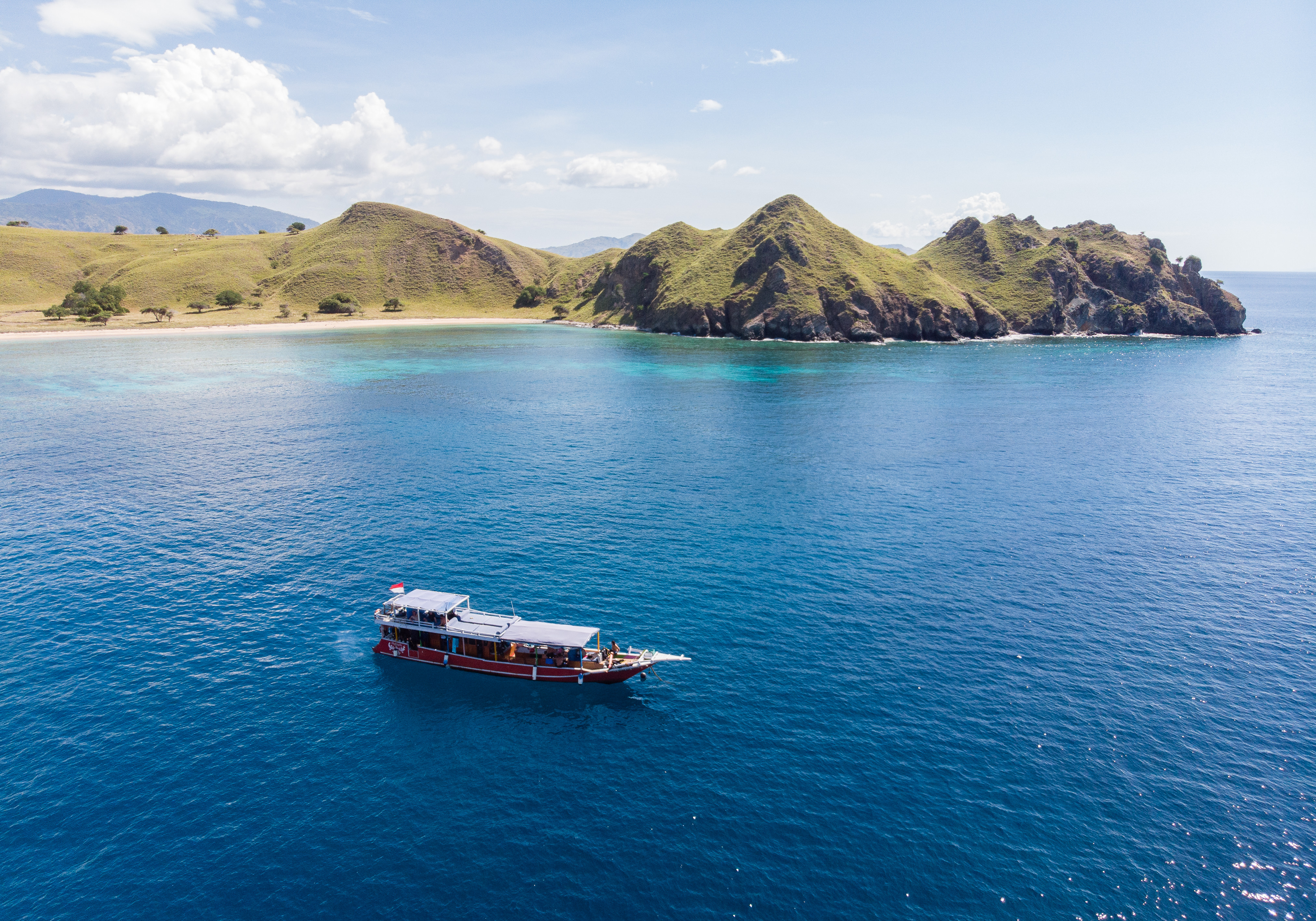
Diving here is resort-based rather than boat-based. The best known operation sits on Onemobaa, a small island beside Tomia, and most guests fly in on a chartered aircraft from Bali. Day boats leave once or twice a day for reefs that are typically 10 to 45 minutes away, and the boats themselves are large, shaded and set up for camera gear, because photography is the reason most people are here.
Why the coral is still intact
Wakatobi is remote, thinly populated and, crucially, managed with local agreement. The resort area operates a privately funded reef reserve in which surrounding villages are paid a lease for a no-take zone, and community rangers patrol it. The result is coral cover and reef fish density that visitors who last dived Indonesia twenty years ago recognise immediately, and that newer divers often have not seen anywhere.
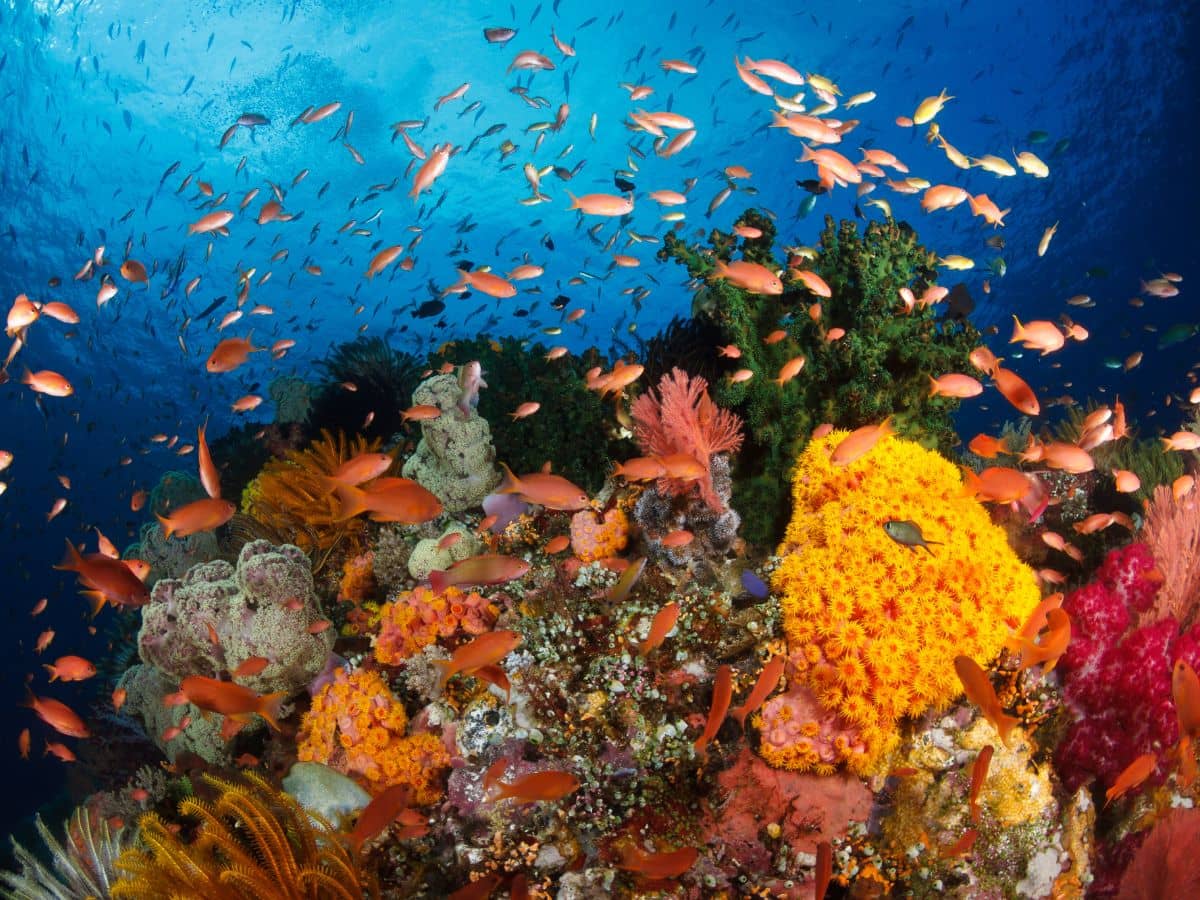
The trade-off is honesty about what Wakatobi is not. There are no shark walls, no manta cleaning circuits and no adrenaline drift channels of the kind Komodo or Raja Ampat produce. What Wakatobi offers is coral, small animals, extraordinary water clarity and dives that are almost never cut short by current, plus a house reef so good that many guests dive it more than the boat sites.
Why dive Wakatobi
Wakatobi is the reef destination in Indonesia for divers and photographers who value coral health and calm conditions over big-animal roulette.
- The House Reef: a wall that starts a few meters off the jetty, dived unlimited by day and by night without a boat, and rated by many visitors as the best shore dive in the world.
- Coral cover you can barely see rock through: hard coral gardens, huge table corals, and gorgonian and soft coral walls with little bleaching or blast damage.
- Visibility of 30 to 40 meters: the islands have no rivers of consequence and little runoff, so the water stays clear for most of the year.
- Mild current: most sites are dived as gentle drifts or as static wall dives, which suits macro photography and less experienced divers.
- A serious critter list: Bargibanti, Denise and Pontohi pygmy seahorses, ghost pipefish, mandarinfish, blue-ringed octopus and a long nudibranch list on healthy reef rather than on rubble.
- Very few other boats: the park is large, the diver numbers are small, and most sites are dived by one boat at a time.
Dive sites in Wakatobi
Most sites are walls, ridges or pinnacles that top out between 3 and 10 meters and fall away to 40 meters and beyond, so a typical dive is a slow traverse along the wall with a long shallow finish in the coral garden on top.
The House Reef
The site that defines the destination. A drop-off that begins a short swim from the jetty and runs for hundreds of meters in both directions, with a shallow coral plateau above and a wall below. Divers enter from shore or take a short boat ride upcurrent and drift back. Frogfish, ghost pipefish, pygmy seahorses, mandarinfish at dusk and a resident cast of reef fish live here, and the dive can be done at any hour.
Roma
A submerged ridge topped with hard coral bommies and swept by enough flow to bring fish onto it. Schooling fusiliers, surgeonfish and anthias sit over the top, while the flanks hold gorgonians and soft coral. One of the more active sites in the area and a favourite for wide-angle work.
The Blade
A narrow ridge running out from the reef, standing like a fin with steep faces on both sides, dived by working along one side and returning along the other. Sea fans on the deeper wall, dense fish on the crest, and one of the more dramatic profiles in Wakatobi.
Cornucopia
A wall covered in overhangs and crevices packed with soft coral, sponges and crinoids. Named for the sheer variety on a single dive: pygmy seahorses on the fans, nudibranchs on the sponges, and reef fish crowding the shallows.
Table Coral City
A shallow plateau of enormous overlapping table corals, some meters across, in an unbroken field. Structurally the most photogenic hard-coral site in the area and a good example of what a reef looks like when nothing has damaged it in decades.
Teluk Maya
A sheltered bay with a gentle slope and a sandy bottom, and the closest Wakatobi comes to muck diving. Ghost pipefish, seahorses, cuttlefish, juvenile fish and octopus, dived slowly and shallow, often as an afternoon or night dive.
Magnifica
A wall on the outer reef with big gorgonians, barrel sponges and clear water, where the blue side is worth watching for eagle rays, tuna and the occasional grey reef shark. Better visibility here than on the inner sites in most conditions.
Karang Kaledupa
The long barrier reef off Kaledupa, dived at several points along its length. Larger structures, more current than the sites near the resort and the best chance of schooling pelagics, turtles and Napoleon wrasse, with pods of dolphins and pilot whales sometimes met on the crossing.
Marine life in Wakatobi
Wakatobi sits inside the Coral Triangle and the park has been surveyed with several hundred coral species and well over 600 fish species. The character of the diving is reef, not pelagic: what stands out is the density of small life on coral that is still fully intact.
Reef
- Very high hard-coral cover, including large table corals, staghorn thickets and healthy plate formations.
- Gorgonian sea fans and barrel sponges on the walls, with crinoids in every colour on the shoulders.
- Anthias, fusiliers, surgeonfish and butterflyfish in numbers across the reef top.
- Hawksbill and green turtles, Napoleon wrasse, bumphead parrotfish and large grouper on the outer reefs.
Macro
- Bargibanti, Denise and Pontohi pygmy seahorses, with guides who know the individual fans.
- Ornate and robust ghost pipefish, and several pipefish species in the shallows.
- Mandarinfish at dusk on the house reef and in the sheltered bays.
- Frogfish, leaf scorpionfish, blue-ringed octopus, cuttlefish and a long nudibranch list.
- Crinoid shrimp, porcelain crabs, orangutan crabs and other commensal life on the coral.
Passing through
- Eagle rays, dogtooth tuna and grey reef sharks in the blue on the outer walls.
- Spinner dolphins and pilot whales seen on surface crossings, particularly toward Kaledupa.
- Occasional whale sharks and mantas, but neither is a reliable feature of the destination.
Dive conditions
Water temperature runs 27 to 30C, with the coolest months from July to September when Banda Sea water pushes in, and the warmest from October to April. A 3 mm full suit works all year; divers who do four or five dives a day, including a long house-reef night dive, are usually happier in a 5 mm or a 3 mm with a hooded vest.
Visibility is one of the reasons people come. Thirty to forty meters is normal on the outer walls, and it rarely drops below 20 meters even in the wet season, because there is almost no terrestrial runoff. Plankton blooms occasionally soften the water and bring more small life with them.
Current is generally light to moderate, and most sites are dived as slow drifts or as static wall dives. The barrier reef off Kaledupa and the outer ridges can run harder on a spring tide, and guides simply move to a sheltered face when they do. Depth discipline matters because the walls are deep, but the profiles are easy. Open Water is enough for the majority of sites and Advanced Open Water is worth having for the deeper outer walls. Nitrox is available and makes sense given the number of dives per day. There is no recompression chamber in the park; evacuation is to Makassar or Bali, so insurance covering that is essential.
Wakatobi through the year
Water and air temperature, visibility and rainfall for every month, with the windows we would book ourselves. Hover or tap a month for the detail.
- Water
- Air
- Visibility
- Rain
Show the monthly data as a table
| Month | Water °C | Air °C | Visibility | Rain | Diving | Notes |
|---|---|---|---|---|---|---|
| Jan | 28–29 °C | 24–31 °C | 20–30 m | 250 mm | Possible | Wet season, many resorts closed |
| Feb | 28–29 °C | 24–31 °C | 20–30 m | 220 mm | Possible | Maintenance closure window |
| Mar | 28–30 °C | 24–31 °C | 25–35 m | 200 mm | Good | Season restarts, water warm |
| Apr | 28–30 °C | 25–32 °C | 25–40 m | 150 mm | Peak | Calm and clear, few guests |
| May | 28–30 °C | 25–32 °C | 30–40 m | 120 mm | Peak | Great visibility, mild current |
| Jun | 27–29 °C | 24–31 °C | 30–40 m | 90 mm | Peak | Dry season begins, clearest water |
| Jul | 27–28 °C | 23–30 °C | 30–40 m | 70 mm | Peak | Coolest water, peak season |
| Aug | 27–28 °C | 23–30 °C | 30–40 m | 60 mm | Peak | Driest month, busiest weeks |
| Sep | 27–29 °C | 24–31 °C | 30–40 m | 70 mm | Peak | Calm crossings to outer reefs |
| Oct | 28–30 °C | 25–32 °C | 30–40 m | 100 mm | Peak | Warming water, still very clear |
| Nov | 28–30 °C | 25–32 °C | 25–35 m | 160 mm | Good | Rain returns, diving still good |
| Dec | 28–30 °C | 25–31 °C | 20–30 m | 230 mm | Good | Wet season starts, holiday weeks |
Best time to visit Wakatobi
Wakatobi is diveable for most of the year. The pattern is set by the northwest monsoon, which brings rain and wind roughly from December to March, and the drier southeast season from May to October. Resorts commonly close for several weeks in the January to February window for maintenance, so confirm operating dates before you book flights.
- March to May: the season reopens, water is warm, seas settle and visibility climbs. Quieter than the northern summer and good value.
- June to September: the dry season and the peak. Best visibility, calmest crossings to the outer reefs, coolest water at 27 to 28C, and the busiest weeks of the year.
- October to November: warm water returns with visibility still excellent and fewer guests. One of the most underrated windows.
- December to February: the wet season, with rain, more wind and some resort closures. Diving remains possible where operations run, and underwater conditions hold up better than the weather suggests.
Getting to Wakatobi
Wakatobi is remote, and how you get there depends on where you are staying. The best known route is a private chartered flight from Bali Ngurah Rai (DPS) direct to the Maranggo airstrip on Tomia, roughly two and a half hours, operated on a fixed weekly cycle by the resort for its own guests. That cycle is why most Wakatobi packages are seven or ten nights rather than an arbitrary number.
The public alternative is Matahora Airport (WNI) on Wangi-Wangi, served by domestic flights from Kendari (KDI) and Makassar (UPG), with Makassar in turn connected to Jakarta, Bali and Singapore. From Wangi-Wangi you continue by public ferry or private speedboat to Kaledupa or Tomia, which takes between one and three hours depending on the boat and the sea state. Schedules are thin, so allow a buffer day in each direction.
Sea travel to Wakatobi from Bau-Bau (BUW) on Buton is also possible by ferry for divers on a budget or with time, but it is slow and not practical on a short trip.
Indonesia grants visa-free entry or visa on arrival to most nationalities for 30 days, with visa on arrival extendable once for a further 30 days. Check the current list and fee before departure.
Getting to Wakatobi, and what to know before you go
Public gateway to the park; ferry or speedboat 1 to 3 h onward to Kaledupa or Tomia
Private charter flight to the Maranggo airstrip on Tomia, about 2 h 30, on a weekly cycle
Domestic flights to Wangi-Wangi and Kendari; connections to Jakarta, Bali and Singapore
Short domestic hops to Wangi-Wangi, plus ferry links to Buton
Wangi-Wangi · Tomia · Kaledupa
- Best season
- Jun–Sep
- Off season
- Jan–Feb northwest monsoon; resorts often close for maintenance
- Typical trip
- 7–10 nights (charter flight cycle)
- Experience
- Open Water, about 0 logged dives
- Park / marine fee
- Wakatobi National Park entry fee is modest and normally included in resort packages; resorts also collect a per-guest reef conservation contribution paid to local villages
- Visa
- Visa-free or visa on arrival for most nationalities, 30 days, extendable once
- Nitrox
- Available at the resorts, usually at extra cost
- Currency
- Indonesian rupiah (IDR)
- Language
- Indonesian and local Wakatobi languages; English spoken at the resorts
- Time zone
- UTC+8 (WITA)
- Power
- Type C/F, 230 V
- Bargibanti pygmy seahorse
- Denise pygmy seahorse
- Mandarinfish
- Ornate ghost pipefish
- Hawksbill turtle
- Napoleon wrasse
- Bumphead parrotfish
- Eagle ray
| Species | Months | Where |
|---|---|---|
| Mandarinfish | Year round | House Reef and sheltered bays at dusk |
| Pygmy seahorse | Year round | Gorgonians at Cornucopia, Roma and the House Reef |
| Ornate ghost pipefish | Jun–Nov | Crinoids on the House Reef and Teluk Maya |
| Spinner dolphin and pilot whale | Year round, best Jun–Oct | Surface crossings toward Kaledupa |
| Eagle ray | Year round | Blue water off Magnifica and Karang Kaledupa |
| Bumphead parrotfish | Year round | Outer barrier reef at Kaledupa, early dives |
Seasons are typical, not guaranteed: sightings depend on currents, weather and luck.
Practical information
Park and conservation fees: the Wakatobi National Park entry fee for foreign visitors is modest and is normally bundled into resort packages. Resorts in the area also fund a private no-take reserve through a per-guest conservation contribution paid to the surrounding villages, which is generally built into the rate rather than billed separately. Ask at booking so there are no surprises.
Rules: no gloves, no touching, no collecting and no fishing inside the reserve area. Do not buy shells or coral products locally. Drones need permission from the operator.
Money: the Indonesian rupiah is the currency. There are no ATMs on Tomia and cash options on the smaller islands are very limited, so bring what you need for tips and incidentals; resorts settle main accounts by card or bank transfer.
Diving: nitrox is available and worth taking given four to five dives a day. There is no recompression chamber in the park, and evacuation is to Makassar or Bali, so dive insurance with evacuation cover is required by most operators.
Practicalities: 230 V with type C and F sockets; Indonesian is the national language and English is spoken at the resorts. Mobile coverage and internet are limited and slow.
Tips & recommendations
- Book around the charter flight: the Bali to Tomia service runs on a weekly cycle, so trip length is effectively fixed at seven or ten nights.
- Dive the House Reef every day: it is unlimited and unguided for qualified divers, and most guests end up logging more dives there than on the boat.
- Bring macro glass and patience: the reef rewards a 60 or 105 mm and long, still dives more than it rewards chasing big animals.
- Confirm the maintenance closure: resorts often shut for several weeks around January and February, and flights are booked long before that is announced.
- Take a hooded vest for July to September: 27C water plus five dives a day is colder than the number suggests.
- Carry cash in rupiah: there are no ATMs on the small islands and tipping is expected at the end of the stay.
- Allow a buffer day if flying via Wangi-Wangi: domestic schedules and boat transfers are thin and change without much notice.