Introduction to Komodo National Park Diving
Bordered by the Sulawesi and Flores Seas to the north and the Indian Ocean to the south, Komodo National Park is a marine protected area and a UNESCO World Heritage Site. It is comprised of three major islands—Komodo, Rinca, and Padar—along with numerous smaller islands that create some of the world's most exciting dive sites.
Why Choose a Komodo Liveaboard? As a scuba diving destination, Komodo offers two distinct dive environments that are best explored by boat. Even though they are geographically close, these areas are worlds apart in terms of conditions:North Komodo: Warm Waters & Big Fish
In the north, the water is generally warm (up to 30°C/86°F) and crystal clear. This area is famous for submerged pinnacles like Castle Rock and Crystal Rock, where strong currents attract massive schools of trevally, barracuda, and reef sharks. It is the quintessential Indo-Pacific reef experience.South Komodo: Nutrient-Rich & Macro Magic
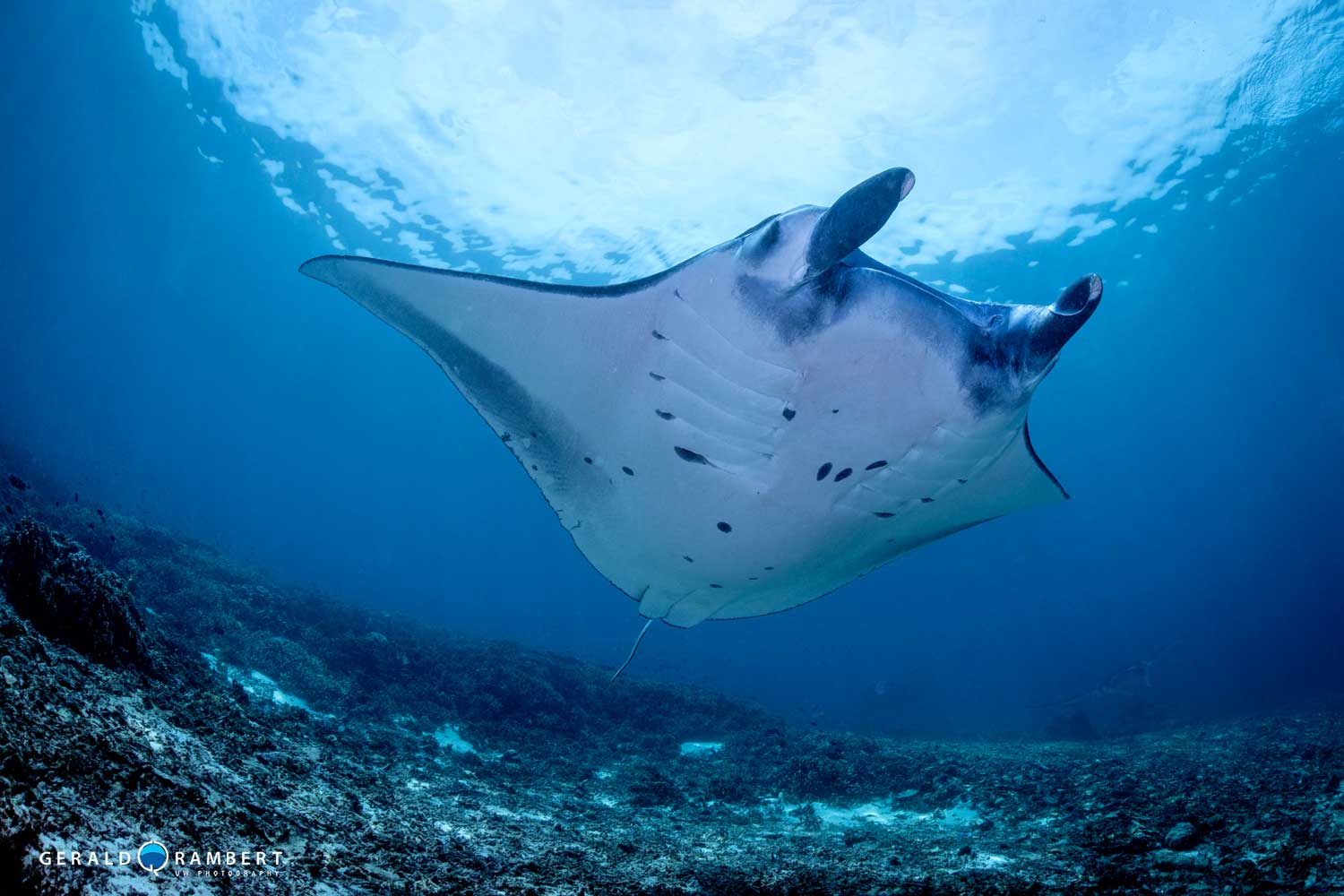
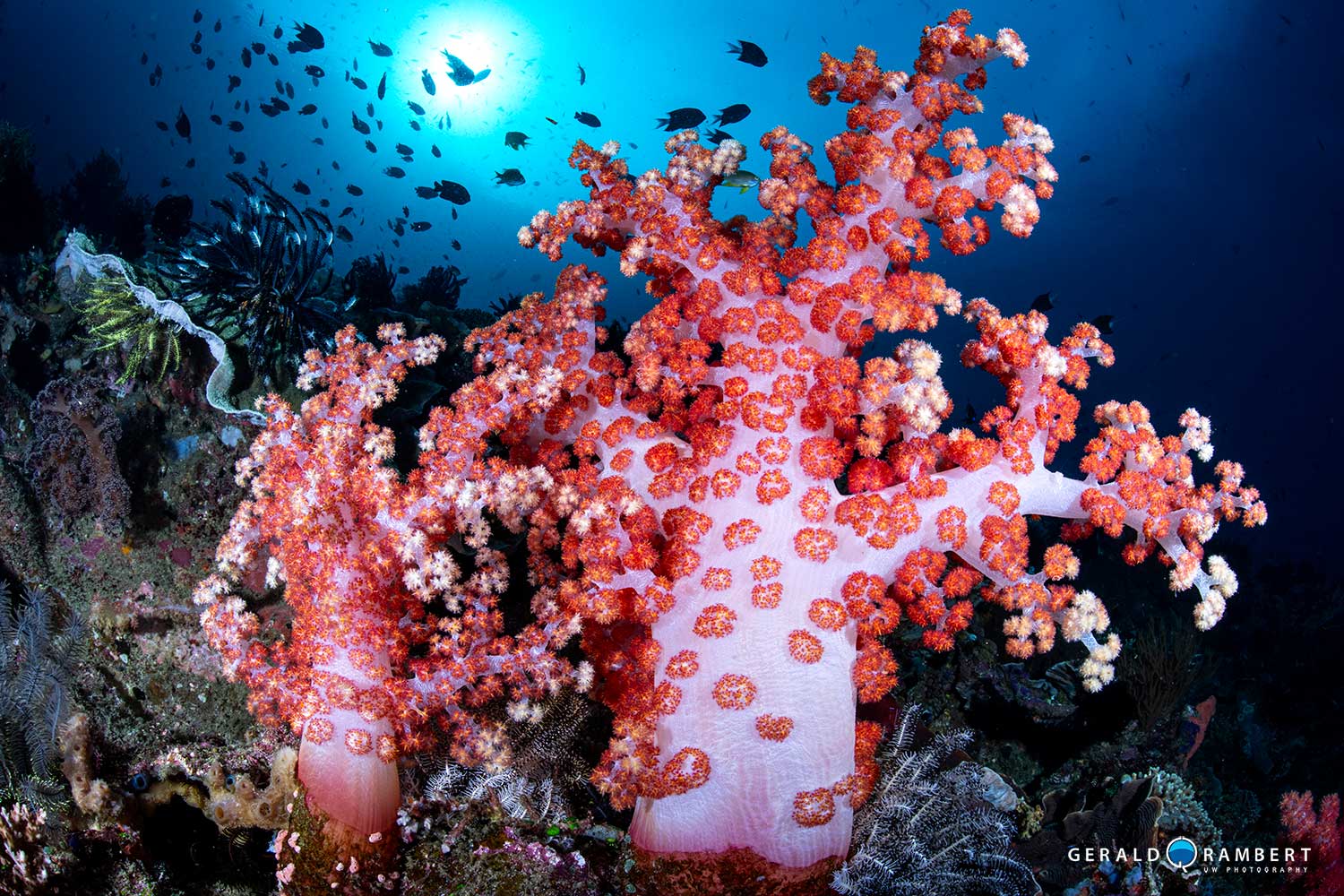
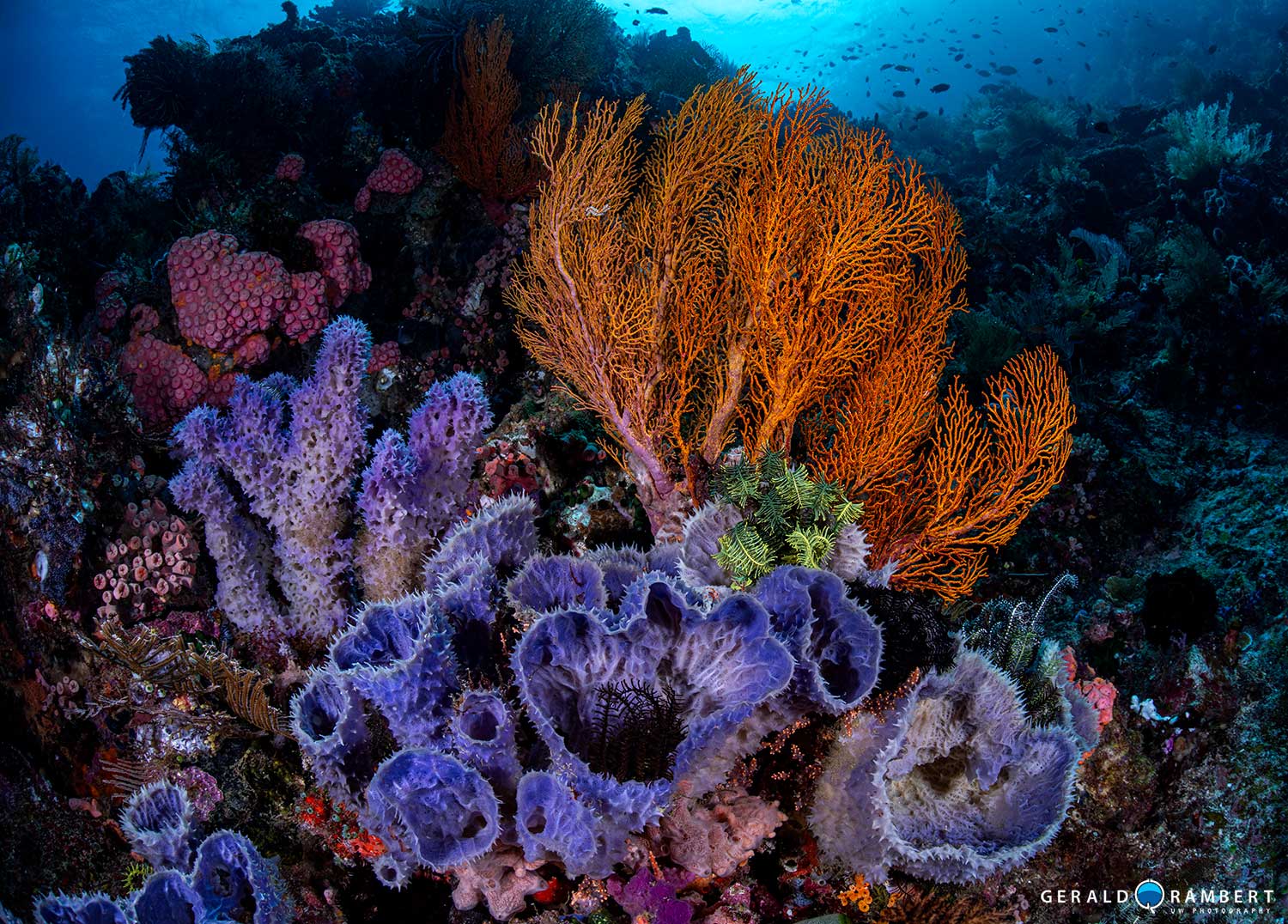
In the south, upwelling currents from the Indian Ocean deliver cooler (low 20s°C/70s°F), nutrient-rich waters. While visibility can be lower, this "planktonic soup" supports an incredible density of life. This is the place for vibrant soft coral walls, invertebrate life, and the famous Manta Alley, a key aggregation site for Giant Manta Rays.Home of the Dragon
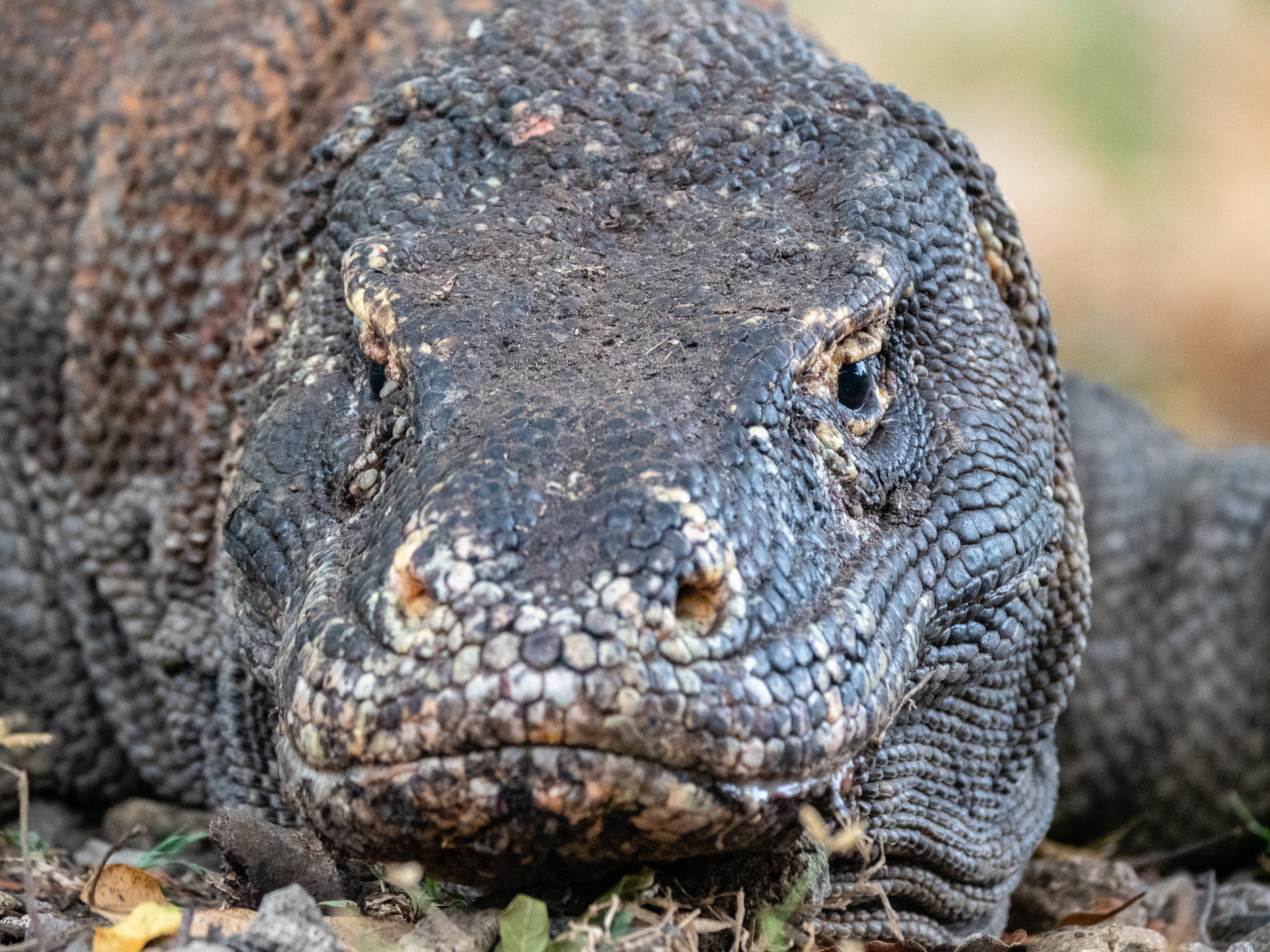
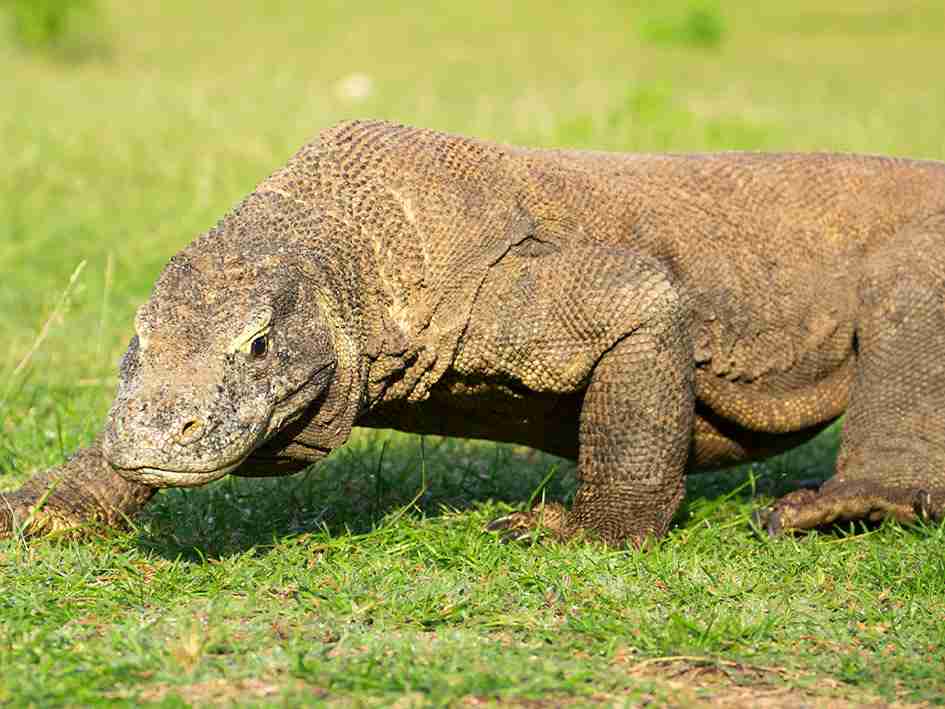
Above the water, the park is the only place on Earth to see the endemic Komodo Dragon in the wild. These prehistoric monitors, the world's largest lizards, can reach up to 3 meters (10 feet) in length. Most liveaboard itineraries include a land tour to Rinca or Komodo Island to witness these legendary creatures safely.
Why Komodo is a Bucket-List Liveaboard Destination
Komodo National Park is frequently voted as one of the top 5 diving destinations in the world. It offers a rare combination of high-voltage action and macro biodiversity that few other places can match.
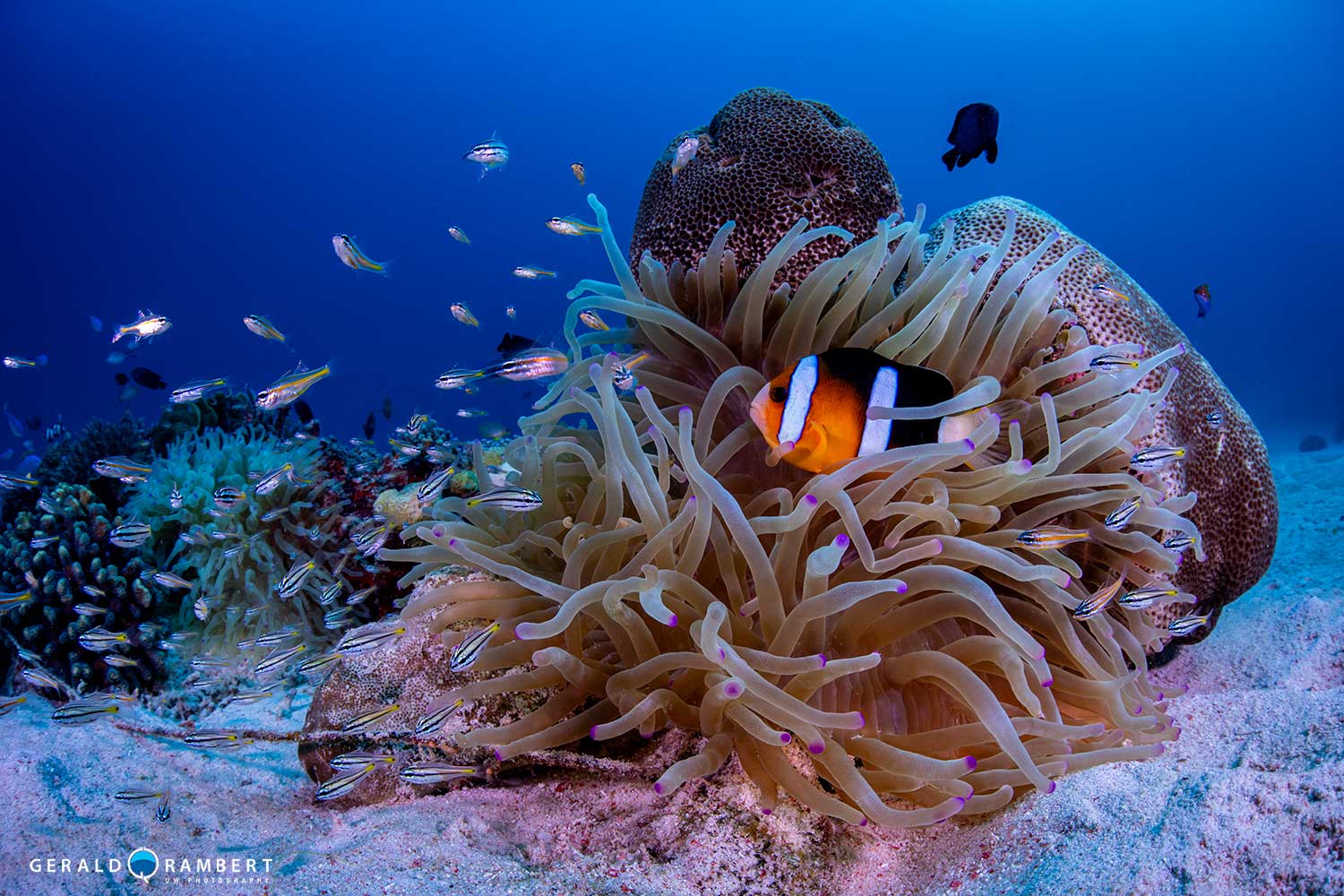
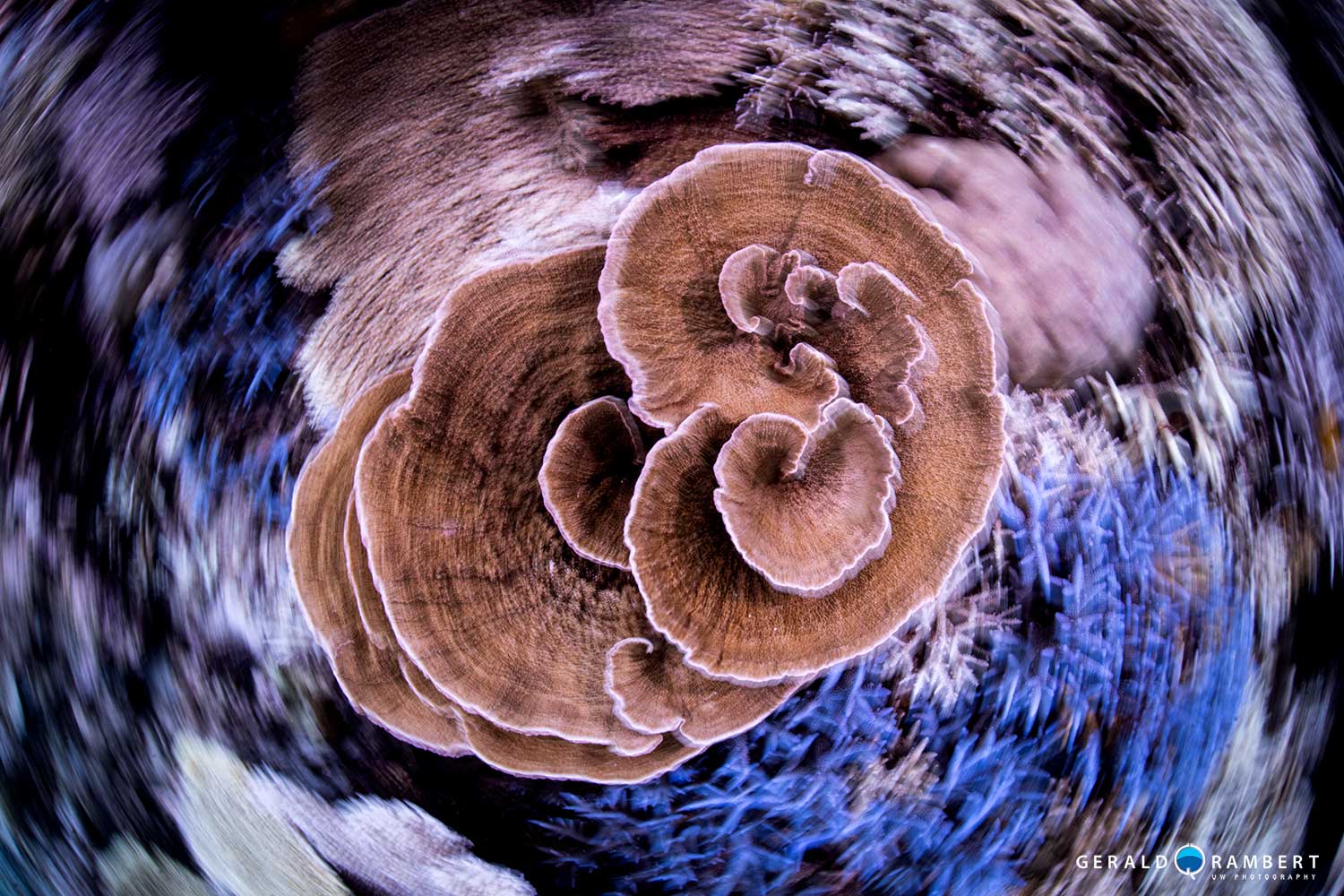
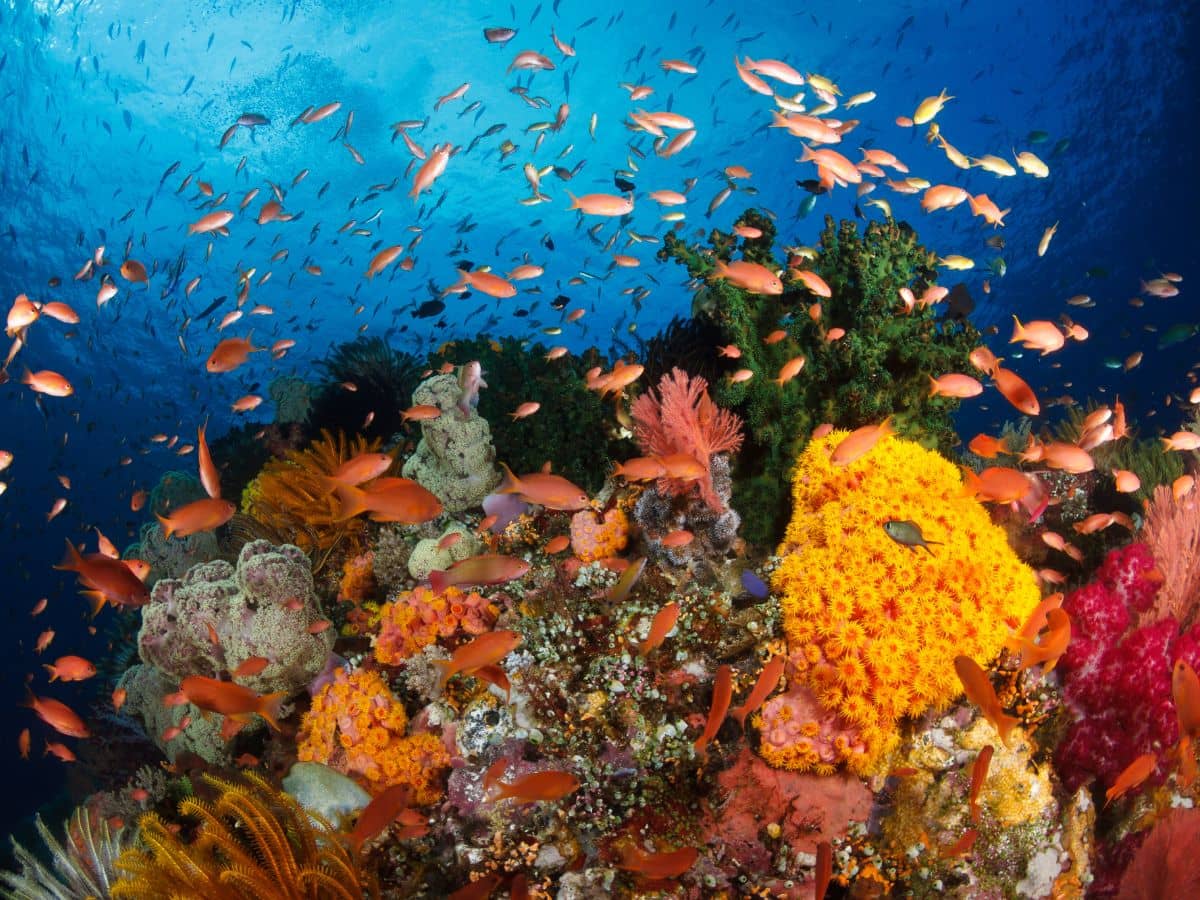
Complete Biodiversity: Situated at the crossroads of the Indian and Pacific Oceans, the park hosts over 1,000 species of fish and 260 types of coral. You get the best of both worlds: massive schools of pelagics and rare critters like the "Ladybug" amphipod.
Big Animal Encounters: It is one of the few places on Earth where you can reliably dive with Manta Rays (both Reef and Oceanic) year-round, alongside Reef Sharks, Turtles, and massive Dogtooth Tuna.
Drift Diving Thrills: The famous Indonesian throughflow currents create exhilarating drift dives that bring the reefs to life, making every dive dynamic and action-packed.
Dragons & Dry Land: The surface intervals are just as prehistoric as the underwater world. Trekking to see the Komodo Dragons is a unique experience integrated into your liveaboard itinerary.
Legendary Komodo Dive Sites: North to South
A Komodo liveaboard is the only way to effectively dive the "Big Three" regions of the park in one trip. Here are the iconic sites you can expect to explore:
Castle Rock (North Komodo)
A submerged pinnacle in the open sea, famous for its crystal-clear water and adrenaline-pumping action. Exposed to strong currents, it attracts massive schools of Fusiliers and Surgeonfish, which in turn bring in the predators: Giant Trevally, Spanish Mackerel, and Grey Reef Sharks. Dolphins are also frequently spotted hunting here.
Batu Bolong (Central Komodo)
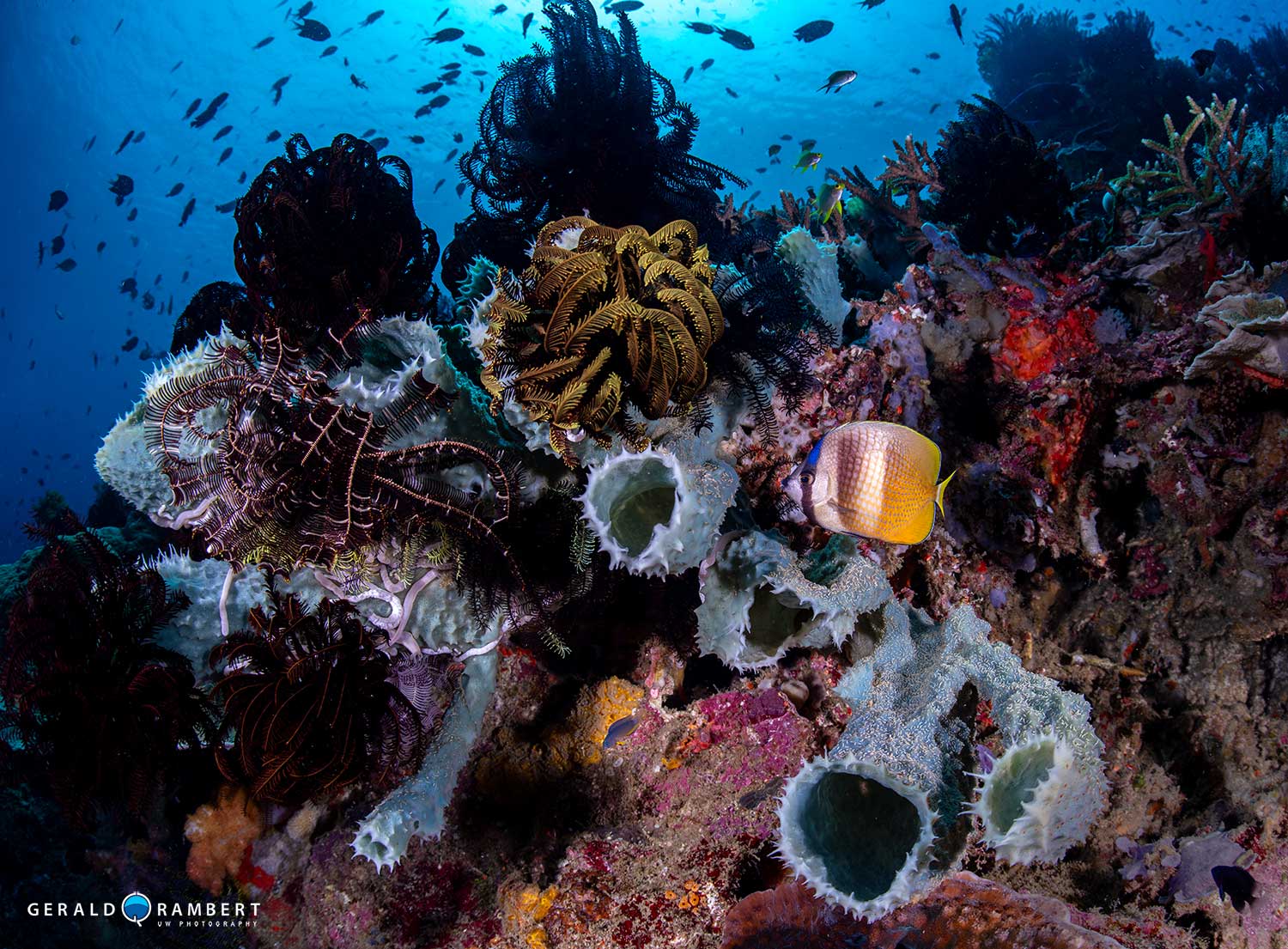
Often cited as one of the best dive sites in the world, this rock pinnacle pierces the surface and drops down into the deep. The "Hollow Rock" is covered in an explosion of hard and soft corals and teems with life, from Napoleons and Whitetip Sharks to Turtles grazing in the shallows. It is diving in an aquarium on steroids.
Manta Alley (South Komodo)
Located at the southern tip of Komodo Island, this site is the primary cleaning station for Manta Rays in the colder waters. It is common to see "trains" of 10 to 20 Mantas circling the rocky islets. The site also features large Groupers and patrolling sharks.
Cannibal Rock (South / Horseshoe Bay)
Don't let the name scare you; it refers to the ravenous appetite of the invertebrate life! This submerged seamount in the nutrient-rich south is a macro photographer's dream. It is blanketed in soft corals and Sea Apples, and hides Frogfish, Pygmy Seahorses, and the endemic Zebra Crab.
Komodo Marine Life: From Giants to Macro
The marine life in Komodo is defined by variety. Depending on whether you are diving the warm North or the cool South, here is what you will encounter:
The Big Stuff (Pelagics)
- Manta Rays: The stars of the show. Reef Mantas are resident, while larger Oceanic Mantas are often seen in the South.
- Sharks: Grey Reef Sharks, Whitetip Reef Sharks, and Blacktip Reef Sharks are common. Hammerheads are occasionally spotted in deep waters.
- Schools: Massive schools of Barracuda, Big-Eye Trevally, and Snapper are a staple of the current-swept pinnacles.
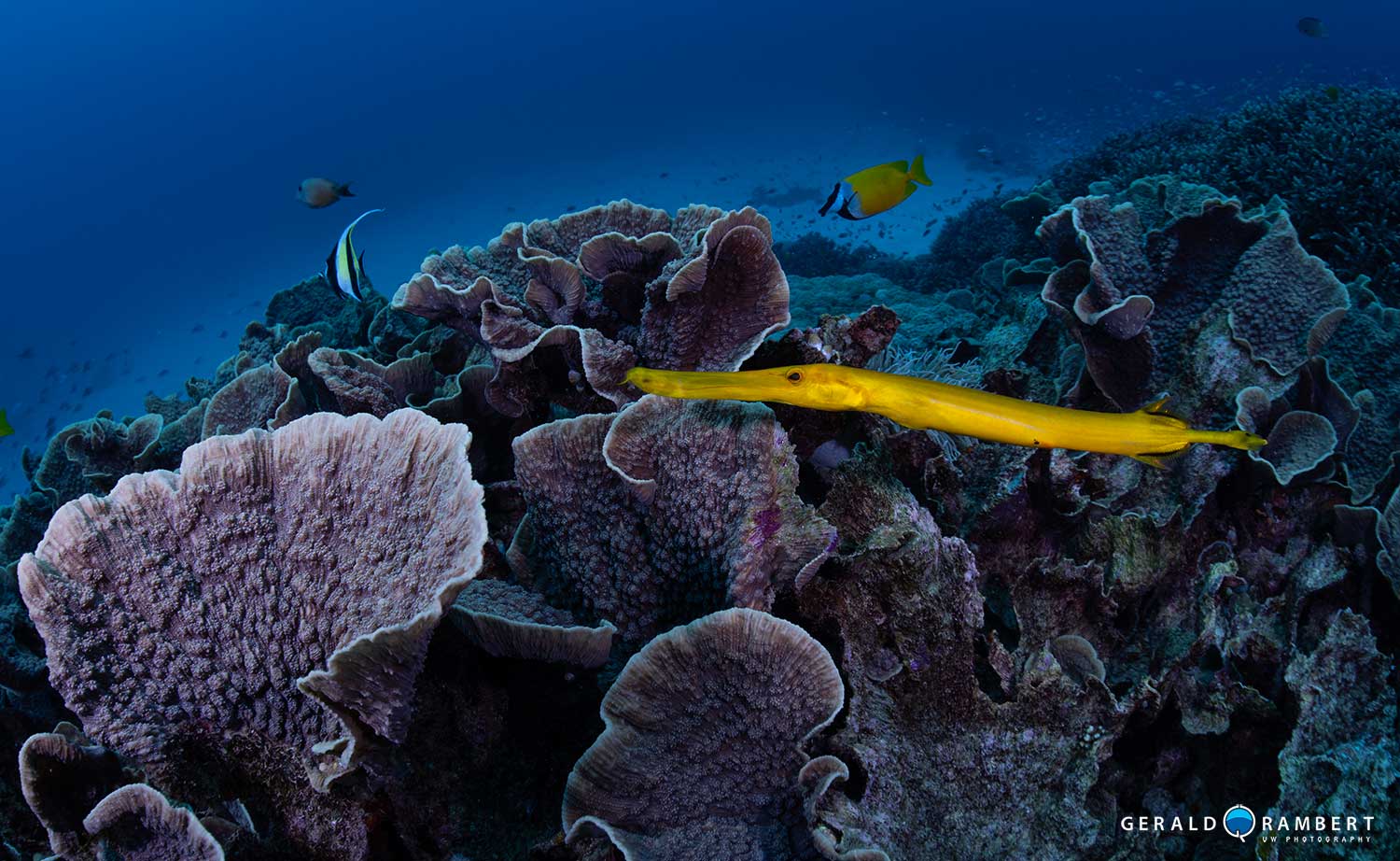
- Others: Napoleon Wrasse, Bumphead Parrotfish, Eagle Rays, and Green/Hawksbill Turtles.
The Small Stuff (Macro)
Komodo is a world-class muck diving destination. Keep your eyes peeled for:
- Pygmy Seahorses: Bargibanti and Denise species found on Gorgonian fans.
- Cephalopods: Wonderpus, Flamboyant Cuttlefish, Blue-Ringed Octopus, and Bobtail Squid.
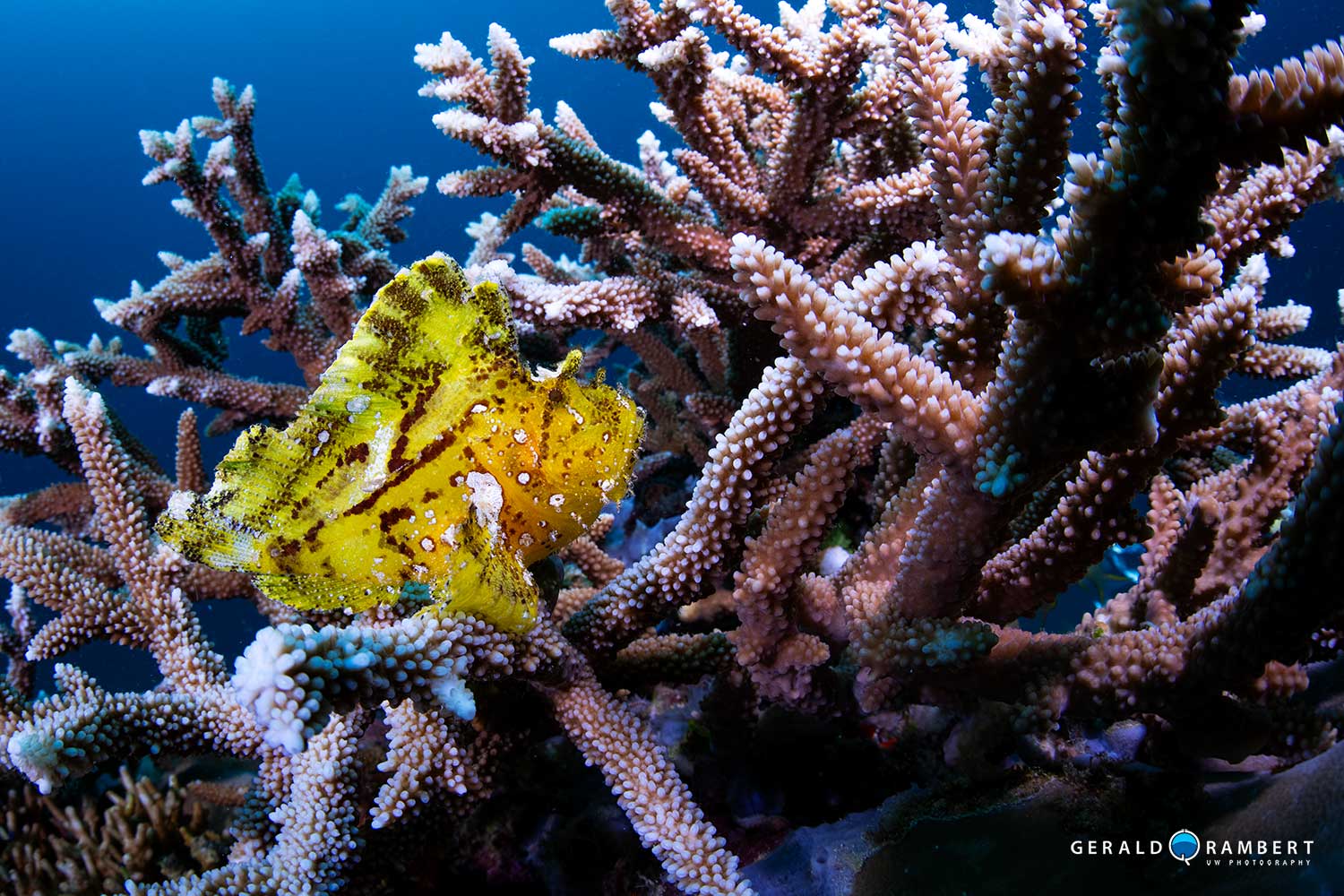
- Rare Critters: Frogfish (Warty, Giant, Painted), Nudibranchs in the thousands, and the endemic "Ladybug" Amphipods.
Komodo through the year
Water and air temperature, visibility and rainfall for every month, with the windows we would book ourselves. Hover or tap a month for the detail.
- Water
- Air
- Visibility
- Rain
Show the monthly data as a table
| Month | Water °C | Air °C | Visibility | Rain | Diving | Notes |
|---|---|---|---|---|---|---|
| Jan | 27–29 °C | 25–32 °C | 10–20 m | 260 mm | Good | Wet season; mantas peak, south sites at their best |
| Feb | 27–29 °C | 25–32 °C | 10–20 m | 230 mm | Possible | Wettest month; mantas at Karang Makassar, plankton-rich water |
| Mar | 27–29 °C | 25–32 °C | 12–22 m | 170 mm | Good | Rain easing, boats return, quiet sites |
| Apr | 27–29 °C | 24–32 °C | 15–25 m | 80 mm | Peak | Dry season starts; warm water north and south |
| May | 26–29 °C | 24–31 °C | 15–30 m | 40 mm | Peak | Excellent visibility, calm seas |
| Jun | 25–28 °C | 23–31 °C | 15–30 m | 15 mm | Peak | South sites cool down (22–24 °C), bring a 5 mm |
| Jul | 24–28 °C | 22–30 °C | 15–30 m | 5 mm | Peak | Peak season; busiest weeks at Batu Bolong and Castle Rock |
| Aug | 24–28 °C | 22–30 °C | 15–30 m | 5 mm | Peak | Strongest trade winds; south swell, cold thermoclines |
| Sep | 25–28 °C | 23–31 °C | 15–30 m | 10 mm | Peak | Fewer boats, still dry, great currents at Shotgun |
| Oct | 26–29 °C | 24–32 °C | 15–25 m | 30 mm | Peak | Water warming again, mola mola sightings possible in the south |
| Nov | 27–29 °C | 25–33 °C | 12–25 m | 90 mm | Good | Shoulder season; first rains, warm and quiet |
| Dec | 27–29 °C | 25–32 °C | 10–22 m | 200 mm | Good | Manta season begins; holiday departures fill early |
Best time to visit Komodo
Best Time to Dive Komodo National Park
To maximize access to all dive sites, the ideal time to visit Komodo is during the shoulder seasons.
Optimal All-Site Access: March to May & September to November These periods offer the best balance, with calmer weather allowing liveaboards to easily navigate both northern and southern sites. South Komodo Peak: Mid-November through January During this time, conditions in the South are generally optimal (warmer and clearer), though some northern sites may be exposed to winds. North Komodo Peak: Mid-May to Early September Southeast winds make some southern sites inaccessible, but this is the prime time for diving the northern sites (Castle Rock, Crystal Rock).How to Get There: Logistics & Visa
Getting to your Komodo liveaboard has never been easier thanks to expanded flight routes.
Airport & Transfers
The gateway to the park is Labuan Bajo (Komodo Airport - Code: LBJ) on the island of Flores.
- Domestic Routes: Daily direct flights are available from Jakarta (CGK) and Denpasar/Bali (DPS).
- International Routes: Direct international flights are now available from Singapore (via Scoot) and Kuala Lumpur, bypassing the need for a Jakarta layover.
- Transfers: Most liveaboard operators provide free pick-up service from LBJ Airport or local hotels to the harbor.
Visa Requirements
Travelers from most countries can enter Indonesia with a Visa on Arrival (VoA). The cost is IDR 500,000 (approx. USD $35). You can pay by credit card or cash upon landing. Ensure your passport is valid for at least 6 months.
Getting to Komodo, and what to know before you go
Ten minutes by car to the harbour; liveaboards embark from Labuan Bajo
Several daily flights to LBJ, about 1 h 15
Direct flights to LBJ, about 2 h 30
Labuan Bajo
- Best season
- Apr–Nov (dry season)
- Off season
- Jan–Feb (wet season; diving continues, some boats pause)
- Typical trip
- 3–7 nights on a liveaboard; day trips from Labuan Bajo
- Experience
- AOW, about 20 logged dives
- Park / marine fee
- Komodo National Park entry and diving fees are charged per person per day (approximately IDR 300,000–400,000, higher at weekends); liveaboards usually collect them on board
- Visa
- Visa on arrival for most nationalities, approximately IDR 500,000, 30 days
- Nitrox
- Available on most liveaboards and larger dive centers
- Currency
- Indonesian rupiah (IDR)
- Language
- Indonesian; English spoken on boats and in dive shops
- Time zone
- UTC+8 (WITA)
- Power
- Type C/F, 230 V
- Reef manta ray
- Komodo dragon (on land)
- Grey reef shark
- White-tip reef shark
- Giant trevally
- Pygmy seahorse
- Frogfish
- Mola mola
| Species | Months | Where |
|---|---|---|
| Reef manta ray | Dec–Feb (peak), year-round | Karang Makassar, Manta Alley, Mawan |
| Mola mola | Jul–Oct | South Komodo, Cannibal Rock area |
| Grey reef shark | Year-round, best Apr–Nov | Castle Rock, Crystal Rock, Shotgun |
| Pygmy seahorse | Year-round | Cannibal Rock, Yellow Wall, Batu Bolong |
| Whale shark | Occasional, Dec–Mar | Open water around Padar and the north |
Seasons are typical, not guaranteed: sightings depend on currents, weather and luck.
Practical information
Essential Practical Information for Komodo Travel
Topside Activity & Komodo Dragons Land tours to see the endemic Komodo Dragons are a highlight on Rinca and Komodo Islands and are included in most liveaboard itineraries between dives. Always follow your guide's instructions closely. Currency & Cash The currency is the Indonesian Rupiah (IDR). It is essential to withdraw sufficient cash in Labuan Bajo, as limited facilities are available in the park. Visa and Passport Visitors from most countries can receive a 30-day Visa on Arrival (VoA). Your passport must be valid for at least six months from the date of entry. Safety & Insurance Due to the currents and remote nature of the diving, evacuation and dive insurance (like DAN) is highly recommended/mandatory for all guests. Be prepared for potential domestic flight delays. Electricity & Plugs Standard is 220 volts with 2 round pin plugs (European C/F). Liveaboards typically provide continuous power, but always bring adapters.Tips & recommendations
Bring a Surface Marker Buoy (SMB): This is mandatory in Komodo due to strong currents and boat traffic. Ensure you know how to deploy it.
Reef Hooks: Essential for "hooking in" at sites like Castle Rock to watch the shark action without exhausting your air fighting the current.
Thermal Protection: Bring layers! We recommend a 3mm long suit for the North, but you might want a 5mm (or a hooded vest layer) for the cooler waters of the South (South Komodo can drop to 19°C/66°F).
Insurance: Dive Evacuation Insurance (DAN or equivalent) is strictly mandatory for all liveaboard guests.
Cash is King: While the boat may take cards, bring Indonesian Rupiah (IDR) for park fees, crew tips, and small purchases in Labuan Bajo.
Liveaboards in Komodo
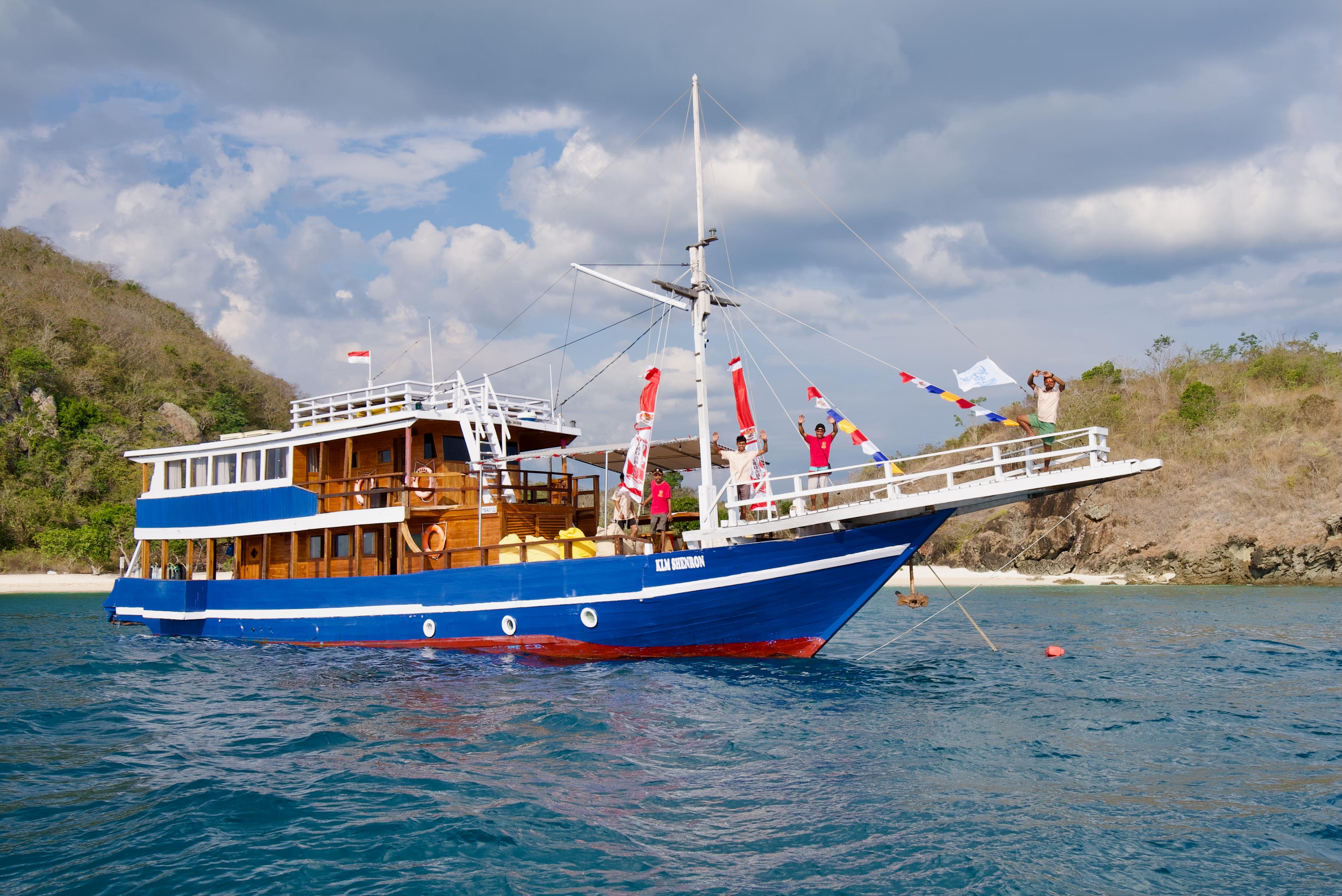 Liveaboard
Shenron
Run by Shenron · dragondivekomodo.com
Upcoming departures
Dates, prices and spots as last reported by each operator. You book on their site — DiveHQ takes no commission.