Introduction to diving Raja Ampat
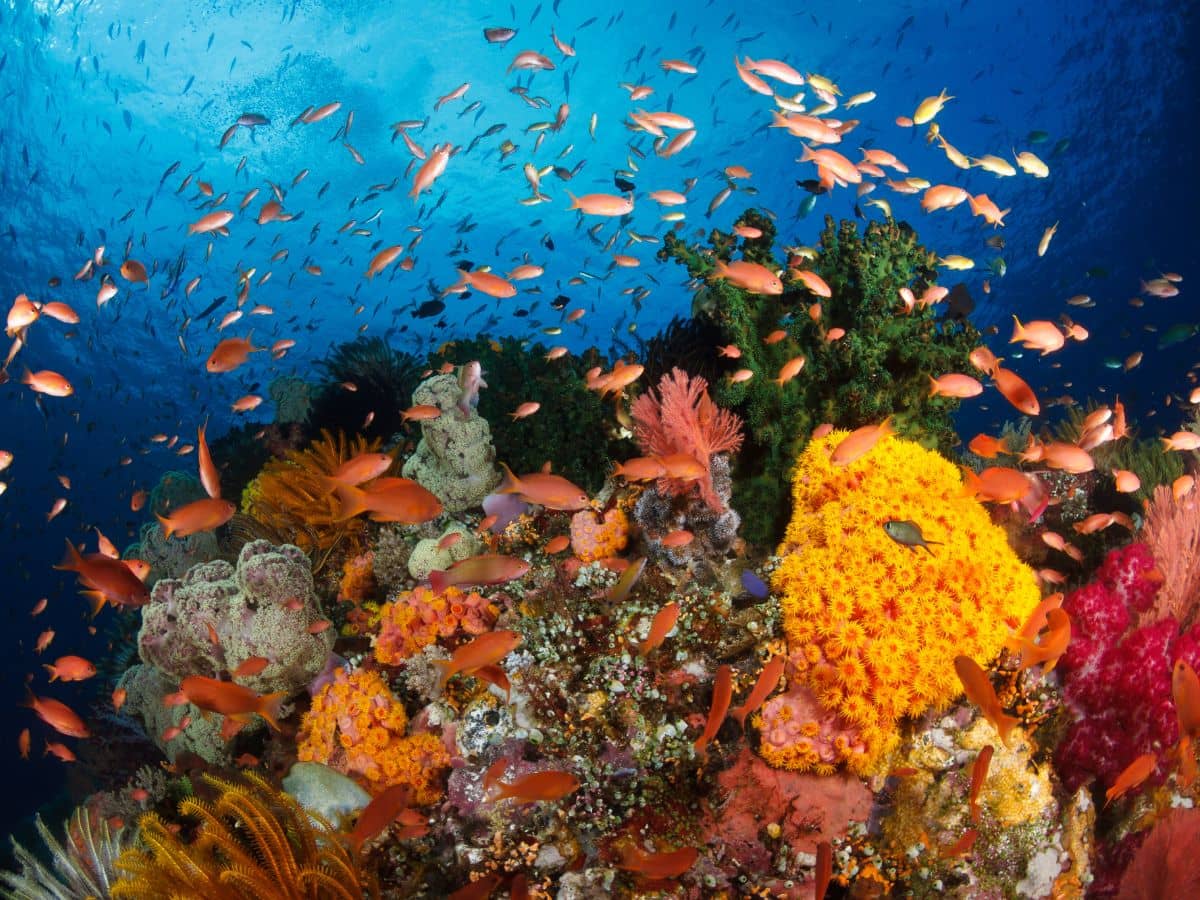
Raja Ampat, "the Four Kings", is a scatter of some 1,500 islands and cays off the Bird's Head Peninsula of West Papua, Indonesia. The archipelago sits where Pacific and Indian Ocean water meets, and the result is the highest recorded reef biodiversity on the planet. Surveys led by Conservation International counted more than 1,500 reef fish species and around 550 hard coral species, roughly three quarters of the world's total. On one dive at Cape Kri in 2012, ichthyologist Gerald Allen logged 374 fish species.
For divers the archipelago divides into four main areas. Dampier Strait, between Waigeo and Batanta, is the busiest and the easiest to reach from Sorong; its current-fed reefs at Cape Kri, Blue Magic and Sardine Reef hold the densest fish schools and the manta cleaning stations. The Fam and Penemu islands to the west offer shallow hard-coral gardens such as Melissa's Garden. Misool, a long overnight sail south, is the soft-coral and sea-fan kingdom, with pinnacles, swim-throughs and the no-take zone of the Misool Marine Reserve. Wayag in the far north is visited mostly for its karst lagoon and lookout.
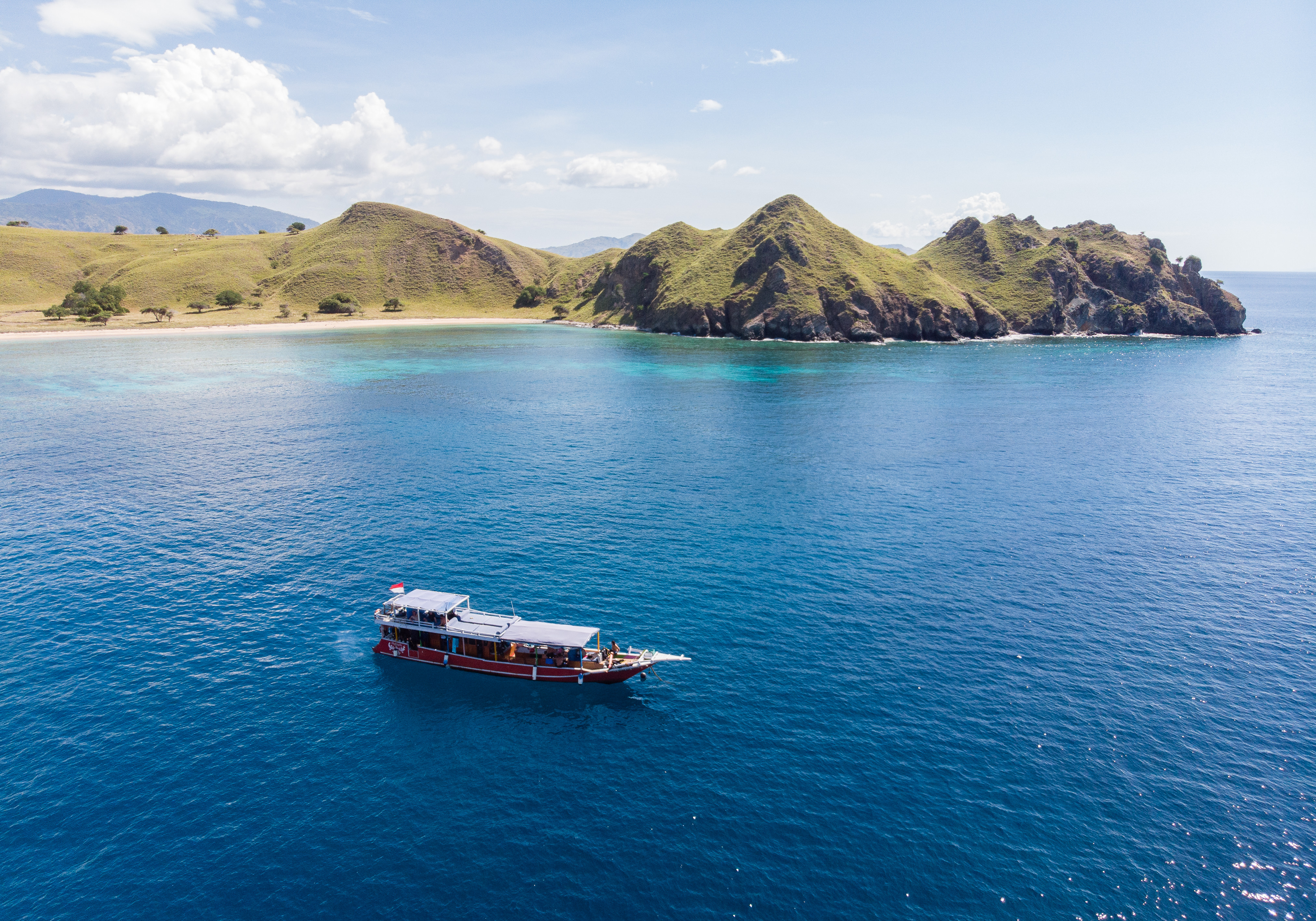
Almost all serious diving here is done from liveaboards, which are the only practical way to combine Dampier, Fam and Misool in one trip. Itineraries of 7 to 12 nights typically embark in Sorong, and boats move south during the October to April season when the southern seas are calm. A handful of resorts on Kri, Gam and Misool islands offer land-based diving for those who prefer a fixed base.
What to expect
Expect current. The reefs are healthy because water moves through them, and reef hooks are standard equipment on most sites. Expect coral cover that looks the way it did before bleaching became the norm elsewhere, and fish in quantities that make counting pointless. Expect visibility that is often moderate rather than crystal, especially in Dampier, because the nutrient-rich water that feeds the reef also carries plankton. Raja Ampat is not primarily a big-animal destination, although mantas are reliable in season; it is a destination for reef density, and for the small things hiding inside it.
Why dive Raja Ampat
Plenty of destinations promise healthy reefs. Raja Ampat is where the numbers back it up, and where a well-planned liveaboard puts the best of it within a single trip.
- Reef biodiversity on record: more than 1,500 fish species and about 75 percent of known hard corals have been documented here, and you notice it on the first dive, in the sheer variety on a single bommie.
- Manta cleaning stations: reef mantas gather at Manta Sandy and oceanic mantas at Blue Magic and Magic Mountain, with sightings reliable from roughly November to April.
- Endemic sharks: the tasselled wobbegong lies under table corals on most Dampier dives, and the Raja Ampat epaulette or "walking" shark is a regular on night dives.
- Misool's soft-coral walls: the southern islands carry sea fans and soft corals in a density few places match, inside a no-take reserve where fish biomass has risen markedly since 2007.
- Macro that rewards patience: Bargibanti, Denise and Pontohi pygmy seahorses live on named sea fans that the guides know individually.
- Scale and quiet: a 10-night itinerary covers three distinct areas, and once away from Dampier you will often have a site to your boat alone.
Raja Ampat dive sites
These are the sites that shape most Raja Ampat itineraries. Current varies with the tide at all of them, and a good cruise director will time each dive to the slack or to the incoming flow.
Cape Kri (Dampier Strait)
The reef point off Kri Island where the record fish count was made. Drop in on the slope, hook in at the point around 20 to 25 m and watch bigeye trevally, barracuda and sweetlips stack up in the current, with blacktip and grey reef sharks passing along the edge. Best on an incoming tide.
Blue Magic (Dampier Strait)
A submerged pinnacle rising to about 7 m in open water south of Mioskon. Oceanic mantas visit a cleaning station on the top from around November to April, and the surrounding schools of fusiliers, jacks and Spanish mackerel are constant. Wobbegongs rest under the plate corals on the shoulder. Current can be strong; a reef hook is standard here.
Sardine Reef (Dampier Strait)
An oval reef named for the volume of small fish that sit in the current on its up-current side, drawing trevally, tuna and reef sharks. It is a busy, mid-depth dive, mostly between 12 and 25 m, and one of the sites where the density of Raja Ampat is most obvious.
Manta Sandy (Arborek, Dampier Strait)
A sandy patch at around 15 m where reef mantas queue at coral bommies to be cleaned. Divers line up behind a row of rocks and stay put; the rules are strict and enforced by rangers, and the mantas keep coming as long as nobody crosses the line. Best from November to April.
Boo Windows (Misool)
Two holes through a rocky islet that frame the blue at about 5 to 10 m, with a soft-coral slope dropping below them. Batfish, sweetlips and schooling fusiliers hold around the arches, and the wall to the south is dense with sea fans and pygmy seahorses. Photogenic and usually gentle.
Magic Mountain (Misool)
Also called Shadow Reef, a seamount on the southern edge of Misool with a top at around 6 m and a ridge running deeper. Oceanic and reef mantas use the cleaning stations together, and grey reef sharks patrol the deep side. Current can be brisk on the ridge.
Wayag (northern Raja Ampat)
The reason boats go to Wayag is the lagoon, a maze of karst islets best seen from the lookout, plus the blacktip nursery in the shallows. The reef dives on the way north are pleasant rather than exceptional, and Wayag is usually a one-day detour on longer itineraries.
Marine life in Raja Ampat
Raja Ampat's reputation rests on reef density rather than open-ocean giants, but it delivers at both ends of the scale in season. The lists below are what divers see on a typical 10-night itinerary covering Dampier Strait and Misool, not a catalogue of everything recorded here.
Pelagics and big animals
- Reef mantas at Manta Sandy and oceanic mantas at Blue Magic and Magic Mountain, reliable from November to April
- Blacktip and grey reef sharks on most current points; whitetips resting under ledges
- Schooling barracuda, bigeye trevally, bumphead parrotfish and Spanish mackerel in Dampier Strait
- Occasional whale sharks, mobula rays and passing dolphins, none of which can be counted on
Reef
- Tasselled wobbegong sharks under table corals, seen on most Dampier dives
- Raja Ampat epaulette (walking) sharks on night dives over shallow reef flats
- Napoleon wrasse, giant sweetlips, and dense schools of fusiliers and snapper
- Green and hawksbill turtles, and dugongs occasionally in seagrass bays
Macro
- Bargibanti, Denise and Pontohi pygmy seahorses on sea fans and halimeda
- Nudibranchs, flatworms and ghost pipefish along Misool's walls
- Mandarin fish at dusk on jetty and rubble sites, and blue-ringed octopus on night dives
Dive conditions in Raja Ampat
Currents: moderate to strong on the Dampier Strait points and the Misool seamounts, and changing with the tide. Most dives are drift or hook-in dives, and a reef hook, a surface marker buoy and good buoyancy control are expected. Sheltered sites exist in every area for gentler dives.
Visibility: 15 to 30 m as a rule, with Dampier often at the lower end because of plankton, and Misool and Wayag clearer. Rain and strong tides can drop it to 10 m for a day.
Temperature: 27 to 30C year-round, with little seasonal swing. A 3 mm suit is enough for most divers; those doing four dives a day often prefer a 5 mm.
Depth: most of the action is between 10 and 30 m; nothing worth seeing requires going deeper.
Experience: Advanced Open Water with 30 or more logged dives is the sensible baseline for a liveaboard, mainly because of the current. Resort-based diving around Kri suits confident Open Water divers.
Raja Ampat through the year
Water and air temperature, visibility and rainfall for every month, with the windows we would book ourselves. Hover or tap a month for the detail.
- Water
- Air
- Visibility
- Rain
Show the monthly data as a table
| Month | Water °C | Air °C | Visibility | Rain | Diving | Notes |
|---|---|---|---|---|---|---|
| Jan | 28–30 °C | 24–31 °C | 15–30 m | 260 mm | Peak | Peak manta season in Dampier and Misool |
| Feb | 28–30 °C | 24–31 °C | 15–30 m | 240 mm | Peak | Peak season, calm seas across the archipelago |
| Mar | 28–30 °C | 24–31 °C | 15–30 m | 250 mm | Peak | Mantas still reliable at the cleaning stations |
| Apr | 28–30 °C | 24–31 °C | 15–25 m | 260 mm | Good | Shoulder month, mantas thin out late in the month |
| May | 28–30 °C | 24–31 °C | 15–25 m | 300 mm | Good | Last liveaboard departures before the monsoon |
| Jun | 27–29 °C | 24–30 °C | 10–20 m | 320 mm | Possible | Southeast monsoon, swell in Misool, boats reposition |
| Jul | 27–29 °C | 24–30 °C | 10–20 m | 300 mm | Possible | Dampier Strait diveable from resorts only |
| Aug | 27–29 °C | 24–30 °C | 10–20 m | 260 mm | Possible | Windy, few liveaboards in the area |
| Sep | 27–29 °C | 24–31 °C | 15–25 m | 220 mm | Possible | Seas settle towards the end of the month |
| Oct | 28–30 °C | 24–31 °C | 15–30 m | 200 mm | Good | Season opens, good visibility in Misool |
| Nov | 28–30 °C | 24–31 °C | 15–30 m | 210 mm | Peak | First reliable mantas at Manta Sandy and Blue Magic |
| Dec | 28–30 °C | 24–31 °C | 15–30 m | 250 mm | Peak | Peak season, Christmas departures sell out early |
Best time to visit Raja Ampat
Raja Ampat can be dived all year, but the liveaboard calendar is shaped by the two monsoons, and October to April is the main season. Water temperature barely changes; what changes is wind, swell and the presence of mantas.
- October to December: the season opens with calm seas, good visibility in Misool and the first manta sightings in Dampier. Boats fill early for the Christmas weeks.
- January to March: peak season and the most reliable manta months at Manta Sandy, Blue Magic and Magic Mountain. Some rain, but seas stay workable across the whole archipelago.
- April to May: a shoulder period with fewer boats, still-good conditions and mantas thinning out by late April.
- June to September: the southeast monsoon brings wind and swell to Misool and the open crossings; many liveaboards move to Komodo. Dampier Strait remains diveable from land-based resorts, with fewer divers and lower prices, but expect reduced visibility on windy days.
Getting to Raja Ampat
The gateway is Sorong, Domine Eduard Osok Airport (SOQ), on the Bird's Head Peninsula of West Papua. There are no international flights; connect through Jakarta (CGK), Makassar (UPG) or Manado (MDC). Direct flights from Jakarta take about four hours and often leave around midnight, arriving in Sorong at dawn, which fits most liveaboard embarkation times. Bali (DPS) to Sorong usually involves a change in Makassar.
Liveaboards embark and disembark at Sorong harbour, a 15-minute drive from the airport, and most operators include the transfer. Land-based resorts in Dampier Strait are reached by the public ferry from Sorong to Waisai on Waigeo, about two hours, followed by a resort speedboat; some resorts run their own boat straight from Sorong.
Most nationalities can obtain a Visa on Arrival at the first international airport (30 days, extendable once, approximately IDR 500,000), or an e-VOA in advance. Check your own eligibility before travel. Allow a spare night in Sorong on the way in if your international connection is tight; missing a liveaboard departure is expensive, and Sorong has adequate hotels near the airport.
Baggage allowances on domestic flights are usually 20 kg; pre-book extra weight for dive gear, and keep regulators and computers in hand luggage.
Getting to Raja Ampat, and what to know before you go
Liveaboards embark at Sorong harbour, about 15 minutes from the airport; public ferry to Waisai about 2 hours
Direct flights to SOQ, about 4 hours, often overnight
Connections to SOQ from Bali and Jakarta
Flights to SOQ, useful when combining with North Sulawesi
Sorong · Waisai
- Best season
- Oct–Apr
- Off season
- Jun–Sep (southeast monsoon, swell in Misool, most liveaboards reposition to Komodo)
- Typical trip
- 7–12 nights
- Experience
- AOW, about 30 logged dives
- Park / marine fee
- Approximately IDR 1,000,000 marine park tag for international visitors, valid 12 months (approximately USD 60); confirm current amount
- Visa
- Visa on Arrival or e-VOA for most nationalities, approximately IDR 500,000 (about USD 35), 30 days, extendable once
- Nitrox
- Available on most liveaboards, sometimes included, often as a paid extra
- Currency
- Indonesian rupiah (IDR)
- Language
- Indonesian; English spoken on boats and in resorts
- Time zone
- UTC+9 (WIT)
- Power
- Type C/F, 230 V
- Reef manta ray
- Oceanic manta ray
- Tasselled wobbegong shark
- Epaulette (walking) shark
- Pygmy seahorse
- Blacktip reef shark
- Barracuda schools
- Bumphead parrotfish
| Species | Months | Where |
|---|---|---|
| Reef manta ray | Nov–Apr | Manta Sandy, Manta Ridge (Arborek, Dampier Strait) |
| Oceanic manta ray | Nov–Apr | Blue Magic, Magic Mountain |
| Tasselled wobbegong shark | Year-round | Under table corals on most Dampier Strait sites |
| Epaulette (walking) shark | Year-round | Night dives on shallow reef flats, Kri and Gam |
| Pygmy seahorse | Year-round | Sea fans on Misool walls and Dampier slopes |
Seasons are typical, not guaranteed: sightings depend on currents, weather and luck.
Practical information
Marine park fee: all visitors must buy the Raja Ampat environmental services tag, approximately IDR 1,000,000 for international visitors (less for Indonesian nationals), valid for 12 months. It is issued in Sorong or Waisai, usually arranged by your operator; carry it on the boat, as rangers check it. Confirm the current amount before you travel, as it has changed in recent years.
Money: the currency is the Indonesian rupiah. Sorong has ATMs and card payment at larger hotels, but bring cash for park fees, crew tips and village purchases. Liveaboards generally accept cards for onboard extras, sometimes with a surcharge.
Nitrox: offered on most liveaboards, sometimes included and sometimes as an extra, and worthwhile with four dives a day at 20 to 30 m.
Insurance: dive travel insurance with evacuation cover is essential. Recompression chambers exist in Sorong and Waisai; confirm their current status with your operator and dive conservatively.
Mains power is 230 V with type C and F plugs. Indonesian is the national language; guides and cruise directors speak English.
Tips & recommendations
- Bring a reef hook and an SMB: both are used on most Dampier and Misool dives, and boats do not always have spares in good condition.
- Book the season, not the month: boats for January to March sell out a year ahead; October and April offer the same reefs with more choice of cabins.
- Choose an itinerary by area: a 7-night trip covers Dampier and Fam; you need 10 to 12 nights to add Misool without rushing the crossing.
- Arrive a day early: Jakarta to Sorong flights land at dawn and delays are common; a night in Sorong protects your embarkation.
- Follow the manta rules: at Manta Sandy stay behind the rock line and keep your fins off the sand; rangers will end the dive for a group that does not.
- Pack for humidity: silica gel for cameras, a rash guard for the sun on the tender, and a light layer for early-morning briefings.
- Carry small rupiah notes: for the village visit at Arborek, sundowner stalls and the crew tip envelope at the end of the trip.