Introduction to diving Alor
Alor sits at the far eastern end of the Lesser Sunda islands, roughly 1,000 km east of Bali, where the island chain breaks up into the volcanic peaks of Pantar, Pura, Ternate and Alor itself. The Pantar Strait between them is a deep channel that funnels water between the Banda Sea and the Savu Sea. That flow brings cold, nutrient-rich water up from depth, and with it the density of fish and the health of hard coral that make the strait worth the long journey.
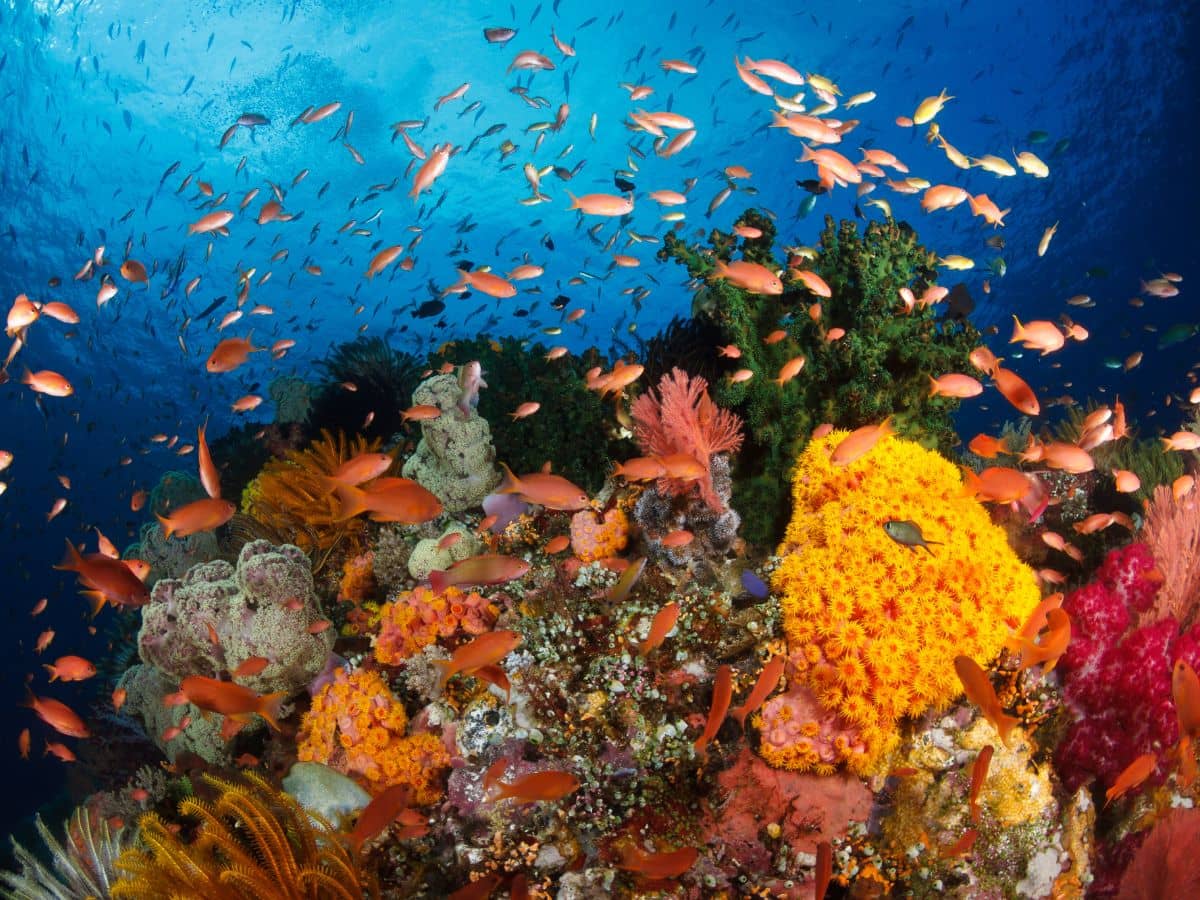
The diving falls into two distinct halves. In the strait, the sites are walls, pinnacles and current points off Pura and Ternate islands, with schools of jacks and fusiliers, resident reef sharks, anemone fields so dense they look like carpet, and the occasional thresher shark, hammerhead or sunfish rising from the deep water. In the sheltered bays of Kalabahi and Beangabang, the diving is muck: black volcanic sand, scattered debris and seagrass that hold Rhinopias scorpionfish, frogfish, ghost pipefish, mimic and wonderpus octopus, and a cast of nudibranchs that keep macro photographers busy for days.
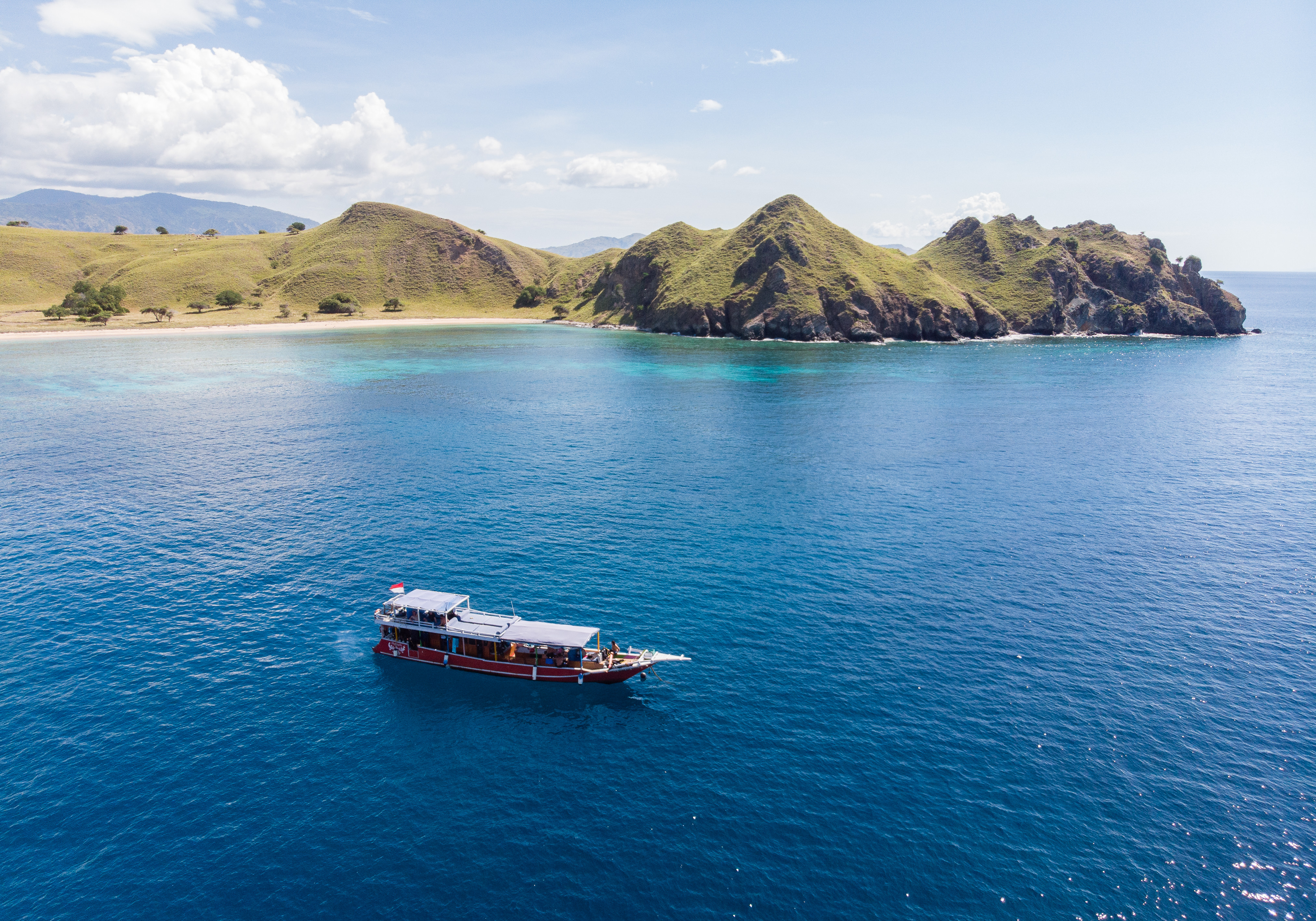
Alor has never been developed at the scale of Komodo or Raja Ampat. A handful of small dive resorts operate around Kalabahi and on Kepa island, and liveaboards call on their way between Komodo, Maumere and the Banda Sea, usually for two to four days. On many sites you will be the only boat, and the villages along the strait still fish from dugout canoes.
What to expect
Expect cold. Thermoclines in the strait can drop the temperature below 20C in the space of a few metres, especially from July to September, and a 5 mm suit with a hood is not excessive. Expect current, sometimes strong and changing quickly, and dive plans built around the tide tables. Expect visibility that swings between crystal in the strait and a few metres in the muck bays. And expect to hear whales through the hull in the migration months, when sperm whales, pilot whales and occasionally blue whales pass through the strait.
Why dive Alor
Alor is not the easiest Indonesian destination to reach, and that is a large part of why it still delivers what it does. The reasons to make the effort are specific.
- Two kinds of diving in one place: current-fed pinnacles and walls in the Pantar Strait in the morning, black-sand muck in Kalabahi Bay in the afternoon, without moving the boat very far.
- Rhinopias and rare critters: weedy and paddle-flap scorpionfish are found reliably in the muck bays, alongside frogfish, mimic octopus, wonderpus, flamboyant cuttlefish and ghost pipefish.
- Anemone fields: Clown Valley and neighbouring slopes carry anemones and clownfish in a density that is hard to find anywhere else in Indonesia.
- Deep-water visitors: thresher sharks, hammerheads and sunfish come up from the cold water in the strait; not guaranteed, but seen often enough to keep divers looking into the blue.
- Whales and dolphins: the Pantar and Ombai straits are a cetacean corridor, with dolphins on most crossings and whales frequently seen from the boat in April to May and October to November.
- Almost nobody else: a few resorts and a handful of liveaboards share the area, and the reefs show it in intact coral and unbothered fish.
Alor dive sites
Most of Alor's named sites lie in the Pantar Strait around Pura and Ternate islands, a short boat ride from Kalabahi, with the muck sites in the bays on either side. Guides time the strait dives to slack water; the muck sites can be dived whenever the light is right.
Kal's Dream (Pantar Strait)
The signature site: a submerged pinnacle in open water off Pura island, swept by current on both tides. Hook in on the ridge at 20 to 30 m and watch schools of bigeye trevally, rainbow runners and barracuda pass, with grey reef sharks patrolling the deep side and the occasional hammerhead or thresher below. For experienced divers only, and only at slack.
Clown Valley (Pura Island)
A gentle slope from 5 to 25 m carpeted with anemones and their clownfish, thousands of them, interrupted by table corals and sea fans. It is an easy dive and a memorable one, and works well as a check dive or a between-currents breather.
The Cathedral (Pantar Strait)
A wall cut by overhangs and a cave-like recess that gives the site its name, with soft corals and fans in the shade and schooling fish along the edge. Light beams through the openings in the late morning. Current is usually moderate, and the dive suits anyone comfortable on a wall.
Babylon (Pantar Strait)
A current point with a sloping reef and a rubble plateau where sharks, Napoleon wrasse and schools of surgeonfish and fusiliers gather in the flow. When the current runs it is a drift with a reef hook; when it eases, the plateau is worth combing for macro.
Mucky Mosque (Kalabahi Bay)
Named for the mosque above the beach, this black-sand slope in Kalabahi Bay is the muck site guides go to first for Rhinopias, frogfish, ghost pipefish and unusual octopus. Depth is 5 to 25 m, current is negligible and visibility is often poor, which is entirely beside the point.
Torpedo Alley (Beangabang Bay, Pantar)
A volcanic black-sand bay on the east coast of Pantar, named for the torpedo rays that bury themselves in the sand. Devilfish, stargazers, snake eels, seahorses and flamboyant cuttlefish appear on most dives, and night dives here are exceptional for bobbit worms and crustaceans.
Marine life in Alor
Alor's marine life reflects its geography: cold, deep water in the strait brings pelagic visitors and dense fish schools, while the volcanic sand bays hold a critter list that rivals Lembeh's. Guides know both halves well.
Pelagics and big animals
- Thresher sharks and scalloped hammerheads at deep sites in the strait, seen often enough to hope for but never promised
- Ocean sunfish (mola) in the coldest months, usually July to September
- Sperm whales, pilot whales and occasionally blue whales passing through the strait in April to May and October to November; dolphins on most crossings
- Grey and whitetip reef sharks, schooling bigeye trevally, barracuda and rainbow runners on the current points
Reef
- Anemone fields with several clownfish species at Clown Valley
- Napoleon wrasse, bumphead parrotfish and large schools of surgeonfish and fusiliers
- Healthy hard coral on the walls and slopes of Pura and Ternate, with sea fans in the shade
Macro
- Weedy and paddle-flap Rhinopias in Kalabahi Bay, the main draw for macro photographers
- Frogfish, ghost pipefish, seahorses and pipefish on the black sand
- Mimic octopus, wonderpus, blue-ringed octopus and flamboyant cuttlefish
- Nudibranchs, stargazers, snake eels and bobbit worms on night dives
Dive conditions in Alor
Currents: strong and sometimes unpredictable in the Pantar Strait, with down-currents possible on the exposed pinnacles. Kal's Dream and Babylon are dived only at slack water and only with experienced groups. The muck bays have little or no current.
Visibility: 15 to 30 m in the strait, often clearer in the cold months, and anywhere from 5 to 15 m in the muck bays.
Temperature: 24 to 28C at the surface, warmest from December to April. Thermoclines in the strait can drop the water below 20C for part of a dive, most noticeably from July to September. A 5 mm suit is the sensible choice, with a hood or hooded vest for the strait; a 3 mm is adequate in the bays.
Depth: most dives sit between 10 and 30 m; the pinnacles and thresher sightings tend to be deeper.
Experience: Open Water divers can enjoy the muck bays and sheltered slopes with a guide. The strait's current sites call for Advanced Open Water, drift experience and comfort with a reef hook and surface marker buoy.
Alor through the year
Water and air temperature, visibility and rainfall for every month, with the windows we would book ourselves. Hover or tap a month for the detail.
- Water
- Air
- Visibility
- Rain
Show the monthly data as a table
| Month | Water °C | Air °C | Visibility | Rain | Diving | Notes |
|---|---|---|---|---|---|---|
| Jan | 27–28 °C | 24–32 °C | 10–20 m | 250 mm | Possible | Wet season, rough crossings, resorts only |
| Feb | 27–28 °C | 24–32 °C | 10–20 m | 230 mm | Possible | Rain and wind, lowest visibility of the year |
| Mar | 27–28 °C | 24–32 °C | 15–25 m | 180 mm | Good | Season opens, warm water, seas settling |
| Apr | 26–28 °C | 24–32 °C | 15–25 m | 90 mm | Good | Whales begin passing through the strait |
| May | 26–27 °C | 23–31 °C | 15–30 m | 40 mm | Peak | Dry season, whale passage, first crossings arrive |
| Jun | 25–27 °C | 22–30 °C | 15–30 m | 15 mm | Peak | Cooling water, thermoclines start in the strait |
| Jul | 24–26 °C | 22–30 °C | 20–30 m | 5 mm | Peak | Coldest water, best visibility, sunfish possible |
| Aug | 24–26 °C | 22–30 °C | 20–30 m | 5 mm | Peak | Peak liveaboard traffic on Komodo to Alor routes |
| Sep | 24–26 °C | 22–31 °C | 20–30 m | 5 mm | Peak | Cold thermoclines, sunfish still possible |
| Oct | 25–27 °C | 23–32 °C | 15–30 m | 30 mm | Peak | Water warming, whales return, Banda boats pass |
| Nov | 26–28 °C | 24–32 °C | 15–25 m | 90 mm | Good | Last calm month, whale passage continues |
| Dec | 27–28 °C | 24–32 °C | 10–20 m | 200 mm | Possible | Wet season begins, resorts only |
Best time to visit Alor
Alor is dived from March to November, with the dry season from April to October giving the calmest seas and clearest water. The wet season, December to February, brings rain and rougher crossings, and most liveaboards are elsewhere.
- March to May: the season opens with warm water, good visibility and the first whale passage through the strait in April and May. Fewer boats than later in the year.
- June to September: the dry season proper, with the coldest water and the strongest thermoclines. Sunfish sightings peak, visibility in the strait is at its best and the muck bays are calm. This is when most liveaboards pass through on Komodo to Alor or Alor to Banda routes.
- October to November: water warms again, seas stay calm, and whales move back through the strait. Late-season boats heading to the Banda Sea often add Alor days.
- December to February: possible from the resorts on calmer days, but rain, wind and lower visibility make it the least reliable window.
Getting to Alor
The island's airport is Mali Airport in Kalabahi (ARD), served by small propeller aircraft from Kupang (KOE) on Timor, about an hour's flight. Kupang connects to Bali (DPS), Jakarta (CGK) and Surabaya (SUB), so most international visitors fly into Bali, overnight or connect in Kupang, and reach Kalabahi the following morning. Schedules on the Kupang to Alor leg change often and can be cancelled in bad weather, so build a buffer day into the plan.
Resort guests are collected at the airport and driven to Kalabahi, then taken by boat to the resorts on Kepa island or along the strait, usually within an hour. A slow ferry also runs from Kupang to Kalabahi, taking most of a day, which suits those with time rather than luggage.
Liveaboards rarely start in Alor. The usual pattern is a crossing that embarks in Labuan Bajo (LBJ) for Komodo and ends in Maumere (MOF) or Kalabahi, or a Banda Sea route between Maumere and Ambon (AMQ) that spends its first days in the strait. Maumere is reached from Bali on daily flights.
Most nationalities can obtain a Visa on Arrival or an e-VOA for 30 days, extendable once, at approximately IDR 500,000; check eligibility for your passport. Domestic baggage allowances are 20 kg on most carriers and can be lower on the propeller flights to Kalabahi, so pre-book extra weight for dive gear.
Getting to Alor, and what to know before you go
Resort pickup at the airport, then boat to Kepa island or along the strait, usually under an hour
Propeller flight to ARD, about 1 hour; schedules change often
Flights to KOE, about 2 hours, then connect to ARD; also flights to MOF for liveaboards
Liveaboard embarkation or disembarkation for Komodo to Alor and Alor to Banda crossings
Kalabahi · Maumere · Labuan Bajo
- Best season
- May–Oct
- Off season
- Dec–Feb (wet season, rain and rough seas, resorts only)
- Typical trip
- 2–4 nights on a crossing; 5–7 nights at a resort
- Experience
- OW, about 20 logged dives
- Park / marine fee
- No destination-wide park tag; small local reef contributions of a few tens of thousands of rupiah per diver per day may be collected
- Visa
- Visa on Arrival or e-VOA for most nationalities, approximately IDR 500,000 (about USD 35), 30 days, extendable once
- Nitrox
- Available on most liveaboards and some resorts, usually as a paid extra
- Currency
- Indonesian rupiah (IDR)
- Language
- Indonesian; English spoken at resorts and on liveaboards
- Time zone
- UTC+8 (WITA)
- Power
- Type C/F, 230 V
- Rhinopias scorpionfish
- Thresher shark
- Ocean sunfish (mola)
- Mimic octopus
- Frogfish
- Clownfish and anemone fields
- Sperm whale
- Dolphins
| Species | Months | Where |
|---|---|---|
| Thresher shark | Year-round, most often Jun–Oct | Deep sites in the Pantar Strait, Kal's Dream |
| Ocean sunfish (mola) | Jul–Sep | Cold-water sites in the Pantar Strait |
| Sperm whale and pilot whale | Apr–May, Oct–Nov | Pantar and Ombai straits, seen from the boat |
| Rhinopias scorpionfish | Year-round | Mucky Mosque and other Kalabahi Bay muck sites |
| Dolphins | Year-round | Pantar Strait crossings |
Seasons are typical, not guaranteed: sightings depend on currents, weather and luck.
Practical information
Fees and permits: Alor has no equivalent of the Raja Ampat or Komodo park tag. Parts of the Alor and Pantar waters form a regional marine conservation area, and some villages or resorts collect a small reef contribution, usually a few tens of thousands of rupiah per diver per day; ask your operator what is included.
Money: the currency is the Indonesian rupiah. Kalabahi has a few ATMs that do not always work with foreign cards, and card payment is rare outside the resorts, so bring enough cash for tips, extras and local purchases.
Nitrox: available on most liveaboards and at some resorts, and useful for repetitive deep dives in the strait. Confirm before booking if it matters to you.
Insurance: dive insurance with evacuation cover is essential. There is no recompression chamber on Alor; the nearest facilities are several flights away, so dive conservatively.
Power is 230 V with type C and F plugs. Indonesian is the national language, and English is spoken at the resorts and on liveaboards.
Tips & recommendations
- Bring a hood: the thermoclines in the strait are real, and a hooded vest under a 5 mm suit makes the difference between three dives a day and two.
- Build in a buffer day: the Kupang to Kalabahi flight is small, weather-dependent and sometimes cancelled; do not connect it directly to an international departure.
- Pack macro and wide-angle: Alor is one of the few places where both lenses get used on the same day; a muck dive after a strait dive is the standard pattern.
- Carry a reef hook and SMB: the pinnacles are dived on the hook, and drifting off a site in the strait means a long swim without a marker.
- Combine it with a crossing: Alor on its own is a resort trip; on a liveaboard it works best as part of a Komodo to Alor or Alor to Banda itinerary.
- Look up between dives: whales and dolphins are seen from the boat in the strait, most often in April to May and October to November.
- Bring cash: ATMs in Kalabahi are unreliable for foreign cards, and there is little to buy on credit.