Introduction to diving the Banda Sea
The Banda Sea is a deep basin in the Maluku province of eastern Indonesia, more than 5,000 m deep in places and ringed by volcanoes. At its centre lie the Banda Islands, the original Spice Islands, where nutmeg once made Banda Neira one of the most contested pieces of ground on earth; the Dutch traded Manhattan for Run Island in 1667. Today the islands are quiet, with a small town, a fort, and reefs that few divers have seen.
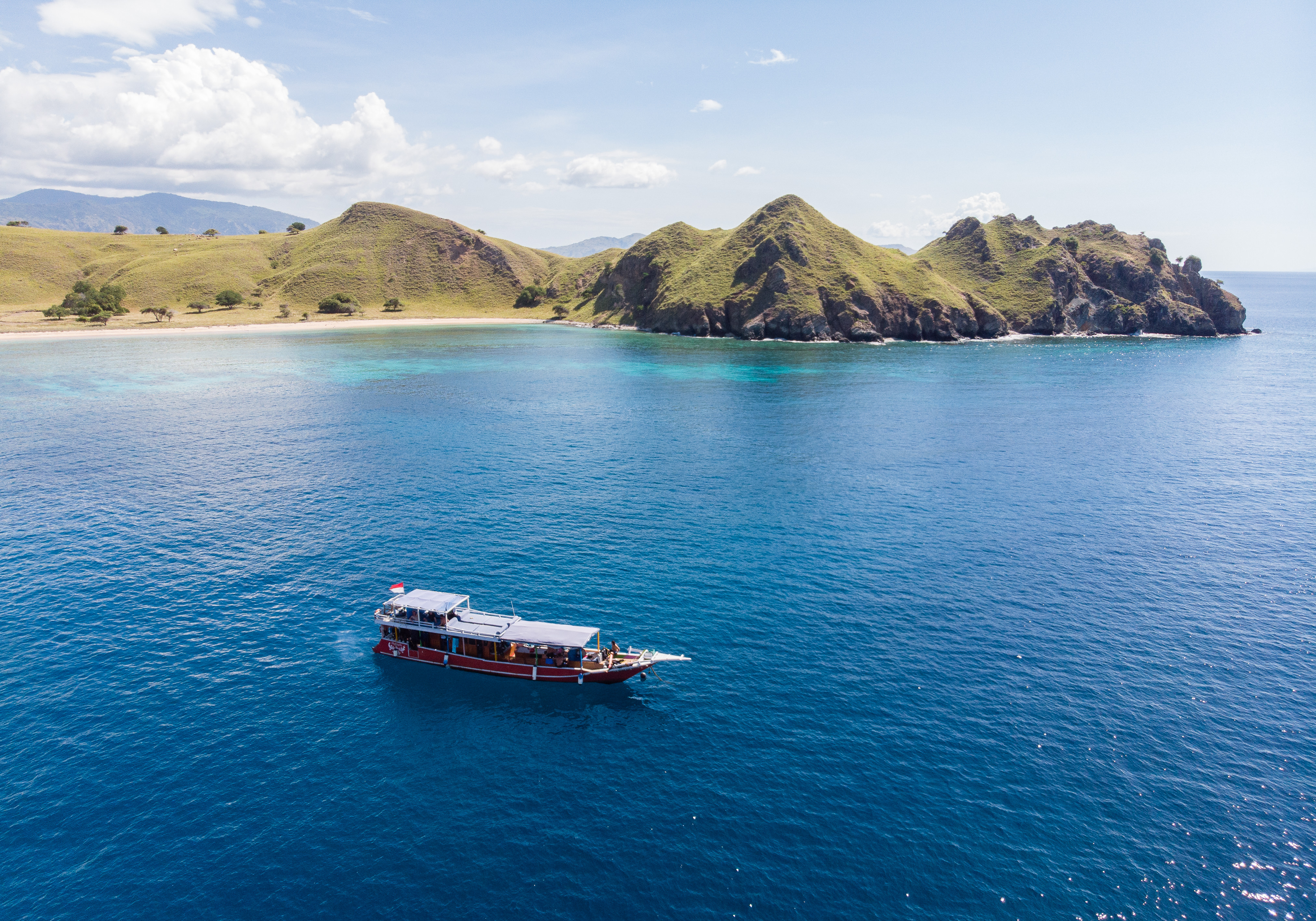
There is no resort diving of consequence here. The sea is crossed by liveaboards in two windows a year, September to November and March to April, when the winds drop between the monsoons. The classic route links Ambon and Maumere across roughly 600 nautical miles, with a longer variant reaching Saumlaki and the Forgotten Islands in the southeast. Between the stops are long stretches of open water, and the diving happens at isolated seamounts, volcanic islets and the walls of the Banda Islands.
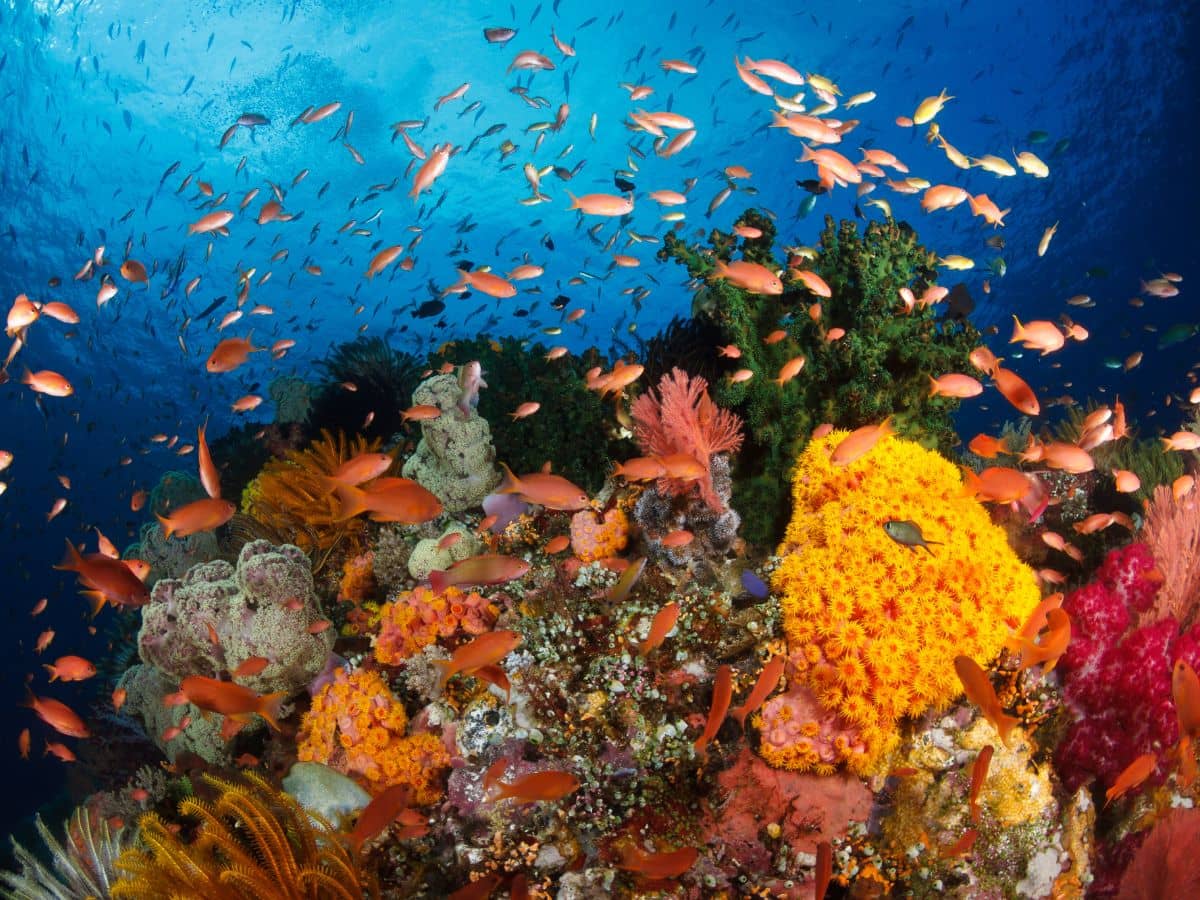
The reason most divers make the crossing is hammerheads. Scalloped hammerheads school below the thermocline at Suanggi, Nil Desperandum and Manuk, sometimes in dozens, and the best encounters are in the cooler water of October and November. Add the sea snakes of Manuk, which gather in numbers that surprise even experienced divers, the coral that has grown over the 1988 lava flow on Gunung Api, and walls at Hatta, Ai and Run that show what an unfished reef looks like.
What to expect
Expect open-ocean diving: blue water, deep drop-offs, current at the seamounts and dives that begin with a descent into the blue to find the thermocline. Expect long passages between sites, sometimes overnight, and days with only two dives. Expect also that hammerheads do not appear on schedule; they are reliable in season, but a trip is a series of chances rather than a certainty. Divers who accept that, and who bring the experience to handle depth and current, find the Banda Sea one of the most rewarding crossings in Indonesia.
Why dive the Banda Sea
The Banda Sea asks more of a diver than most Indonesian destinations: longer travel, two narrow seasons and open-water dives. What it gives in return is specific and hard to find elsewhere.
- Schooling hammerheads: scalloped hammerheads gather below the thermocline at Suanggi, Nil Desperandum and Manuk, with October and November the most consistent months.
- Manuk's sea snakes: the uninhabited volcano of Manuk holds banded sea kraits and olive sea snakes in a density found almost nowhere else, curious and unhurried around divers.
- Coral on lava: the flank of Gunung Api that erupted in 1988 is now covered in fast-growing table and staghorn coral, a rare chance to see a reef that is younger than most of the divers on it.
- Walls without fishing pressure: Hatta, Ai and Run drop steeply into deep water with intact hard coral, sea fans and schools of fusiliers, snapper and bumphead parrotfish.
- Mandarin fish at the jetty: the Banda Neira jetty dusk dive delivers mandarin fish mating displays in a few metres of water, a change of pace after the blue-water days.
- History between dives: Fort Belgica, the nutmeg plantations and the colonial streets of Banda Neira make the land stops more than a formality.
Banda Sea dive sites
Sites in the Banda Sea are strung along the crossing routes rather than clustered, and which ones you dive depends on the itinerary and the sea state. These are the ones that define most trips.
Suanggi Island (northwest of Banda Neira)
A small volcanic islet with steep walls dropping into deep water. Descend along the wall to 25 to 35 m and look out into the blue for scalloped hammerheads, usually below the thermocline, with grey reef sharks and dogtooth tuna closer in. The wall itself carries sea fans and dense schools of fusiliers.
Nil Desperandum (open sea, southeast of Banda)
An isolated reef in open water with a shallow top and sheer sides, named on old Admiralty charts. It is a hammerhead site first, with schools passing the deep edge in season, and a good wall dive second, with big pelagics, barracuda and the occasional whale shark or mobula.
Manuk (eastern Banda Sea)
An uninhabited volcano roughly 100 km east of the Banda Islands, ringed by a reef that drops into deep water. Sea snakes are everywhere, from the shallows to 30 m, and hammerheads school off the points. Manuk is exposed and only dived when the sea allows, which is part of why it stays as it is.
Gunung Api Lava Flow (Banda Islands)
Where the 1988 eruption poured lava into the sea, table corals and staghorns have grown across the black rock at a rate that has surprised marine biologists. It is a shallow to mid-depth reef dive, gentle in most conditions, with sea snakes and schooling fish along the slope.
Hatta Island (Banda Islands)
Steep walls and a reef point at Karang Hatta where current brings in schools of jacks, barracuda and bumphead parrotfish, with sharks on the deep edge. Hard coral cover on the wall is close to complete, and visibility is often at the top of the range.
Run Island (Banda Islands)
The island the Dutch valued above Manhattan has a drop-off along its west side with sea fans, sponges and sweetlips in the overhangs. It is a relaxed wall dive with reliable turtles and a chance of eagle rays, and a good place to see how a reef looks with no fishing pressure.
Banda Neira Jetty (Banda Neira)
A dusk dive under the town jetty in 3 to 10 m of water, where mandarin fish come out to mate at last light. Frogfish, pipefish and shrimp live in the rubble around the pilings, and the site is worth a second look on a night dive.
Marine life in the Banda Sea
The Banda Sea's marine life is shaped by depth and isolation: pelagic animals in the blue, unfished reefs on the drop-offs and a handful of species, above all the sea snakes of Manuk, that have become the reason for the crossing.
Pelagics and big animals
- Scalloped hammerheads schooling below the thermocline at Suanggi, Nil Desperandum and Manuk, most consistent in October and November
- Whale sharks and mobula rays passing the seamounts, seen on some trips but not to be counted on
- Blue whales, sperm whales and pilot whales crossing the basin in the migration months, usually seen from the boat
- Grey reef sharks, silvertips, dogtooth tuna and schools of barracuda and bigeye trevally on the current points
Reef
- Banded sea kraits and olive sea snakes at Manuk and Gunung Api, often several in view at once
- Bumphead parrotfish, Napoleon wrasse and dense schools of fusiliers, snapper and surgeonfish
- Green and hawksbill turtles on the walls of Run, Ai and Hatta; eagle rays occasionally
- Near-complete hard coral cover, with sea fans and sponges in the overhangs
Macro
- Mandarin fish at dusk under the Banda Neira jetty
- Frogfish, pipefish, nudibranchs and cleaner shrimp in the jetty rubble
- Pygmy seahorses on sea fans along the deeper walls, where guides know the fans
Dive conditions in the Banda Sea
Currents: variable, from slack at the sheltered Banda Islands sites to strong at the seamounts and exposed points, where the hammerheads are. Blue-water descents, negative entries and drifting off a reef into open sea are normal, so a surface marker buoy is mandatory on every dive.
Visibility: 20 to 40 m at most sites, among the best in Indonesia, occasionally reduced by plankton blooms that also bring the big animals in.
Temperature: 26 to 29C at the surface, with thermoclines to 23 or 24C at the depths where hammerheads school. A 5 mm suit is the sensible choice for repeated deep dives; a 3 mm with a hooded vest suits some divers.
Depth: the hammerhead sites are dived at 25 to 40 m, and nitrox is strongly recommended. Reef dives at the Banda Islands are shallower and gentler.
Experience: Advanced Open Water with 50 or more dives is the usual minimum, with deep and drift experience; operators also require dive insurance because the nearest medical help is days away.
Banda Sea through the year
Water and air temperature, visibility and rainfall for every month, with the windows we would book ourselves. Hover or tap a month for the detail.
- Water
- Air
- Visibility
- Rain
Show the monthly data as a table
| Month | Water °C | Air °C | Visibility | Rain | Diving | Notes |
|---|---|---|---|---|---|---|
| Jan | 28–29 °C | 24–31 °C | 15–25 m | 150 mm | Closed / not diveable | Northwest monsoon, open crossings closed |
| Feb | 28–29 °C | 24–31 °C | 15–25 m | 140 mm | Closed / not diveable | Rough seas, no liveaboard crossings |
| Mar | 28–29 °C | 24–31 °C | 20–35 m | 150 mm | Good | Spring crossing window opens as winds ease |
| Apr | 28–29 °C | 24–31 °C | 20–35 m | 200 mm | Good | Second season, hammerheads possible, fewer boats |
| May | 27–29 °C | 24–30 °C | 15–30 m | 300 mm | Closed / not diveable | Southeast monsoon begins, boats leave the basin |
| Jun | 27–28 °C | 23–29 °C | 15–25 m | 380 mm | Closed / not diveable | Wettest, windiest month, crossings closed |
| Jul | 26–28 °C | 23–29 °C | 15–25 m | 350 mm | Closed / not diveable | Strong southeast winds, no crossings |
| Aug | 26–28 °C | 23–29 °C | 15–25 m | 250 mm | Closed / not diveable | Seas still big, a few boats wait in Ambon |
| Sep | 26–28 °C | 23–30 °C | 20–35 m | 150 mm | Good | Main season opens, seas settle mid-month |
| Oct | 27–29 °C | 24–31 °C | 25–40 m | 100 mm | Peak | Peak hammerhead month, whales crossing the basin |
| Nov | 27–29 °C | 24–31 °C | 25–40 m | 110 mm | Peak | Peak season, most consistent hammerhead schools |
| Dec | 28–29 °C | 24–31 °C | 20–30 m | 140 mm | Possible | Last crossings early in the month, then closed |
Best time to visit Banda Sea
The Banda Sea is crossed only between the monsoons, when the wind drops and the open-water passages become safe and comfortable. There are two windows, and nothing in between.
- September to November: the main season. Seas settle in September, and October and November bring the coolest thermoclines and the most consistent hammerhead schools at Suanggi, Nil Desperandum and Manuk. Blue and sperm whales cross the basin in these months. Boats fill a year or more ahead.
- March to April: the second, shorter window as the northwest monsoon eases. Hammerheads are seen, but less predictably; the reefs, sea snakes and visibility are as good as in the autumn, and cabins are easier to find.
- May to August: the southeast monsoon brings strong wind, big seas and rain to the Banda Islands; liveaboards move to Komodo, Alor or Raja Ampat.
- December to February: the northwest monsoon makes the open crossings rough; a few boats work sheltered corners of Ambon and Seram, but the Banda Sea proper is closed.
Getting to the Banda Sea
Banda Sea crossings are one-way trips between two ports, so plan flights into one and out of the other. The northern end is Ambon, Pattimura Airport (AMQ), with direct flights from Jakarta (CGK) of about three and a half hours and connections through Makassar (UPG) and Surabaya (SUB). The southwestern end is Maumere on Flores, Frans Seda Airport (MOF), reached from Bali (DPS) in about two hours. Some itineraries end instead in Saumlaki (SXK) in the Tanimbar Islands, which connects to Ambon.
Liveaboards embark at Ambon harbour or at the jetties near the dive resorts in Ambon Bay, and in Maumere at the town harbour; most operators include the airport transfer. Banda Neira has a small airstrip with irregular flights from Ambon and a slow ferry, but neither is a reliable way to join or leave a liveaboard.
Arrive a day early at the embarkation port. Domestic connections in eastern Indonesia are cancelled or rescheduled often, and a missed departure on a one-way crossing is very hard to recover. Ambon Bay is worth the extra day in any case, with muck diving at Laha and other sites that some boats use for a check dive.
Most nationalities can obtain a Visa on Arrival or an e-VOA for 30 days, extendable once, at approximately IDR 500,000; check your eligibility. Domestic baggage allowances are usually 20 kg, so pre-book extra weight for dive gear.
Getting to Banda Sea, and what to know before you go
Liveaboards embark at Ambon harbour or Ambon Bay jetties, 45 to 60 minutes from the airport
Liveaboards embark at Maumere harbour, about 15 minutes from the airport
Used by Forgotten Islands itineraries; flights connect to Ambon
Direct flights to AMQ, about 3.5 hours
Flights to MOF, about 2 hours
Ambon · Maumere · Saumlaki
- Best season
- Sep–Nov
- Off season
- May–Aug and Dec–Feb (monsoons, open crossings closed)
- Typical trip
- 10–14 nights, one-way crossing
- Experience
- AOW, about 50 logged dives
- Park / marine fee
- No single park tag; small local port and reef fees in the Banda Islands, usually included or itemised by the liveaboard
- Visa
- Visa on Arrival or e-VOA for most nationalities, approximately IDR 500,000 (about USD 35), 30 days, extendable once
- Nitrox
- Available on most boats and strongly recommended for the deep hammerhead dives
- Currency
- Indonesian rupiah (IDR)
- Language
- Indonesian; English spoken on boats
- Time zone
- UTC+9 (WIT)
- Power
- Type C/F, 230 V
- Scalloped hammerhead shark
- Banded sea krait
- Olive sea snake
- Mandarin fish
- Dogtooth tuna
- Bumphead parrotfish
- Whale shark
- Blue whale
| Species | Months | Where |
|---|---|---|
| Scalloped hammerhead shark | Oct–Nov (also Mar–Apr) | Suanggi, Nil Desperandum, Manuk, below the thermocline |
| Blue whale and sperm whale | Oct–Nov | Open crossings, seen from the boat |
| Whale shark | Sep–Nov, occasional | Nil Desperandum and the seamounts |
| Banded sea krait and olive sea snake | Year-round in season | Manuk, Gunung Api |
| Mandarin fish | Year-round in season | Banda Neira jetty at dusk |
Seasons are typical, not guaranteed: sightings depend on currents, weather and luck.
Practical information
Fees and permits: there is no single marine park tag for the Banda Sea. The Banda Islands and some villages along the route collect small local port and reef fees, usually on the order of a few tens of thousands of rupiah per diver per stop, which most liveaboards include or itemise. Ask what is covered when booking.
Money: the currency is the Indonesian rupiah. Ambon and Maumere have ATMs and some card acceptance; Banda Neira has very little. Bring cash for tips, extras and anything bought ashore; boats rarely have a reliable card terminal at sea.
Nitrox: available on most boats running Banda crossings and strongly advised for repeated dives at 25 to 40 m; it is sometimes included, sometimes an extra.
Insurance: dive insurance with evacuation cover is required by nearly every operator. There are no recompression chambers along the route, and the nearest hospitals are in Ambon and Maumere, days away by sea.
Power is 230 V with type C and F plugs. Indonesian is the national language; English is spoken on the boats.
Tips & recommendations
- Book early for October and November: the number of boats crossing in season is small, and the best-known ones sell out a year or more ahead.
- Dive nitrox and carry a computer you trust: the hammerhead dives are deep and repeated, and the margin for error is smaller when help is days away.
- Bring an SMB, a whistle and ideally a personal locator beacon: blue-water descents and open-sea drifts are routine, and surfacing away from the tender is a real possibility.
- Cover your skin at Manuk: sea snakes are curious, not aggressive, but a full suit and hood remove any temptation to test that.
- Accept the schedule: the itinerary follows the sea state, and Manuk or Nil Desperandum can be dropped if the swell is up; a flexible attitude makes for a better trip.
- Plan an extra day at both ends: one-way crossings leave no room for a missed flight, and Ambon Bay muck diving fills the spare day well.
- Bring seasickness remedies: the passages are long and the boat rolls in open water even in the calm months.