Introduction to diving Tubbataha
Tubbataha Reefs Natural Park covers about 97,000 hectares of the Sulu Sea, roughly 150 km southeast of Puerto Princesa on Palawan. It is made up of the North Atoll and South Atoll, separated by an 8 km channel, plus the smaller Jessie Beazley Reef to the north. The park has been protected since 1988 and was inscribed as a UNESCO World Heritage Site in 1993; a permanent ranger station on the North Atoll is the only human presence.
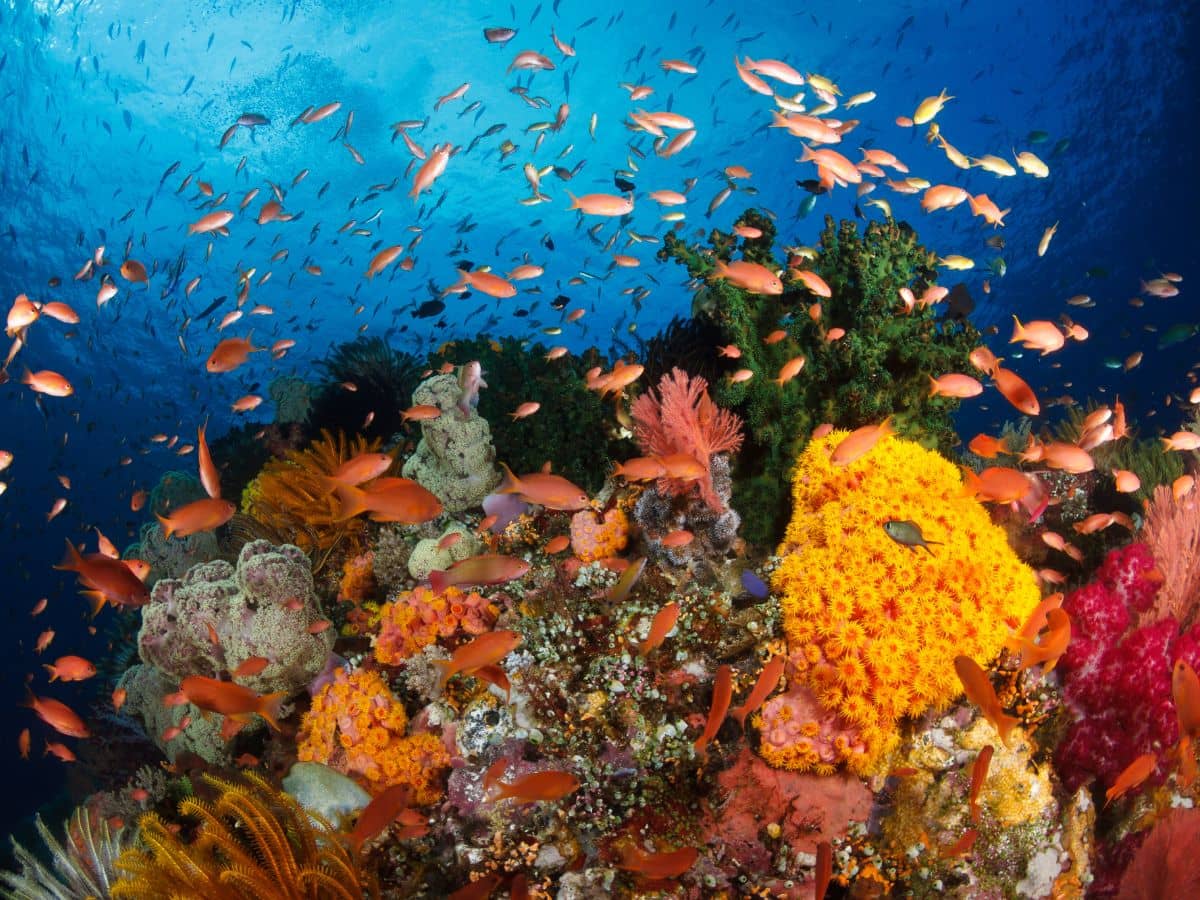
The atolls rise from deep water with no surrounding land, so the diving is almost entirely wall diving. Reef flats at 5 to 10 meters give way to vertical drop-offs that continue far beyond recreational depth, covered in hard coral, gorgonians and barrel sponges. Because there is no runoff and little fishing pressure, fish biomass is high and sharks are part of nearly every dive rather than an event.
A short, weather-bound season
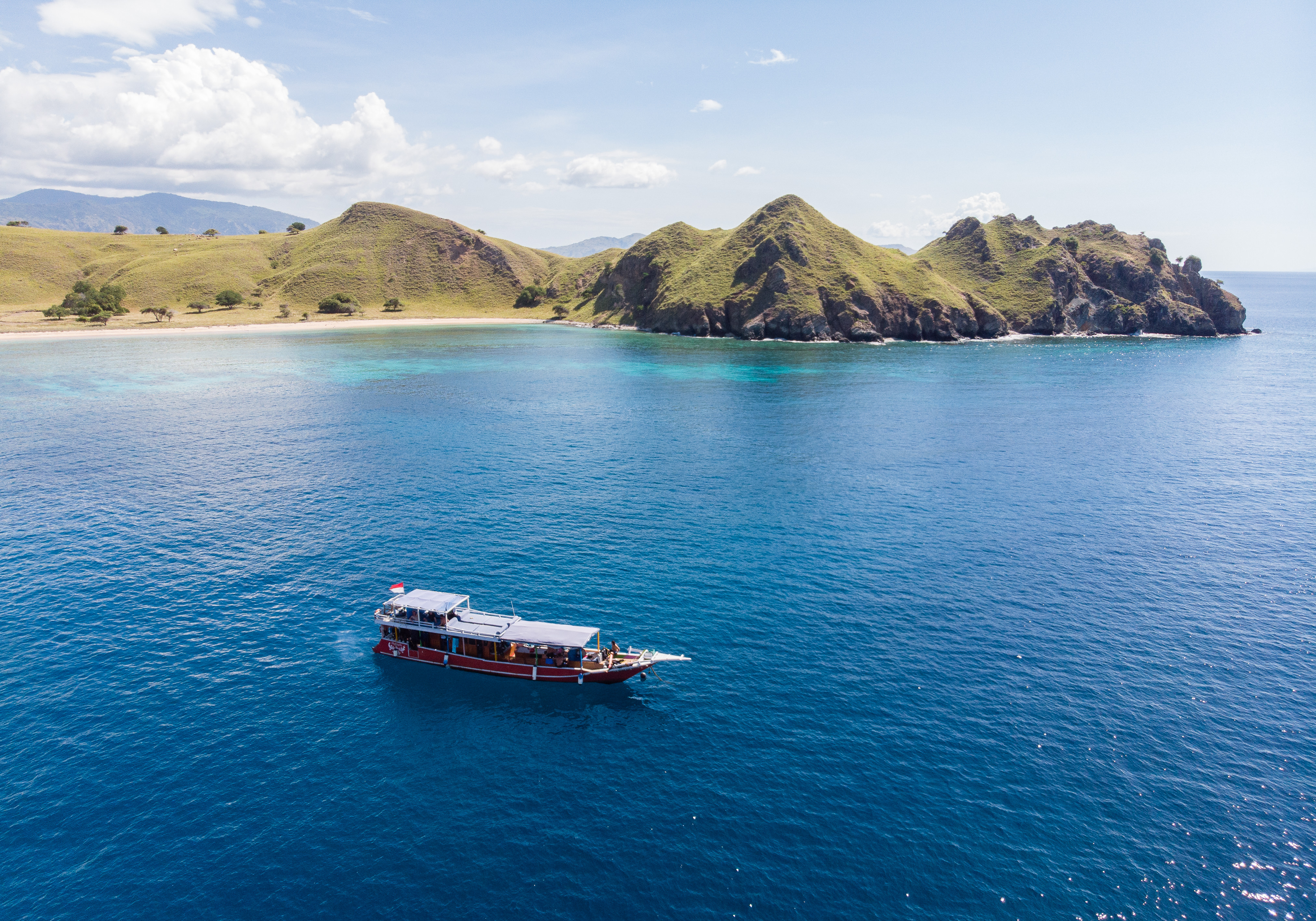
Tubbataha can be dived only from mid-March to mid-June, the window between the northeast and southwest monsoons when the open Sulu Sea is calm enough for boats to cross and moor. Outside those months the park is closed to visitors. There are no resorts or day trips: every visit is a liveaboard of typically five to six nights, departing Puerto Princesa in the evening and arriving at the reef the next morning after a 10 to 12 hour crossing.
The park is tightly managed. Boats tie to fixed mooring buoys, rangers check permits, and the number of vessels in the park at any time is limited. That management, combined with the short season and remote location, is why the reefs look the way they do. It also means demand outstrips the available berths most years, and trips are often sold out well ahead of the season.
Why dive Tubbataha
Tubbataha is the place in the Philippines for divers who want sharks, walls and clear water rather than muck and macro, and the three-month season concentrates everything into a few weeks.
- Sharks on every dive: grey reef and whitetip sharks are constant along the walls, with scalloped hammerheads at depth off Black Rock and the wrecks, and occasional tiger sharks.
- Healthy hard coral: the reef flats and upper walls are among the most intact in Southeast Asia, thanks to decades of enforced protection and no coastal runoff.
- Visibility of 30 to 45 meters: open-ocean water with nothing to cloud it, which makes the walls and the pelagics easy to see.
- Mantas and whale sharks in season: reef mantas visit cleaning stations at Black Rock and Delsan Wreck, and whale sharks are seen most often from April to June.
- Bird Islet: the North Atoll holds one of the last breeding colonies of boobies, noddies and terns in the Philippines, visible from the boat.
- Turtles and big reef fish: green and hawksbill turtles, Napoleon wrasse, bumphead parrotfish and schools of jacks and barracuda are everyday sightings.
Dive sites in Tubbataha
Liveaboards move between the two atolls and Jessie Beazley Reef depending on wind and current, so the order varies. Most sites are drift dives along a wall, with the boat's tenders picking divers up at the end.
Amos Rock (North Atoll)
Often the first dive of the trip. A sloping reef leads to a wall with large gorgonians and a gathering of grey reef sharks at the point where current hits. Trevally, barracuda and the occasional eagle ray pass in the blue, and the shallows are thick with hard coral.
Shark Airport (North Atoll)
Named for the sandy shelf at about 20 meters where whitetip reef sharks rest in numbers before the wall drops away. Turtles are common on the reef flat, and the site is one of the easier dives in the park when current is light.
Malayan Wreck (North Atoll)
A fishing vessel stranded on the reef edge decades ago, with wreckage visible above water. The dive follows the wall below, where grey reef sharks patrol and schools of snapper and sweetlips sit in the coral. Hammerheads have been recorded deep off this wall in the early morning.
Washing Machine (North Atoll)
A channel through the reef where converging currents produce swirling water, which is the point. Schools of jacks, fusiliers and the sharks that follow them concentrate here; it needs good buoyancy and a guide who reads the current.
Black Rock (South Atoll)
The site most associated with scalloped hammerheads, seen at depth in the first light of day, and with reef mantas visiting the cleaning stations on the wall. Whitetips and greys are constant, and the wall itself is covered in soft coral.
Delsan Wreck (South Atoll)
The southeastern tip of the South Atoll, marked by the remains of a wreck on the reef flat. Strong current draws large schools of barracuda, jacks and dogtooth tuna, and it is a regular site for mantas and, on lucky days, tiger sharks and whale sharks.
Jessie Beazley Reef
A small, isolated reef about 20 km north of the atolls with a shallow coral top and steep walls on all sides. Visibility is often the best in the park here, with grey reef sharks, turtles and big schools of surgeonfish, and sometimes a whale shark passing in the blue.
Marine life in Tubbataha
Tubbataha sits at the center of the Coral Triangle, and survey work by the park records more than 600 fish species, around 360 coral species, 11 shark species and 13 species of dolphin and whale. For divers the headline is the density of large animals along the walls.
Pelagics
- Grey reef and whitetip reef sharks on almost every dive; silvertip and blacktip less often.
- Scalloped hammerheads at depth in the early morning, most frequently off Black Rock and the wrecks.
- Tiger sharks and whale sharks, seen occasionally, with whale sharks most frequent from April to June.
- Reef manta rays at the Black Rock and Delsan Wreck cleaning stations; eagle rays along the walls.
- Schools of bigeye trevally, chevron barracuda, dogtooth tuna and rainbow runners in the current.
Reef
- Green and hawksbill turtles, often several on a single dive.
- Napoleon wrasse, bumphead parrotfish, giant groupers and sweetlips along the upper wall.
- Dense hard-coral cover, large gorgonians and barrel sponges on the drop-offs.
Macro
- Nudibranchs, flatworms and leaf scorpionfish on the reef flats.
- Pygmy seahorses on the deeper gorgonians for guides who know the fans.
- Nesting boobies, noddies and terns on Bird Islet, seen from the boat rather than in the water.
Dive conditions
Water temperature is 27 to 30C across the season, warmest in May and June. A 3 mm full suit is the usual choice; some divers are comfortable in a shorty, but four dives a day and long safety stops in current argue for full coverage.
Visibility is typically 30 to 45 meters, occasionally reduced by plankton in the late season. Currents range from light to strong and can change during a dive, especially at Washing Machine, Delsan Wreck and the atoll corners; most dives are drifts along the wall with a tender pickup, and a surface marker buoy is mandatory on every dive.
Walls drop well beyond recreational limits, so depth discipline matters, and the hammerheads usually sit at 30 meters or deeper in the early morning. Operators generally require Advanced Open Water or equivalent and often a minimum of 25 to 50 logged dives; Nitrox is widely available and makes the repetitive wall profiles easier. There are no shore facilities, so everything you need must be on the boat.
Tubbataha through the year
Water and air temperature, visibility and rainfall for every month, with the windows we would book ourselves. Hover or tap a month for the detail.
- Water
- Air
- Visibility
- Rain
Show the monthly data as a table
| Month | Water °C | Air °C | Visibility | Rain | Diving | Notes |
|---|---|---|---|---|---|---|
| Jan | 27–28 °C | 23–31 °C | 25–40 m | 50 mm | Closed / not diveable | Park closed (northeast monsoon) |
| Feb | 27–28 °C | 23–32 °C | 25–40 m | 30 mm | Closed / not diveable | Park closed |
| Mar | 27–29 °C | 24–33 °C | 30–45 m | 40 mm | Good | Season opens mid-March; best visibility |
| Apr | 28–29 °C | 24–34 °C | 30–45 m | 40 mm | Peak | Calmest seas; hammerheads at Black Rock |
| May | 29–30 °C | 25–33 °C | 30–40 m | 120 mm | Peak | Warmest water; most frequent whale sharks |
| Jun | 29–30 °C | 25–32 °C | 25–40 m | 200 mm | Good | Last departures; park closes mid-June |
| Jul | 28–30 °C | 25–31 °C | 20–35 m | 250 mm | Closed / not diveable | Park closed (southwest monsoon) |
| Aug | 28–30 °C | 25–31 °C | 20–35 m | 260 mm | Closed / not diveable | Park closed |
| Sep | 28–30 °C | 25–31 °C | 20–35 m | 250 mm | Closed / not diveable | Park closed |
| Oct | 28–29 °C | 24–31 °C | 20–35 m | 230 mm | Closed / not diveable | Park closed |
| Nov | 28–29 °C | 24–31 °C | 25–40 m | 180 mm | Closed / not diveable | Park closed |
| Dec | 27–29 °C | 23–31 °C | 25–40 m | 100 mm | Closed / not diveable | Park closed (northeast monsoon) |
Best time to visit Tubbataha
The park is open to visitors only from mid-March to mid-June. For the rest of the year the northeast and southwest monsoons make the crossing and the moorings unsafe, and no boats are permitted. Within the season the differences are modest but real, and they mostly come down to sea state on the crossing and which animals are around.
- Mid-March to early April: the first departures, with the last of the northeast wind still possible, cooler water around 27C and often the best visibility of the year.
- April: the most settled seas and the most reliable month for hammerheads at Black Rock; it is also the busiest period, so book early.
- May: warmest water and the most frequent whale shark sightings, with mantas still active at the cleaning stations; afternoon showers begin to appear.
- Early to mid-June: the last departures before closure, quieter boats, some plankton and a rising chance of a rough crossing as the southwest monsoon builds.
Getting to Tubbataha
Tubbataha is reached only by liveaboard from Puerto Princesa on Palawan. Puerto Princesa International Airport (PPS) has frequent domestic flights from Manila Ninoy Aquino (MNL), about 75 minutes, and from Cebu (CEB), about 80 minutes, plus a few flights from Clark (CRK). International travelers connect through Manila or Cebu, both of which have direct flights from most Asian hubs, the Gulf and North America.
Boats embark at Puerto Princesa harbor, a short drive from the airport, usually in the late afternoon or evening. The crossing to the reef takes 10 to 12 hours overnight, so the first dive is on the morning of day two. On the way back the boat leaves the park in the afternoon and arrives in Puerto Princesa early the next morning; most operators recommend not booking a flight out before late morning, and an overnight in town is safer given occasional weather delays.
Typical itineraries are five or six nights, with a few seven-night trips that add reef time. Fill in the passport details requested by your operator in advance, as the park requires a manifest for every boat.
Most nationalities enter the Philippines visa-free for 30 days for tourism; check the current list before travel.
Getting to Tubbataha, and what to know before you go
Liveaboards embark at Puerto Princesa harbor, about 15 min from the airport
Frequent 75-min domestic flights to PPS
Daily 80-min domestic flights to PPS
Puerto Princesa
- Best season
- Apr–May
- Off season
- Park closed mid-June to mid-March (monsoon seas)
- Typical trip
- 5–6 nights (up to 7)
- Experience
- AOW, about 25 logged dives
- Park / marine fee
- Tubbataha conservation fee approximately PHP 5,000 per diver per trip (approximately USD 90), usually billed separately by the operator
- Visa
- Visa-free entry for most nationalities, 30 days
- Nitrox
- Available on nearly all liveaboards, usually at extra cost
- Currency
- Philippine peso (PHP)
- Language
- Filipino and English; English spoken on all boats
- Time zone
- UTC+8 (PHT)
- Power
- Type A/B/C, 220 V
- Grey reef shark
- Whitetip reef shark
- Scalloped hammerhead
- Reef manta ray
- Whale shark
- Tiger shark
- Green turtle
- Napoleon wrasse
| Species | Months | Where |
|---|---|---|
| Scalloped hammerhead | Mar–May | Black Rock, Malayan Wreck, early morning at depth |
| Whale shark | Apr–Jun | Delsan Wreck, Jessie Beazley Reef, in the blue |
| Reef manta ray | Mar–Jun | Black Rock and Delsan Wreck cleaning stations |
| Tiger shark | Mar–Jun | Delsan Wreck, South Atoll walls (occasional) |
| Grey reef shark | Mar–Jun | Amos Rock, Washing Machine, most walls |
Seasons are typical, not guaranteed: sightings depend on currents, weather and luck.
Practical information
Park fees: the Tubbataha conservation fee is approximately PHP 5,000 per diver per trip for foreign visitors (approximately USD 90), collected by the operator and passed to the park. It is usually not included in the trip price, so confirm at booking. Rangers may board to check permits.
Rules: boats use fixed moorings, no anchoring; no touching, feeding or collecting; a surface marker buoy on every dive. Drones and fishing are prohibited.
Money: the Philippine peso is the currency. Bring cash for the conservation fee if it is collected on board, plus crew tips; cards are accepted in Puerto Princesa but not at sea.
Diving: nitrox is available on nearly all boats; dive insurance covering evacuation is expected, as the nearest chambers are in Puerto Princesa and Cebu and the park is a 10-hour crossing from land.
Practicalities: 220 V with type A, B and C sockets; Filipino and English are both official languages.
Tips & recommendations
- Book six to twelve months ahead: with only three months of departures, boats fill early, particularly for April.
- Arrive a day early: a missed embarkation cannot be recovered; stay a night in Puerto Princesa before the boat leaves.
- Dive early for hammerheads: the first dive of the day at Black Rock, deep and in the blue, is where they are seen most often.
- Carry a DSMB and a signaling device: drift dives with tender pickups are the norm and the park requires a marker buoy.
- Take seasickness precautions: the overnight crossing is open ocean; medication taken before departure works better than after.
- Budget for the conservation fee: approximately PHP 5,000 per person, usually paid separately from the trip.
- Bring a wide-angle setup: the walls, schools and sharks favor wide lenses; macro opportunities are limited.