Introduction to diving Sipadan
Sipadan sits about 35 km off the southeast coast of Sabah in Malaysian Borneo, at the edge of the Celebes Sea. It is the only true oceanic island in Malaysia: a limestone and coral pinnacle that rises roughly 600 meters from the sea floor, capped by 12 hectares of forest. The reef flat ends abruptly a few meters from the beach and the wall drops into blue water on almost every side, which is why so much of the diving here is a single slow drift along a vertical face.
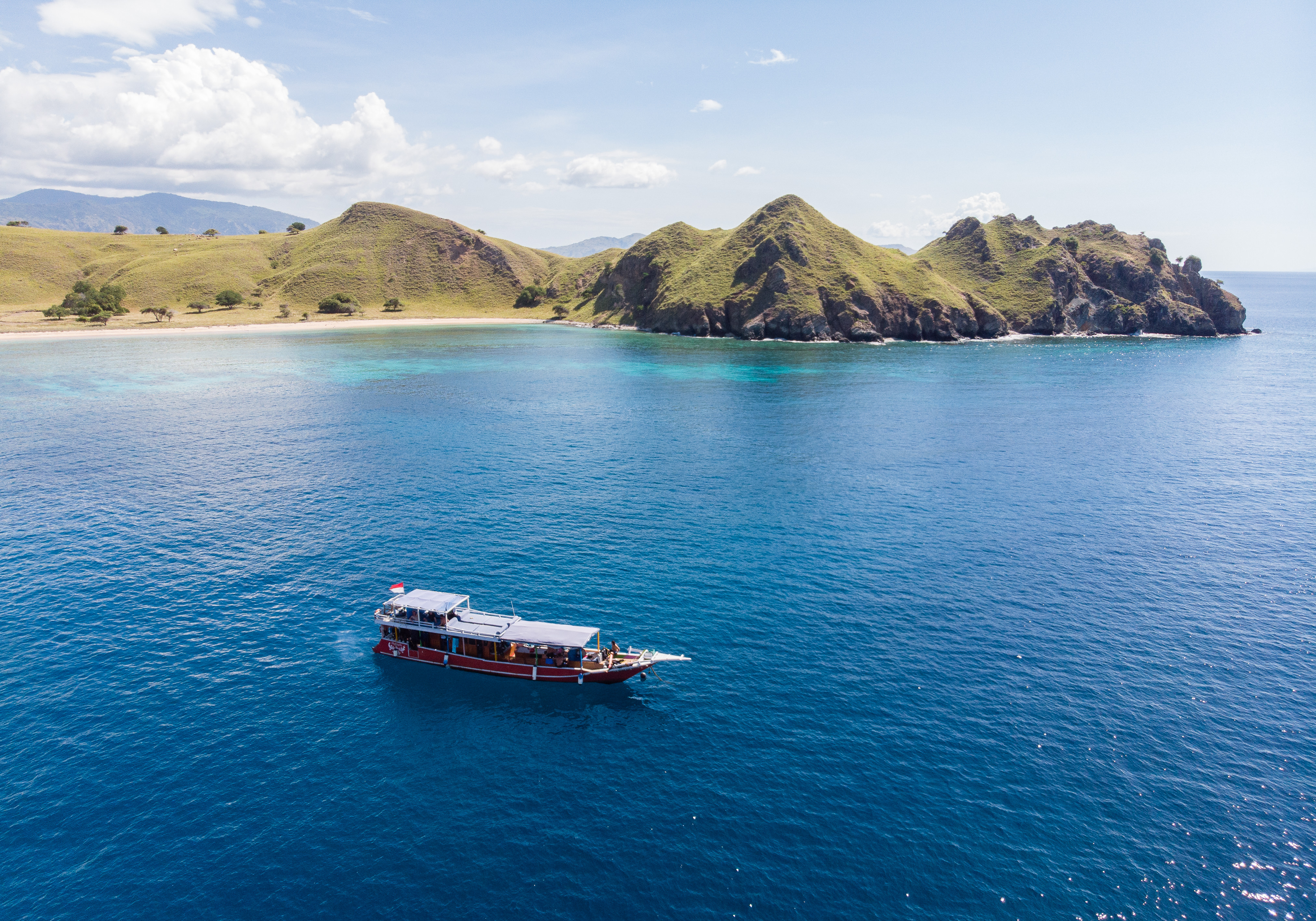
The island itself has been off limits for overnight stays since 2004, when the resorts that once stood on it were removed to reduce pressure on the reef. Everyone now dives Sipadan as a day trip from Mabul island, from the stilt resorts of Kapalai, or from the town of Semporna on the mainland. The crossing takes 15 to 25 minutes from Mabul and Kapalai, and 60 to 90 minutes from Semporna.
The permit system
Sabah Parks limits the number of divers allowed into the Sipadan park each day. The quota, currently 176 permits per day, is divided between the licensed operators, and each operator then rotates its own guests. In practice a four-night stay on Mabul earns one or two Sipadan days, with the remaining days spent on the muck and reef sites around Mabul and Kapalai. Permits cannot be bought at the jetty; they are allocated by the resort against your booking, and the passport details you send at booking are what goes onto the park list.
That constraint shapes everything. The right question when comparing operators is not the price of a dive but how many Sipadan days the package includes, and the honest answer from most divers is that the surrounding islands justify the trip on their own. Mabul is one of the best macro sites in Southeast Asia, and Kapalai adds seagrass and sandy slopes that hold critters Sipadan does not have.
Why dive Sipadan
Sipadan and its neighbours cover both ends of the diving spectrum in one trip: big-animal wall diving on the island, and world-class muck five minutes from your room.
- Turtles on every single dive: green and hawksbill turtles are so numerous on Sipadan that divers stop counting; several are usually resting on the wall ledges at any moment.
- The barracuda tornado: Barracuda Point holds a resident school of chevron barracuda that forms a slow vortex in current, alongside dense walls of bigeye trevally.
- A wall that starts at the beach: the drop-off begins a few meters from the shoreline and falls beyond 600 meters, giving deep-blue diving with no boat ride to the site.
- Reef sharks as background: whitetip reef sharks rest on the sand terraces, grey reef sharks patrol the corners, and bumphead parrotfish move along the reef top in herds at dawn.
- Mabul and Kapalai macro: the black sand and seagrass around the resorts produce flamboyant cuttlefish, blue-ringed octopus, frogfish, mandarinfish and pygmy seahorses.
- Warm water all year: 28 to 30C in every month, with no closed season and no monsoon that shuts the site down entirely.
Dive sites in Sipadan, Mabul and Kapalai
Sipadan has around a dozen named sites strung around a small island, so a permit day usually covers three of them plus a surface interval on the jetty. Mabul and Kapalai carry the other days, dived from the resort house reefs and by short boat hops.
Barracuda Point (Sipadan)
The signature dive. A reef shoulder on the northeast corner where current accelerates and pushes schooling life together: chevron barracuda in a tornado, bigeye trevally in a wall of silver, grey reef and whitetip sharks in the flow, and bumphead parrotfish grazing on the reef top. It can be a gentle drift or a hard one depending on the tide, and guides read the water before dropping.
The Drop Off (Sipadan)
Directly in front of the old jetty, where the reef flat ends and the wall falls vertically into the dark. Often used as the first dive of the day and as the checkout dive, and also the approach to the cavern. Turtles rest in the crevices and schools of jacks and surgeonfish hang along the face.
Turtle Cavern (Sipadan)
An entrance at about 20 meters on the Drop Off leads into a limestone cave system where the skeletons of turtles that swam in and never found the way out lie in the silt. Penetration is a technical activity; most guides bring divers only to the mouth, and any deeper visit is a cave dive that needs cave training, lights and a line.
South Point (Sipadan)
The most exposed corner of the island and the one with the strongest current, which makes it the best chance of something large: schooling jacks, big dogtooth tuna, eagle rays and, in the early part of the year, the rare hammerhead out in the blue. Not a site for the first dive of a trip.
Hanging Gardens (Sipadan)
A stretch of the south wall hung with soft corals and gorgonians that grow outward from the overhangs. Best dived shallow on the way back, with turtles, nudibranchs and reef fish on the coral shelf above 20 meters.
Coral Garden and Whitetip Avenue (Sipadan)
The gentler face of Sipadan: a sloping hard-coral garden on the west side leading to a sandy terrace where whitetip reef sharks lie in numbers. Good visibility, mild current and the easiest profiles on the island.
Paradise 2 and the Mabul house reefs
Black volcanic sand and rubble a short swim from the Mabul resorts, and the reason many photographers come here at all. Flamboyant cuttlefish, blue-ringed octopus, hairy frogfish, mandarinfish at dusk, ornate ghost pipefish and crocodile fish are all regular. Visibility is modest, depth is rarely past 15 meters, and the dives run long.
Mandarin Valley and the Kapalai flats
Kapalai is a sandbank rather than an island, and its shallow seagrass and sand hold mandarinfish that emerge in the last light, plus pipefish, juvenile batfish, seahorses and dozens of nudibranch species. Dives here are shallow and slow, and the pier pilings are a site in themselves.
Marine life around Sipadan
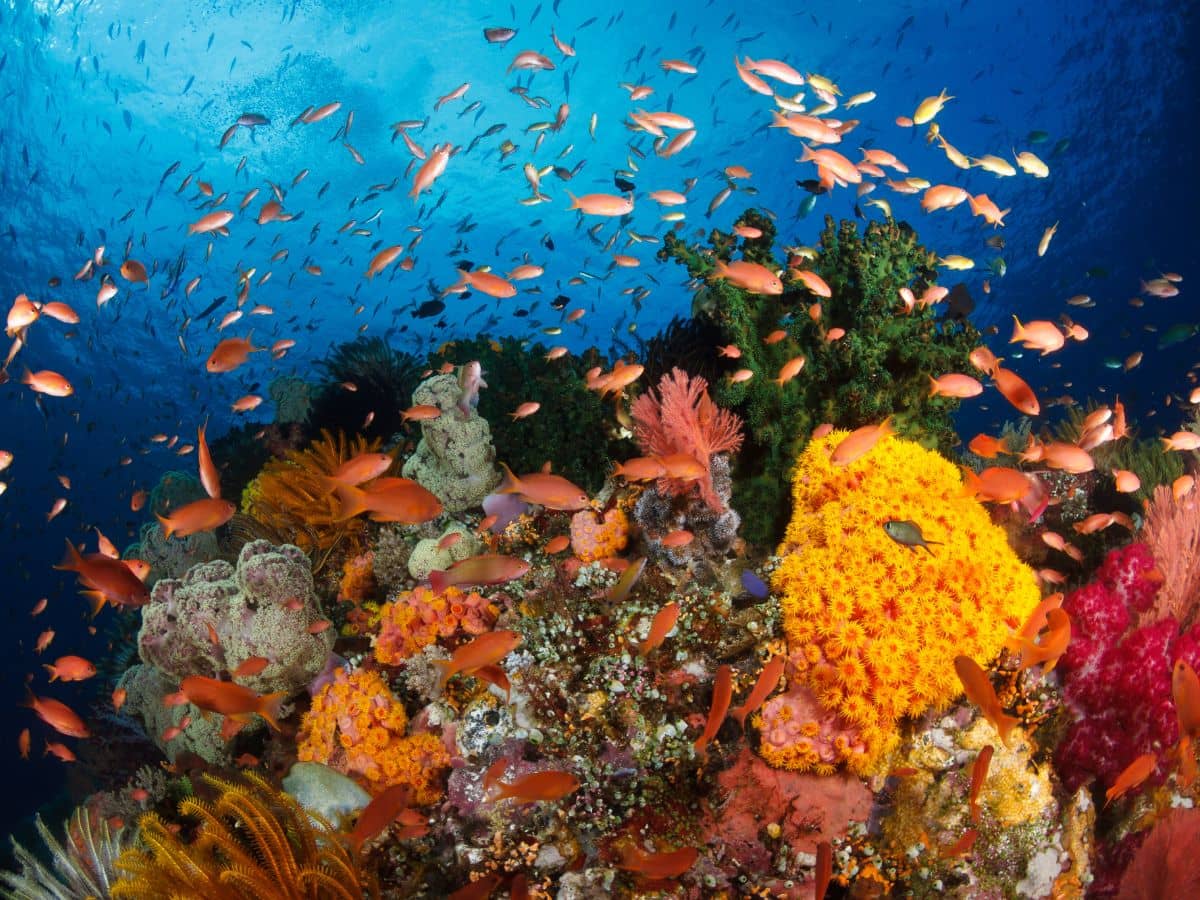
The Sipadan area sits inside the Coral Triangle, and surveys of the wider Semporna reefs have recorded several thousand fish species and hundreds of corals. What divers notice is the split personality: pelagic and reptile life on Sipadan itself, and a critter list on Mabul and Kapalai that rivals Lembeh.
Sipadan
- Green turtles in extraordinary numbers, plus hawksbills; both nest on the island beaches.
- Chevron barracuda in a schooling tornado and bigeye trevally in dense walls at Barracuda Point.
- Whitetip reef sharks on the sand terraces, grey reef sharks on the corners, occasional leopard sharks and, rarely, hammerheads at South Point.
- Bumphead parrotfish in herds along the reef top at first light.
- Napoleon wrasse, dogtooth tuna, eagle rays and schooling surgeonfish along the wall.
Mabul and Kapalai
- Flamboyant cuttlefish, blue-ringed octopus, mimic and wonderpus octopus on the sand.
- Hairy, painted and giant frogfish, plus ornate and robust ghost pipefish in season.
- Mandarinfish emerging at dusk over the rubble and around the pier pilings.
- Bargibanti pygmy seahorses on the sea fans, plus thorny and common seahorses in the seagrass.
- Crocodile fish, stargazers, snake eels and a very long nudibranch list.
Coral and reef
- Dense hard coral on the Sipadan reef top, with gorgonians and soft coral on the overhangs.
- Anemone fields with clownfish and porcelain crabs on the Mabul slopes.
- Seagrass beds at Kapalai holding pipefish, juvenile fish and sea moths.
Dive conditions
Water temperature runs 28 to 30C year round, warmest from April to September. A 3 mm full suit suits most divers; on Mabul, where dives are long, slow and shallow, a 5 mm or a hooded vest is worth having because you barely move for an hour.
Visibility at Sipadan is typically 15 to 30 meters, better on the wall in the calm months and reduced by plankton after heavy rain. Around Mabul and Kapalai it is a different world: 5 to 15 meters over black sand is normal, and it is not a problem, because nothing you are looking at is more than an arm away.
Current is the variable that matters. Barracuda Point and South Point can run hard, and the schooling behaviour that makes them famous depends on that flow, so guides plan the day around the tide rather than a fixed rotation. Most Sipadan dives are drifts with a boat pickup and a surface marker buoy is expected. Operators generally want Advanced Open Water or equivalent with around 20 logged dives for permit days, while Open Water divers dive Mabul and Kapalai comfortably. Nitrox is available at most resorts and helps on three-dive permit days. The nearest recompression chamber is in Kota Kinabalu, so dive insurance covering evacuation is not optional.
Sipadan through the year
Water and air temperature, visibility and rainfall for every month, with the windows we would book ourselves. Hover or tap a month for the detail.
- Water
- Air
- Visibility
- Rain
Show the monthly data as a table
| Month | Water °C | Air °C | Visibility | Rain | Diving | Notes |
|---|---|---|---|---|---|---|
| Jan | 28–29 °C | 24–31 °C | 15–25 m | 140 mm | Possible | Northeast monsoon, wind and surge |
| Feb | 28–29 °C | 24–31 °C | 15–25 m | 100 mm | Good | Wind easing, permits easy to get |
| Mar | 28–30 °C | 24–32 °C | 20–30 m | 100 mm | Peak | Calm crossings return |
| Apr | 29–30 °C | 25–32 °C | 20–30 m | 120 mm | Peak | Turtles nesting on Sipadan |
| May | 29–30 °C | 25–32 °C | 20–30 m | 150 mm | Peak | Warm and calm, barracuda schooling |
| Jun | 29–30 °C | 25–32 °C | 20–30 m | 140 mm | Peak | Peak starts, book permits early |
| Jul | 28–30 °C | 25–32 °C | 20–30 m | 130 mm | Peak | Best jack and barracuda schooling |
| Aug | 28–30 °C | 25–32 °C | 20–30 m | 150 mm | Peak | Busiest month, permits scarce |
| Sep | 28–30 °C | 25–32 °C | 15–30 m | 160 mm | Good | Still strong, occasional plankton |
| Oct | 28–30 °C | 24–32 °C | 15–25 m | 190 mm | Good | Rain building, seas still workable |
| Nov | 28–29 °C | 24–31 °C | 15–25 m | 210 mm | Possible | Monsoon sets in, wetter crossings |
| Dec | 28–29 °C | 24–31 °C | 15–25 m | 200 mm | Possible | Wettest month, choppy boat days |
Best time to visit Sipadan
Sipadan is diveable in every month of the year and no season closes it. The differences come from the northeast monsoon, which brings wind, rain and choppier crossings from roughly November to February, and from how tight the permit allocation gets in the peak months.
- March to May: seas settle, visibility improves and resorts fill steadily. April and May are excellent and slightly less crowded than the northern summer.
- June to September: the peak. Calm water, the most reliable schooling at Barracuda Point and the highest demand for permits, so book several months ahead.
- October to November: rain increases and the wind turns; diving stays good but crossings from Semporna can be lumpy and a day can be lost to weather.
- December to February: the wettest and windiest window, with reduced visibility on the muck sites and the odd cancelled boat. Prices are lower and permits are far easier to get, which suits divers who can be flexible.
Getting to Sipadan
The gateway is Tawau Airport (TWU) in southeast Sabah. Tawau is served by frequent domestic flights from Kota Kinabalu (BKI), about 50 minutes, and from Kuala Lumpur (KUL), about two and a half hours, with some services from Johor Bahru and Kuching. International travelers usually route through Kuala Lumpur or Kota Kinabalu.
From Tawau it is a road transfer of about 1 hour 15 minutes to the Semporna jetty, which every resort arranges as part of the package. From Semporna, speedboats run roughly 45 minutes to Mabul and Kapalai. Boats leave on a fixed morning schedule, so flights into Tawau need to land in the morning; an arrival after mid-afternoon usually means a night in Tawau or Semporna.
Typical stays are four to seven nights, with Sipadan permit days spread across the stay rather than clustered at the start. Send your passport details and certification card early: the Sabah Parks permit list is submitted in advance and cannot be edited at the jetty.
Most nationalities enter Malaysia visa-free for 90 days. Sabah operates its own immigration control, so you clear immigration again on arrival from peninsular Malaysia and should keep the entry slip. Eastern Sabah lies inside a designated security zone with a nightly sea curfew, which is why boat movements stop after dark and nobody overnights on Sipadan; check your government travel advice before booking.
Getting to Sipadan, and what to know before you go
Road transfer to Semporna jetty about 1 h 15, then 45 min by speedboat to Mabul or Kapalai
Frequent 50-min flights to Tawau; nearest recompression chamber
Direct flights to Tawau, about 2 h 30, and to Kota Kinabalu
Semporna
- Best season
- Jun–Sep
- Off season
- Nov–Feb northeast monsoon: wetter, choppier crossings, permits easy
- Typical trip
- 4–7 nights (1–3 Sipadan permit days)
- Experience
- AOW, about 20 logged dives
- Park / marine fee
- Sabah Parks conservation fee approximately MYR 140 per diver per Sipadan day, plus small Semporna jetty and terminal charges
- Visa
- Visa-free for most nationalities, 90 days; Sabah has separate immigration control
- Nitrox
- Available at most Mabul and Kapalai resorts, usually at extra cost
- Currency
- Malaysian ringgit (MYR)
- Language
- Malay; English spoken at all resorts
- Time zone
- UTC+8 (MYT)
- Power
- Type G, 240 V
- Green turtle
- Hawksbill turtle
- Chevron barracuda
- Bigeye trevally
- Whitetip reef shark
- Bumphead parrotfish
- Flamboyant cuttlefish
- Mandarinfish
| Species | Months | Where |
|---|---|---|
| Chevron barracuda | Year round, best Apr–Sep | Barracuda Point, on the corner in current |
| Bumphead parrotfish | Year round | Sipadan reef top at first light |
| Green turtle | Year round, nesting Apr–Sep | Drop Off, Turtle Cavern, the whole island |
| Mandarinfish | Year round | Kapalai and Mabul pier pilings at dusk |
| Flamboyant cuttlefish | Year round | Mabul black sand, Paradise 2 and house reefs |
| Scalloped hammerhead | Feb–Apr (rare) | South Point, deep in the blue |
Seasons are typical, not guaranteed: sightings depend on currents, weather and luck.
Practical information
Permits and fees: Sipadan entry is capped at a fixed daily quota, currently 176 permits, allocated by Sabah Parks through licensed operators. The Sabah Parks conservation fee is approximately MYR 140 per diver for each Sipadan day for foreign visitors, plus small jetty and terminal charges at Semporna. Confirm whether your package includes them.
Rules: no gloves on Sipadan, no touching or riding turtles, no collecting, no fishing. Drones need permission. Nobody may stay overnight on the island, and boats return to Mabul or Semporna before dark.
Money: the Malaysian ringgit is the currency. Resorts on Mabul and Kapalai take cards for the main bill but often want cash for park fees, nitrox and tips; there are ATMs in Semporna and Tawau but none on the islands.
Diving: nitrox is offered at most resorts at extra cost. The nearest recompression chamber is in Kota Kinabalu, several hours away by road and air, so evacuation cover is essential.
Practicalities: 240 V with type G sockets; Malay is the national language and English is spoken at every resort.
Tips & recommendations
- Compare Sipadan days, not nightly rates: two operators at the same price can differ by an entire permit day, which is the only number that matters.
- Book June to September six months out: permit allocation in the peak months is the binding constraint, not room availability.
- Fly into Tawau in the morning: boats to Mabul leave on a fixed schedule and an afternoon arrival costs you a night on the mainland.
- Bring macro as well as wide angle: Sipadan wants wide, Mabul and Kapalai want a 60 or 105 mm, and you cannot switch ports mid-day on the boat.
- Dive the Mabul house reef at dusk: mandarinfish, bobtail squid and hunting frogfish all show up in the last twenty minutes of light.
- Send passport details immediately: the park list is filed in advance and errors cannot be fixed on the day.
- Pack a hood or a 5 mm for the muck: hour-long motionless dives on black sand get cold even at 29C.