Introduction to diving the Similan Islands
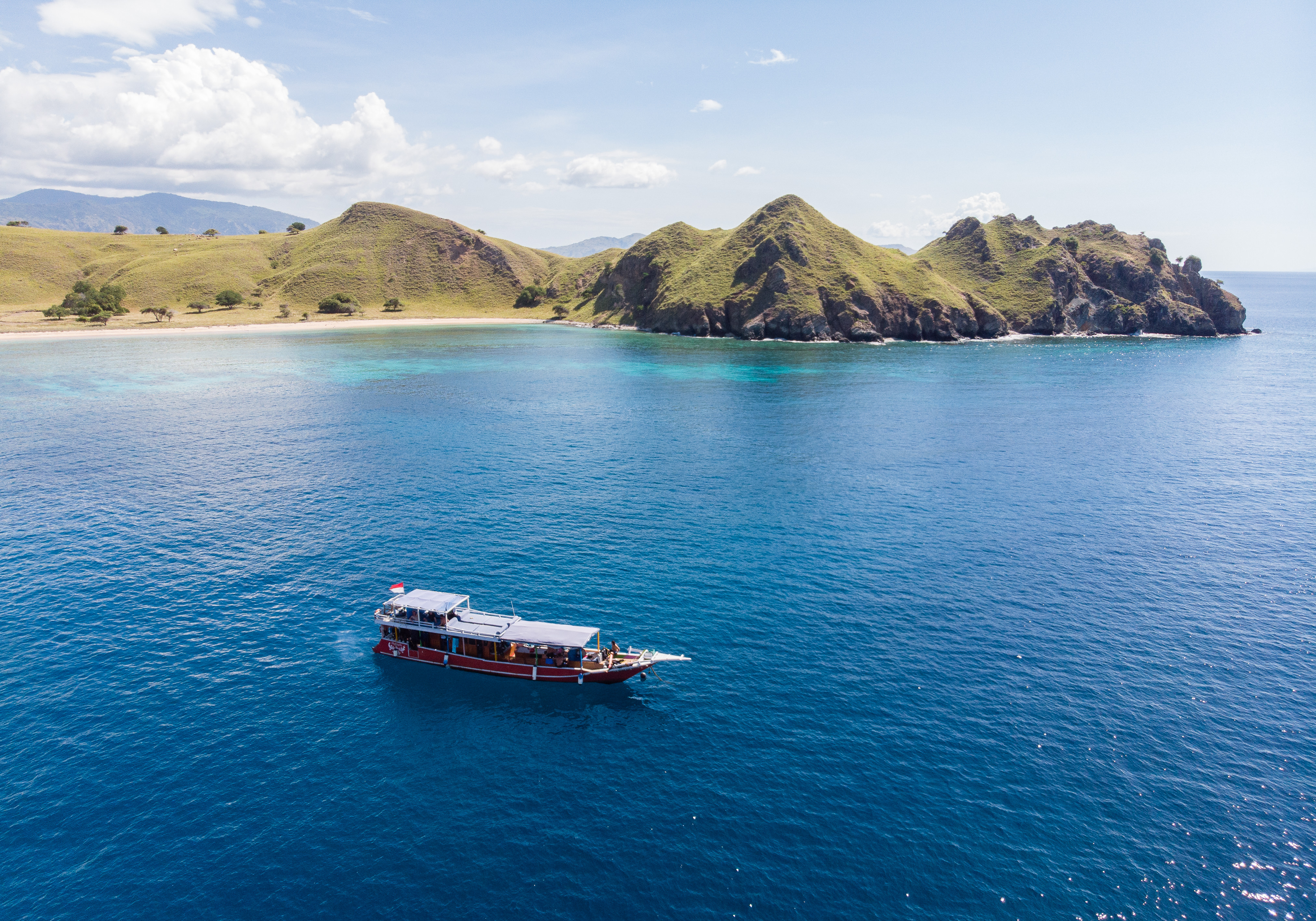
The Similan Islands sit about 60 km off the coast of Phang Nga province in southern Thailand, a chain of nine granite islands protected since 1982 as Mu Ko Similan National Park. Two outlying sites, Koh Bon and Koh Tachai, were added to the park later, and most liveaboard itineraries push further north to Richelieu Rock, which belongs to the neighboring Mu Ko Surin National Park. Together these form the classic Andaman Sea liveaboard route.
What makes the Similans distinctive is the geology. The western sides of the islands are piles of house-sized granite boulders that continue underwater, creating swim-throughs, arches and channels between 5 and 40 meters. The eastern sides are gentler: hard-coral slopes and sandy bottoms with garden eels, rays and the occasional leopard shark. A four-day trip gives you both, then adds the open-water pinnacles further north where the big animals turn up.
Season and access
The park closes every year from mid-May to mid-October during the southwest monsoon, so there is no diving here in the northern-hemisphere summer. Boats start running again in mid-October and the season proper is November to April, with the calmest seas and the best pelagic sightings usually between February and April. Almost all liveaboards leave from Thap Lamu pier near Khao Lak, about 90 minutes north of Phuket airport, and the standard format is four days and four nights covering 12 to 14 dives.
The Similans are one of the more accessible liveaboard destinations in Southeast Asia: Open Water divers can join most trips, the boats range from budget to comfortable, and the coast has a mature dive industry with Khao Lak resorts running day trips by speedboat when a liveaboard is not practical. Diver numbers are managed by the park, and some sites such as Koh Tachai are diving-only with no landing on the island.
Why dive the Similan Islands
Few liveaboard routes combine this much variety in four days: boulder topography, easy reef dives, current-swept pinnacles and two reliable big-animal sites, all within a few hours of each other and a short drive from an international airport.
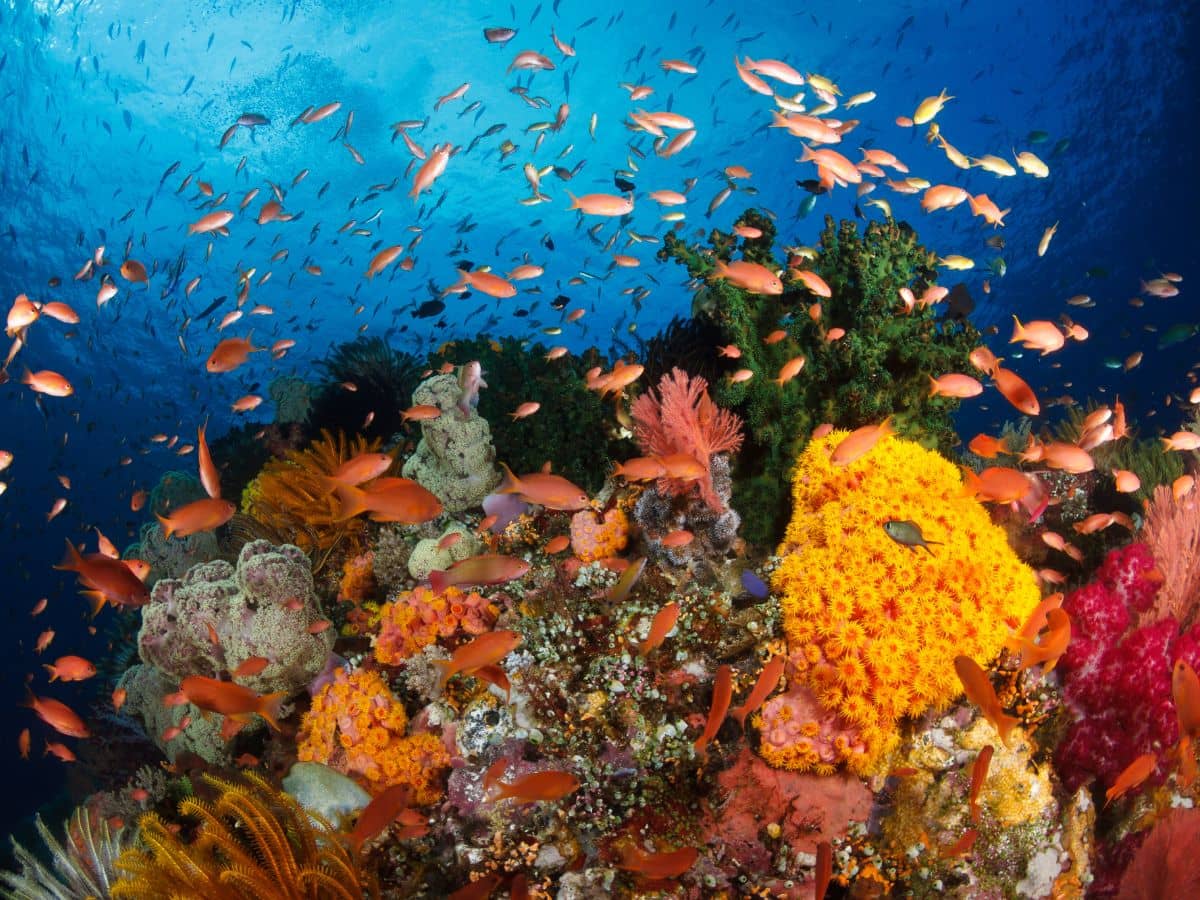
- Richelieu Rock: a horseshoe-shaped pinnacle in Surin waters that is dense with soft coral and fish, and the most frequent whale shark site in Thailand from February to April.
- Manta cleaning station at Koh Bon: the west ridge is a known cleaning station where reef mantas are seen frequently in season, sometimes for a whole dive.
- Granite swim-throughs: Elephant Head Rock and Christmas Point are three-dimensional dives through arches and tunnels that are rare on Southeast Asian reefs.
- Short, easy logistics: Phuket airport to the pier is 90 minutes, boats leave in the evening and you wake up at the islands.
- Open to all levels: sheltered east-side sites suit newer divers, while Koh Tachai and Richelieu give experienced divers current and depth.
- Macro when the big things stay away: tiger-tail sea horses, harlequin shrimp, ghost pipefish and frogfish are found at Richelieu and on the Khao Lak wrecks.
Dive sites in the Similan Islands and Surin
Islands are numbered from south to north; the sites below run in roughly the order a liveaboard visits them. Islands 1 to 3 are a turtle sanctuary and closed to diving.
Anita's Reef (Island 5 and 6)
A gentle sandy slope with coral bommies between 5 and 25 meters, usually the first dive of the trip. The centerpiece is Hin Muan Deaw, a single large boulder covered in soft coral and glassfish. Garden eels, Kuhl's rays and blue-spotted stingrays sit on the sand, and the current is light, which makes it a good check dive.
East of Eden (Island 7)
A classic Similan reef slope from 12 to 35 meters with big gorgonians and a well-known coral bommie at about 20 meters that holds glassfish, lionfish and cleaner shrimp. Look for nudibranchs and ribbon eels on the way up.
Elephant Head Rock (Island 8)
Three granite rocks break the surface and the boulders continue down past 40 meters, forming swim-throughs and canyons. Currents can be surprising here. Whitetip reef sharks rest in the channels and schooling fusiliers gather on the outer edge. This is the signature Similan boulder dive.
Christmas Point (Island 9)
The northernmost Similan site, another boulder field with arches and overhangs between 15 and 35 meters. Sea fans cover the deeper rocks and there is a fair chance of whitetip sharks and, less often, a leopard shark on the sand below.
Koh Bon (West Ridge)
A limestone ridge running out from the island to about 40 meters. Divers hang along the ridge and wait; reef mantas visit the cleaning station regularly from January onward, and the ridge also has schooling batfish and the occasional great barracuda.
Koh Tachai (The Pinnacle)
Also called Twin Peaks, an underwater plateau from 12 to 40 meters with strong currents that bring in trevally, barracuda and sometimes a whale shark or manta. It is the most demanding dive on the route and some operators ask for AOW or a minimum number of logged dives.
Richelieu Rock (Mu Ko Surin)
A horseshoe of limestone that just breaks the surface at low tide and drops to about 35 meters. Every surface is covered in purple soft coral, and the fish density is unusual: schooling snapper, trevally, cuttlefish, pipefish, sea horses and harlequin shrimp, plus the whale sharks that put it on the map. Most boats dive it two or three times.
Marine life in the Similan Islands
The Similans are not a shark destination in the way of the Pacific atolls, but the mix of reef fish, macro and seasonal pelagics is broad, and the northern sites add animals you will not see on the islands themselves. Sightings below are grouped by where you are most likely to find them.
Pelagics
- Whale sharks: seen frequently at Richelieu Rock and Koh Tachai from February to April, never guaranteed.
- Reef manta rays: reliable in season at the Koh Bon cleaning station, occasional at Koh Tachai.
- Trevally, barracuda and rainbow runners on the current-swept pinnacles.
Reef
- Leopard (zebra) sharks resting on sand at Christmas Point and the east-side slopes, less common than a decade ago.
- Whitetip reef sharks in the boulder channels; Kuhl's and blue-spotted rays on the sand.
- Hawksbill and green turtles, Napoleon wrasse, bumphead parrotfish at Koh Bon, large schools of fusiliers, snapper and batfish.
Macro
- Tiger-tail sea horses, ornate ghost pipefish, harlequin shrimp and frogfish at Richelieu Rock.
- Ribbon eels, nudibranchs, cuttlefish and cleaner shrimp on the Similan reefs.
- Honeycomb morays and scorpionfish on the Boonsung and Premchai wrecks off Khao Lak.
Dive conditions
Water temperature stays between 27 and 30C throughout the season, with occasional cooler thermoclines below 25 meters from February onward. A 3 mm shorty is enough for many divers; a 3 mm full suit is better for four dives a day and the night dive.
Visibility is generally 20 to 40 meters at the Similan Islands, lower at Richelieu Rock and Koh Tachai when plankton blooms bring in the filter feeders. Currents are light on the east-side reefs and moderate on the boulder sites, but Koh Tachai and Richelieu can have strong, changing current; briefings there matter and a surface marker buoy is standard.
Most sites sit between 12 and 30 meters, with boulder fields continuing beyond 40. Open Water certification is enough for the majority of the route, and Advanced Open Water or an equivalent number of logged dives is recommended for the northern pinnacles. Nitrox is available on most boats and worthwhile for repetitive dives at 25 to 30 meters.
Similan Islands through the year
Water and air temperature, visibility and rainfall for every month, with the windows we would book ourselves. Hover or tap a month for the detail.
- Water
- Air
- Visibility
- Rain
Show the monthly data as a table
| Month | Water °C | Air °C | Visibility | Rain | Diving | Notes |
|---|---|---|---|---|---|---|
| Jan | 27–29 °C | 23–32 °C | 25–40 m | 30 mm | Peak | Calm seas, clearest water; mantas begin at Koh Bon |
| Feb | 27–29 °C | 23–33 °C | 25–40 m | 30 mm | Peak | Whale shark window opens at Richelieu Rock |
| Mar | 28–30 °C | 24–34 °C | 20–35 m | 60 mm | Peak | Most frequent whale shark and manta sightings |
| Apr | 28–30 °C | 25–34 °C | 20–30 m | 130 mm | Peak | Warmest water; plankton can lower visibility |
| May | 28–30 °C | 25–33 °C | 15–25 m | 300 mm | Possible | Last departures; park closes mid-May |
| Jun | 28–30 °C | 24–31 °C | 10–20 m | 260 mm | Closed / not diveable | Park closed (southwest monsoon) |
| Jul | 28–29 °C | 24–31 °C | 10–20 m | 300 mm | Closed / not diveable | Park closed |
| Aug | 28–29 °C | 24–31 °C | 10–20 m | 310 mm | Closed / not diveable | Park closed |
| Sep | 28–29 °C | 24–31 °C | 10–20 m | 350 mm | Closed / not diveable | Park closed; wettest month |
| Oct | 28–29 °C | 24–31 °C | 15–25 m | 300 mm | Possible | Park reopens mid-October; seas still settling |
| Nov | 28–29 °C | 23–31 °C | 20–30 m | 180 mm | Good | Early season, quieter boats and sites |
| Dec | 27–29 °C | 23–31 °C | 25–35 m | 70 mm | Peak | Calm seas; holiday departures sell out early |
Best time to visit Similan Islands
The park is open from mid-October to mid-May and closed to all visitors from mid-May to mid-October, when the southwest monsoon makes the crossing rough and the moorings unsafe. Within the open season the windows differ mainly by sea state, crowding and pelagic sightings, and there is no bad month once the boats are running.
- Mid-October to November: the first boats of the season, sometimes lively seas, quieter sites and coral that has had five months without divers.
- December to January: peak holiday demand and the calmest, clearest water; book early for Christmas and New Year departures.
- February to April: the most reliable period for whale sharks at Richelieu Rock and mantas at Koh Bon, with plankton occasionally reducing visibility; water is at its warmest in April.
- Early May: the last departures before closure, with fewer boats and a fair chance of pelagics but a rising risk of swell.
Getting to the Similan Islands
The gateway is Phuket International Airport (HKT), which has direct flights from most Asian hubs, the Gulf and, seasonally, Europe, plus frequent domestic connections from Bangkok Suvarnabhumi (BKK) and Don Mueang (DMK). Krabi (KBV) is an alternative but adds two to three hours by road.
Liveaboards embark at Thap Lamu pier, just south of Khao Lak in Phang Nga province, about 90 minutes north of Phuket airport by taxi or minivan. Most operators include or arrange transfers from Phuket airport, Phuket town and Khao Lak hotels. Boats typically leave in the evening and cross to the islands overnight; the return is usually mid-afternoon on the last day, so allow an overnight in Khao Lak or Phuket before a flight home rather than relying on a same-day connection.
Day trips to the Similans and, on longer days, to Richelieu Rock run by speedboat from Khao Lak, and from Phuket with a longer transfer. The crossing is about 90 minutes each way.
Many nationalities enter Thailand visa-free for tourism, with the permitted stay currently 30 to 60 days depending on passport; check the latest rules before travel.
Getting to Similan Islands, and what to know before you go
About 90 min by road to Thap Lamu pier (Khao Lak); most operators arrange transfers
Frequent 80-min domestic flights to HKT
Low-cost domestic flights to HKT
About 3 h by road to Khao Lak; useful only if fares to HKT are poor
Thap Lamu (Khao Lak) · Chalong (Phuket)
- Best season
- Nov–Apr
- Off season
- Park closed mid-May to mid-October (southwest monsoon)
- Typical trip
- 4 nights (2 to 6 nights available)
- Experience
- OW
- Park / marine fee
- Mu Ko Similan approximately THB 500 entry plus THB 200 per diving day for foreigners; Mu Ko Surin (Richelieu Rock) charged separately at similar rates
- Visa
- Visa-free entry for many nationalities, currently 30 to 60 days depending on passport
- Nitrox
- Available on most liveaboards, usually at extra cost
- Currency
- Thai baht (THB)
- Language
- Thai; English spoken on boats and in dive centers
- Time zone
- UTC+7 (ICT)
- Power
- Type A/B/C/O, 220 V
- Whale shark
- Reef manta ray
- Leopard (zebra) shark
- Tiger-tail sea horse
- Whitetip reef shark
- Harlequin shrimp
- Hawksbill turtle
- Great barracuda
| Species | Months | Where |
|---|---|---|
| Whale shark | Feb–Apr | Richelieu Rock, Koh Tachai |
| Reef manta ray | Jan–Apr | Koh Bon west ridge, Koh Tachai |
| Leopard (zebra) shark | Nov–Apr | Christmas Point, east-side sandy slopes |
| Tiger-tail sea horse | Nov–Apr | Richelieu Rock |
| Whitetip reef shark | Nov–Apr | Elephant Head Rock, Christmas Point |
Seasons are typical, not guaranteed: sightings depend on currents, weather and luck.
Practical information
Park fees: Mu Ko Similan National Park charges foreign visitors approximately THB 500 per entry plus a diving fee of approximately THB 200 per day. Richelieu Rock lies in Mu Ko Surin National Park, which charges its own entry and diving fee at similar rates. Operators usually collect these in cash at check-in on top of the trip price; confirm what is included.
Money: the currency is the Thai baht. Cards are accepted in Khao Lak and Phuket, but bring cash for park fees, crew tips and anything bought on board.
Diving: nitrox is offered on most liveaboards; dive insurance covering hyperbaric treatment is expected, and there are chambers in Phuket. The park bans touching, feeding and collecting; reef hooks are not used.
Practicalities: 220 V with type A, B, C and O sockets; Thai is the language, with English spoken throughout the dive industry.
Tips & recommendations
- Book February to April early: the whale shark window sells out first, particularly on the smaller boats.
- Bring a surface marker buoy: currents at Koh Tachai and Richelieu can carry you off the site; a DSMB and a whistle are expected.
- Plan an extra night: boats return to Thap Lamu in the afternoon; flying out the same evening is possible but tight.
- Pack for four dives a day: a full 3 mm suit, a hood or vest for the night dive and reef-safe sunscreen for the deck.
- Carry baht for fees: park and diving fees are often collected in cash on the pier.
- Consider the closure: if your dates fall between mid-May and mid-October, look at Thailand's Gulf side or another destination.
- Stay a night in Khao Lak: the town has a relaxed beach and day-trip wrecks if you arrive early.