Introduction to diving Lembeh Strait
Lembeh Strait is a channel roughly 16 km long and 1 to 2 km wide, separating Lembeh Island from the mainland of North Sulawesi at the port city of Bitung. The bottom is volcanic sand, dark grey to black, mixed with rubble, seagrass patches, sponges and the debris that accumulates near a working harbour. That combination is the reason the strait exists as a dive destination: animals that would be invisible on a coral reef are exposed on flat sand, and species that evolved to mimic silt and litter thrive here in numbers found almost nowhere else.
Diving is done from small boats out of resorts strung along both sides of the strait. Sites are typically two to fifteen minutes away, depths run 5 to 25 meters, and dives are slow and long. A guide with a pointer moves a few meters at a time, and it is entirely normal to spend a whole tank inside a 30 meter radius. Four dives a day plus a night dive is the standard rhythm, and camera setups outnumber divers who do not shoot.
Not a reef destination, and not pretending to be
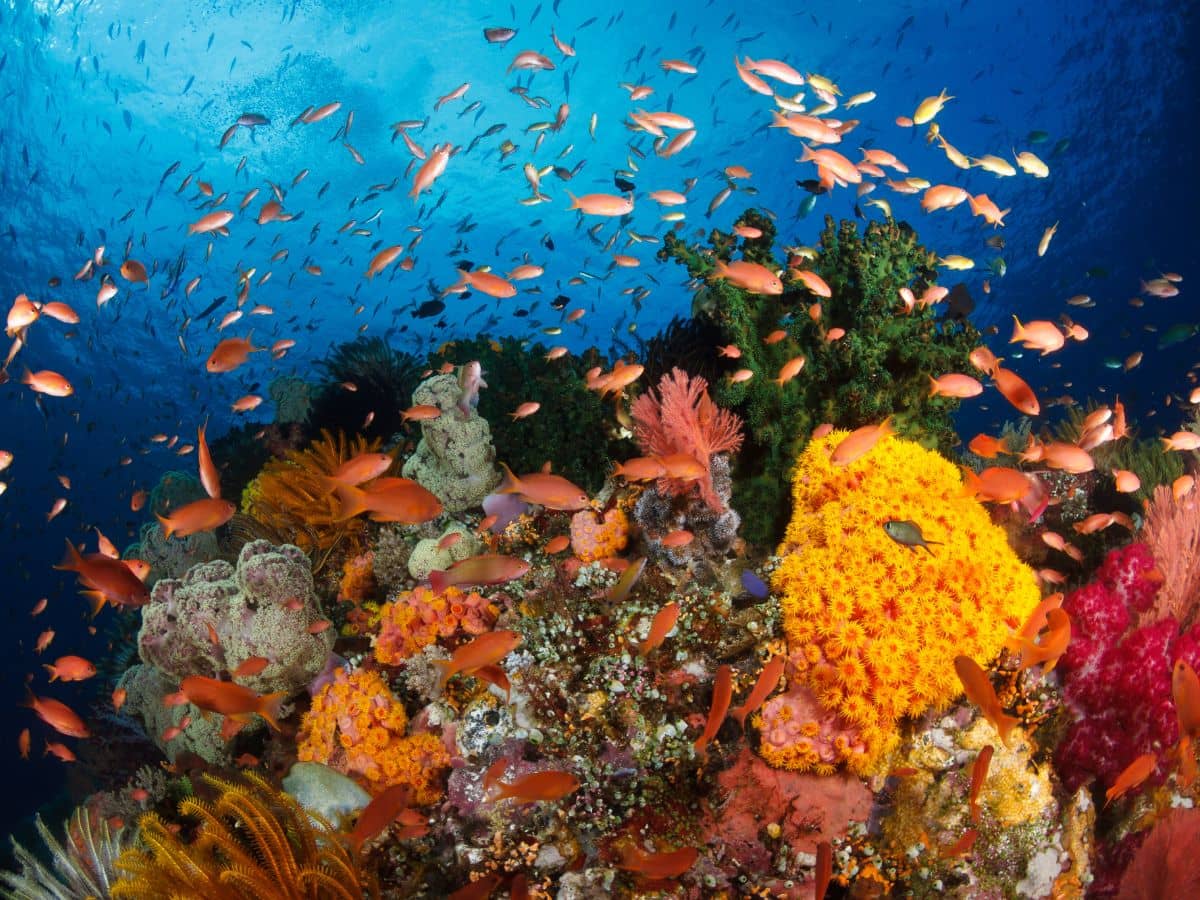
Lembeh has some reef and wall diving on the outer, seaward side of Lembeh Island, and Bunaken National Marine Park is close enough to add as a few days of wall diving on the same trip. But the strait itself is about the sand. Divers who arrive expecting coral gardens and clear blue water are in the wrong place, and divers who arrive with a macro lens and no schedule tend to describe it as the best diving they have done.
Bitung is an active fishing and container port, so the surface traffic is real and the water is not pristine in the postcard sense. Underwater it is what makes the destination work: nutrient-rich, productive, and full of things that eat, mate and hunt in front of you.
Why dive Lembeh Strait
Lembeh is a specialist destination, and for the divers it suits there is nothing comparable at any price.
- Density of rare species: hairy frogfish, mimic octopus, wonderpus, blue-ringed octopus, flamboyant cuttlefish and Rhinopias are all realistic in a single week, not once in a diving lifetime.
- Animals in the open: bare sand means no coral to hide behind, so behaviour, hunting and mating are visible in a way that reef diving rarely allows.
- Guides who are the product: Lembeh spotters work the same sites daily for years and find things a visiting diver would swim over a hundred times.
- Easy conditions: shallow, sheltered, usually little or no current, and sites minutes from the resort, which makes five dives a day sustainable.
- Year-round diving: no closed season, and the cooler upwelling months from July to September actually improve the critter list.
- Bunaken next door: the wall diving of Bunaken National Marine Park is a short transfer away for divers who want coral and clear water in the same trip.
Dive sites in Lembeh Strait
There are more than 40 named sites along the strait, most of them a stretch of sloping black sand with a marker on the surface. What distinguishes them is the substrate: fine silt, coarse rubble, seagrass, sponge fields or wreck debris, and each of those holds different animals.
Hairball
The site most associated with Lembeh and the one that produces the improbable: hairy frogfish, mimic and wonderpus octopus, flamboyant cuttlefish, stargazers, bobbit worms and juvenile fish with no business being visible. A gentle silt slope with almost nothing on it, dived very slowly. Regularly used as a night dive as well.
Nudi Falls
An exception in the strait: a small wall and a bommie draped in soft coral and sponges, sitting next to sand. Pygmy seahorses on the fans, nudibranchs everywhere the name suggests, plus frogfish, octopus and pipefish. One of the prettiest sites in Lembeh and a good first dive for anyone unsure about muck.
TK 1, 2 and 3 (Teluk Kembahu)
A bay divided into three sites, and the classic hunting ground for cephalopods. Mimic octopus and wonderpus on open sand, blue-ringed octopus in shells and bottles, plus coconut octopus carrying their own housing. Also seahorses, snake eels and juvenile lionfish in the shallows.
Jahir
Silt and rubble with scattered sponges and hydroids. Known for hairy frogfish, ornate and robust ghost pipefish, Ambon scorpionfish, harlequin shrimp and an enormous variety of nudibranchs. The kind of site where the guide finds four things in five minutes and none of them are on the same list as yesterday.
Police Pier
A jetty with pilings, shade and structure over a sandy bottom. Pipefish, seahorses, frogfish, cardinalfish holding eggs, and juveniles sheltering under the deck. Shallow, easy and a strong night dive for hunting octopus and bobtail squid.
Angel Window
A pinnacle on the northern part of the strait with a swim-through and a small wall, offering the strait version of a reef dive. Sea fans with pygmy seahorses, soft coral, schooling fusiliers over the top and a fair chance of turtles, with sand on the flanks for the usual critters.
Mawali Wreck
A Japanese cargo vessel lying on its side between about 18 and 30 meters, encrusted with soft coral and sponges. Not a technical wreck dive, but the structure holds frogfish, lionfish, scorpionfish, nudibranchs and glassfish, and it adds a change of pace to a week on flat sand.
California Dreaming
A steep slope on the outer, seaward side of Lembeh Island with more current and better visibility than the inner strait. Barrel sponges and gorgonians, schooling fish over the drop, and a genuine chance of larger visitors passing in the blue. Dived when the strait is flat and conditions allow the crossing.
Marine life in Lembeh Strait
The strait is one of the most surveyed critter sites in the world, and several species were described from here, including the tiny Lembeh sea dragon pipefish. What matters to a diver is that the list below is a realistic week, not a wish list.
Cephalopods
- Mimic octopus and wonderpus on open sand, usually in the morning.
- Blue-ringed octopus in shells, bottles and rubble, and mototi octopus in bottles.
- Coconut octopus carrying shells and half coconuts across the sand.
- Flamboyant cuttlefish walking on the bottom, plus bobtail squid at night.
Fish that do not look like fish
- Hairy frogfish, painted, giant, warty and juvenile frogfish across most sites.
- Rhinopias, most reliable in the cooler months from July to October.
- Ambon scorpionfish, devil scorpionfish, stargazers and crocodile fish.
- Ornate and robust ghost pipefish, seahorses, pygmy seahorses and Pegasus sea moths.
- Mandarinfish emerging at dusk over rubble patches.
Invertebrates
- Harlequin shrimp on sea stars, Coleman shrimp on fire urchins, and hairy shrimp on algae.
- Bobbit worms striking out of the sand, mostly on night dives.
- Hundreds of nudibranch species, plus Melibe, Solar-powered nudibranchs and flatworms.
- Skeleton shrimp, porcelain crabs, orangutan crabs and commensal shrimp on every anemone.
Dive conditions
Water temperature is 25 to 29C. It sits at 28 to 29C for most of the year and drops noticeably from July to September, when upwelling pushes cooler water into the strait and readings of 25 to 26C are common. That cool water is welcomed by critter hunters because it brings Rhinopias and other seasonal species with it, but it changes what you wear. A 5 mm full suit is the sensible default in Lembeh year round, and a hood and vest in the cool months, because these are 70 minute dives spent almost motionless.
Visibility is 5 to 20 meters and typically around 10 to 15. It is silt and plankton, not pollution in the way people assume, and it is irrelevant to the diving: everything you photograph is within a meter. Fine silt does mean buoyancy control is the single most important skill here, since one careless fin kick blacks out a site for everyone behind you.
Current is usually light inside the strait, occasionally moderate on the northern and southern entrances where tidal flow accelerates, and stronger on the outer sites off the seaward side of Lembeh Island. Depths are shallow, mostly 5 to 25 meters, so no-decompression time is rarely the constraint; gas and cold usually end the dive first. Open Water certification is enough, though good buoyancy matters more than the card. Nitrox is available at most resorts but is often unnecessary at these depths. The nearest recompression chamber is in Manado, roughly two hours away by road.
Lembeh Strait through the year
Water and air temperature, visibility and rainfall for every month, with the windows we would book ourselves. Hover or tap a month for the detail.
- Water
- Air
- Visibility
- Rain
Show the monthly data as a table
| Month | Water °C | Air °C | Visibility | Rain | Diving | Notes |
|---|---|---|---|---|---|---|
| Jan | 28–29 °C | 23–30 °C | 5–15 m | 340 mm | Good | Rainy season, run-off after storms |
| Feb | 28–29 °C | 23–30 °C | 5–15 m | 300 mm | Good | Wet weeks, critters unaffected |
| Mar | 28–29 °C | 23–31 °C | 10–20 m | 250 mm | Good | Rain easing, water warm |
| Apr | 28–29 °C | 24–31 °C | 10–20 m | 200 mm | Peak | Calm strait, full critter list |
| May | 28–29 °C | 24–31 °C | 10–20 m | 180 mm | Peak | Warm water, mandarinfish active |
| Jun | 27–29 °C | 24–31 °C | 10–20 m | 150 mm | Peak | Dry season starts, flat water |
| Jul | 26–28 °C | 23–31 °C | 10–20 m | 120 mm | Peak | Upwelling begins, Rhinopias arrive |
| Aug | 25–27 °C | 23–31 °C | 10–20 m | 90 mm | Peak | Coldest water, peak critter season |
| Sep | 25–28 °C | 23–31 °C | 10–20 m | 110 mm | Peak | Cool water, busiest weeks |
| Oct | 27–29 °C | 24–31 °C | 10–20 m | 170 mm | Peak | Warming again, still excellent |
| Nov | 28–29 °C | 24–31 °C | 5–15 m | 250 mm | Good | Rain returns, plankton in strait |
| Dec | 28–29 °C | 23–31 °C | 5–15 m | 320 mm | Good | Wettest month, quieter resorts |
Best time to visit Lembeh Strait
Lembeh dives all year and never closes. The two variables are rainfall, which peaks with the northwest monsoon from November to March, and water temperature, which drops with the upwelling from July to September. Neither stops the diving, and the cool season is regarded by many regulars as the best of the year.
- March to June: warm water at 28 to 29C, rain easing, calm strait and a full critter list. A comfortable all-round window with fewer guests than the peak.
- July to September: the peak. Upwelling drops water to 25 to 27C, brings Rhinopias and other cool-water species, and coincides with the driest weather. Book well ahead and pack more neoprene than you think.
- October to November: water warms again, conditions stay good and resorts quieten before the holidays. Rain starts returning late in the period.
- December to February: the wet season, with heavy rain, occasional run-off and slightly softer visibility in the strait. The critters are unaffected, prices are lower, and the boats still go out most days.
Getting to Lembeh Strait
The gateway is Sam Ratulangi International Airport (MDC) at Manado in North Sulawesi. Manado has frequent domestic flights from Jakarta (CGK), about three and a half hours, and services from Bali Denpasar (DPS) and Makassar (UPG). Some international routes from East Asian cities operate seasonally, but most travelers connect through Jakarta.
From the airport it is a road transfer of roughly 90 minutes to two hours to Bitung, the port at the head of the strait, arranged by every resort. Resorts on the mainland side are reached by road all the way; resorts on Lembeh Island are a further 10 to 20 minutes by boat from the Bitung jetty. Transfers run to fixed departures, so an evening arrival into Manado often means a night in the city.
Typical stays are seven to ten nights, which is what it takes to work through the site list at four or five dives a day. Many divers combine Lembeh with three or four nights in Bunaken National Marine Park on the other side of Manado, giving wall and coral diving in the same trip with only a road transfer between them.
Indonesia grants visa-free entry or visa on arrival to most nationalities for 30 days, with the visa on arrival extendable once. Confirm the current list and fee before departure.
Getting to Lembeh Strait, and what to know before you go
Road transfer 90 min to 2 h to Bitung, plus a 10 to 20 min boat to Lembeh Island resorts
Frequent 3 h 30 domestic flights to Manado
Domestic flights to Manado, direct or via Makassar
Bitung
- Best season
- Jul–Sep
- Off season
- Dec–Feb northwest monsoon: heavy rain, softer visibility, diving continues
- Typical trip
- 7–10 nights (often plus 3–4 in Bunaken)
- Experience
- Open Water, about 0 logged dives
- Park / marine fee
- No national park fee for Lembeh Strait; some resorts add a small local reef or village levy. Adding Bunaken National Marine Park costs an entrance tag of around IDR 150,000 valid for the calendar year
- Visa
- Visa-free or visa on arrival for most nationalities, 30 days, extendable once
- Nitrox
- Available at most resorts, though shallow muck profiles rarely need it
- Currency
- Indonesian rupiah (IDR)
- Language
- Indonesian and Manado Malay; English standard at the resorts
- Time zone
- UTC+8 (WITA)
- Power
- Type C/F, 230 V
- Hairy frogfish
- Mimic octopus
- Wonderpus
- Blue-ringed octopus
- Flamboyant cuttlefish
- Rhinopias
- Bobbit worm
- Harlequin shrimp
| Species | Months | Where |
|---|---|---|
| Rhinopias | Jul–Oct | Deeper sand slopes during the cool upwelling |
| Hairy frogfish | Year round, more Jul–Oct | Hairball, Jahir, Aer Prang |
| Mimic octopus and wonderpus | Year round | Open black sand at TK and Hairball, mornings |
| Mandarinfish | Year round | Rubble patches and jetties at dusk |
| Blue-ringed octopus | Year round | Shells and bottles at TK and Police Pier |
| Ornate ghost pipefish | Jun–Nov | Crinoids and hydroids at Jahir and Nudi Falls |
Seasons are typical, not guaranteed: sightings depend on currents, weather and luck.
Practical information
Fees: there is no national park fee for Lembeh Strait itself. Some resorts collect a small local reef or village levy, usually a few euro equivalent for the stay. If you add days in Bunaken National Marine Park you pay the Bunaken entrance tag, around IDR 150,000, which is valid for the calendar year.
Rules: no touching, no moving animals for a photograph and no baiting. Do not let a guide place a critter on open sand for a better shot; the practice is common enough that it is worth stating your position on day one. Muck-stick use should be limited to dead substrate.
Money: the Indonesian rupiah is the currency. Resorts settle main bills by card or transfer; carry cash for tips, local levies and anything bought in Bitung. ATMs are in Bitung and Manado, not on Lembeh Island.
Diving: nitrox is available at most resorts but the shallow profiles rarely require it. The nearest recompression chamber is in Manado, about two hours by road, and evacuation for anything serious is to Jakarta or Singapore, so insurance is essential.
Practicalities: 230 V with type C and F sockets; Indonesian and Manado Malay are spoken, and English is standard at the resorts. North Sulawesi is predominantly Christian, so the food and the calendar differ from most of Indonesia.
Tips & recommendations
- Bring more exposure protection than the temperature suggests: a 5 mm plus a hood is normal, and in July to September at 25C it is not optional.
- Perfect your buoyancy before arriving: the silt is fine and unforgiving, and a single kick ruins the site for the divers behind you.
- Shoot macro and stay macro: a 60 mm for behaviour and a 105 mm for the tiny stuff; wide angle earns its place only on Nudi Falls, the wreck and the outer sites.
- Do the night dives: bobbit worms, hunting octopus, bobtail squid and stargazers are mostly an after-dark proposition.
- Tell your guide what you want to find: spotters work to a list, and a specific request at breakfast changes which sites the boat runs.
- Add Bunaken for contrast: three or four days of wall diving on the other side of Manado stops a week of black sand becoming monotonous.
- Bring spare o-rings and camera consumables: there is no camera shop in Bitung and the nearest useful supply is Manado.