Introduction to diving Fiji
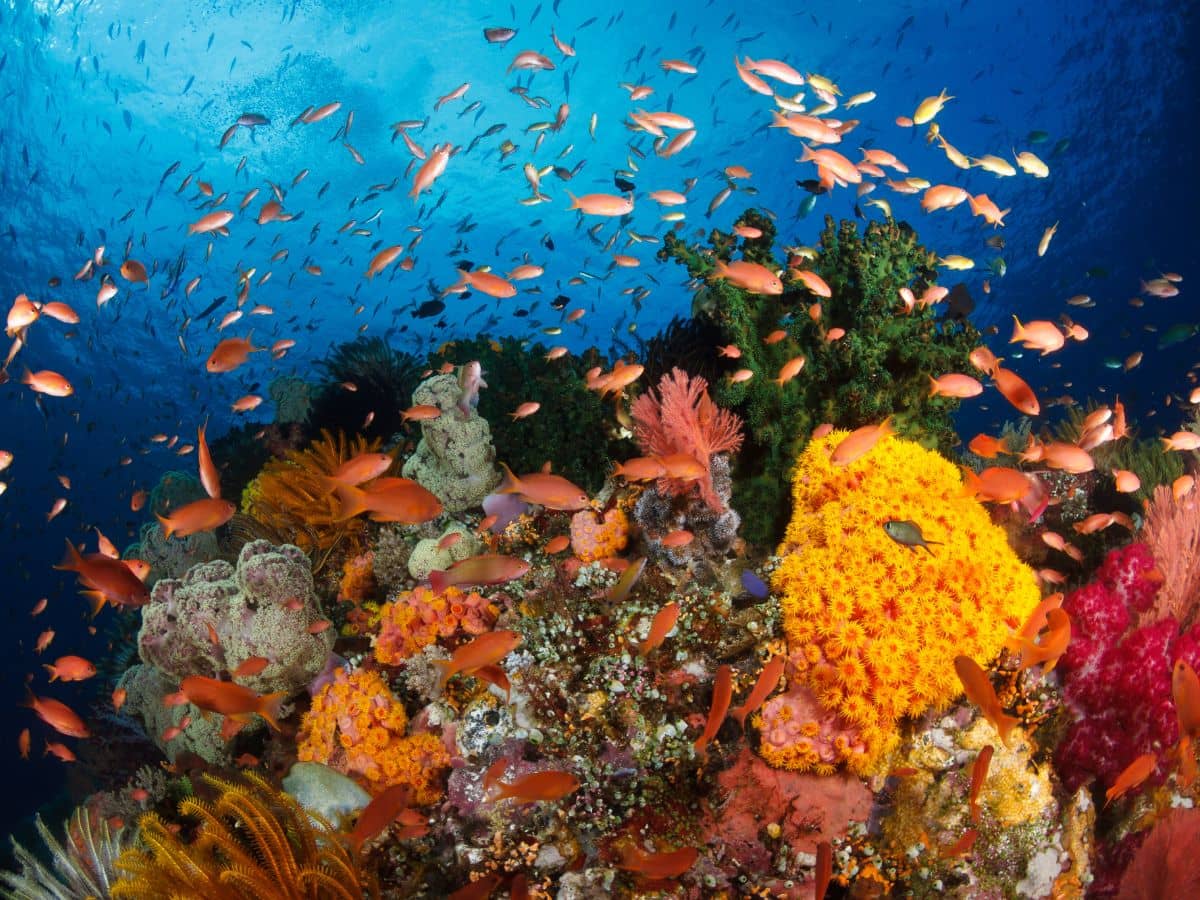
Fiji sits in the South Pacific between Vanuatu and Tonga, with more than 300 islands spread across a shallow archipelago cut by deep channels. The two main islands, Viti Levu and Vanua Levu, are separated by Bligh Water, and the tidal flow that funnels through that gap and through the straits and passages around it is the engine of the diving. Current brings nutrients, nutrients feed soft coral, and soft coral is what Fiji is famous for: entire walls upholstered in Dendronephthya that inflate and glow when the tide runs.
Diving is spread across three main regions that feel like different destinations. Bligh Water, reached mostly by liveaboard, holds isolated seamounts and pinnacles rising from deep water. The Somosomo Strait between Taveuni and Vanua Levu is a narrow tidal channel containing Rainbow Reef and the Great White Wall, dived from resorts on Taveuni and Vanua Levu. Beqa Lagoon, south of Viti Levu near Pacific Harbour, is home to Shark Reef Marine Reserve and the best organised shark feed in the Pacific.
Liveaboard or resort
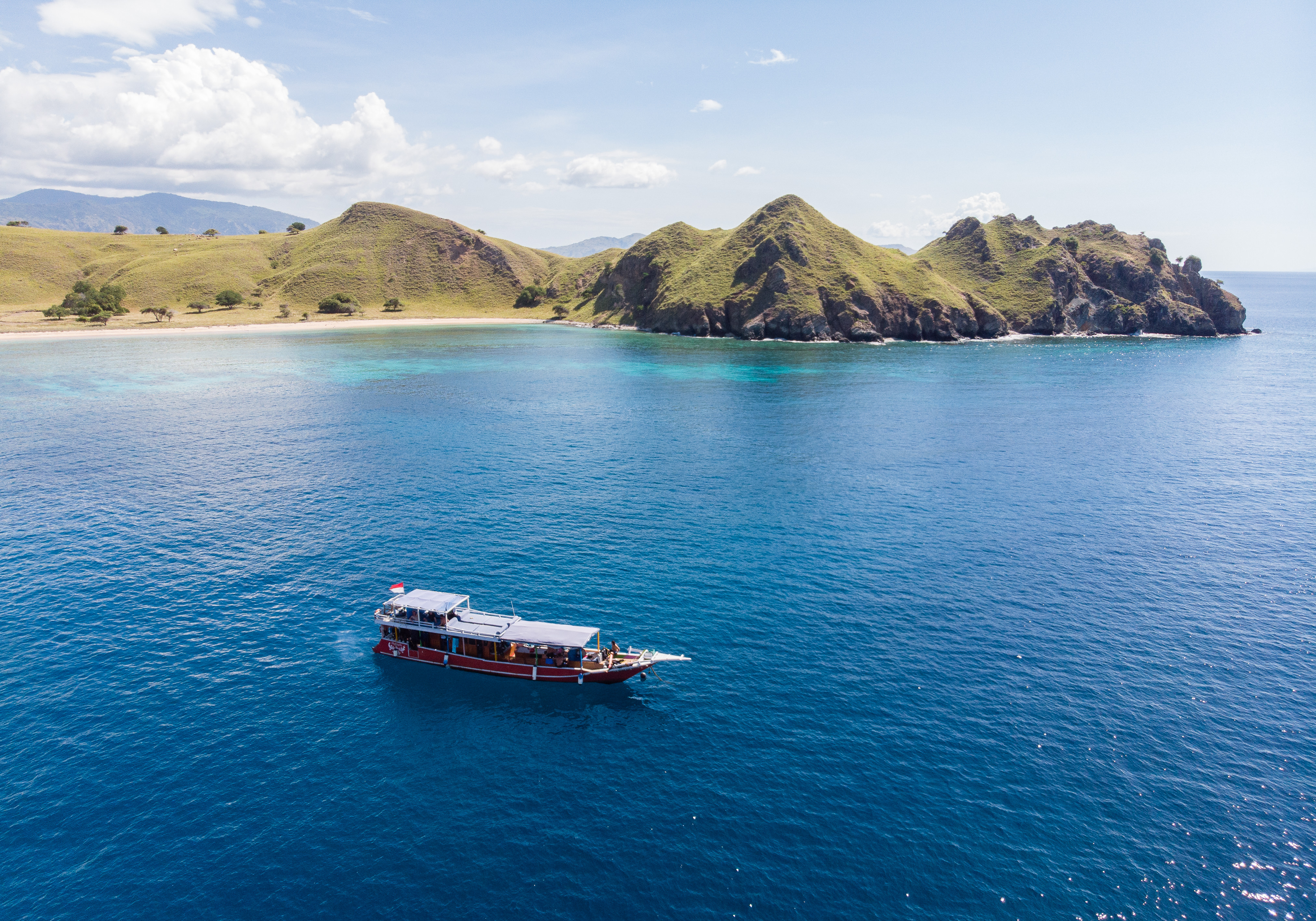
Both models work here and they cover different ground. Liveaboards run week-long Bligh Water and Namena itineraries that reach pinnacles no day boat can service, and they are the only realistic way to dive the remote Lomaiviti and Vatu-i-Ra sites properly. Resorts on Taveuni, Vanua Levu, Beqa and the Coral Coast run two or three dives a day to reefs that are 10 to 45 minutes away, cost less, and suit divers travelling with families.
Fiji is also unusually easy for a destination with this much current, because the operators plan dives around slack and the drift is almost always along a wall rather than out into open water. Reefs belong to customary owners here, and most of the diving takes place under agreements with the villages that hold those rights, which is why small reef levies rather than national park fees are the norm.
Why dive Fiji
Fiji is the colour destination of the Pacific, and it packs soft coral, big animals and easy logistics into one trip.
- Soft coral like nowhere else: tidal flow feeds Dendronephthya colonies that cover walls, bommies and overhangs in pink, yellow, orange and violet, at their best when the current runs.
- The Great White Wall: a chimney in the Somosomo Strait opens onto a slope entirely covered in pale soft coral that reads as white underwater, one of the signature dives in the Pacific.
- The Beqa shark dive: a managed feed inside Shark Reef Marine Reserve that regularly puts bull sharks and, seasonally, tiger sharks in front of divers alongside up to eight shark species.
- Bligh Water pinnacles: seamounts such as E6 and Mount Mutiny rise from hundreds of meters, with anthias clouds, sea fans and pelagic traffic in the blue.
- Warm water all year: 25 to 30C with no closed season, and 30 to 40 meters of visibility through the dry months.
- Genuinely easy travel: direct international flights into Nadi from Australia, New Zealand, the United States and Asia, English spoken everywhere, and short domestic hops to the dive islands.
Dive sites in Fiji
The sites below span the three main regions. Somosomo and Beqa are dived from resorts, Bligh Water and Namena mostly from liveaboards, and a week in any one of them barely scratches the list.
Great White Wall (Somosomo Strait)
The dive Fiji is best known for. A swim-through starting around 15 meters drops through the reef and exits onto a sloping wall blanketed in pale soft coral that appears white or lavender in ambient light. It works only on a running tide with the corals inflated, so operators time it against slack water and it can be cancelled if the tide is wrong.
Rainbow Reef: The Zoo and Annie Bommie (Somosomo Strait)
Rainbow Reef is the long reef system along the strait, and these two are its most dived sections. The Zoo is a series of coral heads and cuts packed with reef fish, anemones and soft coral. Annie Bommie is a single tower rising to about 10 meters, covered in yellow and orange soft coral, with schooling fusiliers and anthias over the top.
Purple Wall (Somosomo Strait)
A wall between roughly 12 and 25 meters hung with violet soft coral, sea fans and overhangs full of small fish. Easier than the Great White Wall and often dived as the second tank of the morning, with leaf scorpionfish, nudibranchs and blue ribbon eels for anyone looking closely.
E6 (Bligh Water)
A seamount rising from over 900 meters to just below the surface, with vertical walls on every side and a cathedral-like cavern in the reef. Enormous sea fans, dense soft coral and open blue water that produces grey reef sharks, barracuda, tuna and, occasionally, hammerheads. Liveaboard territory and one of the best sites in the country.
Mount Mutiny (Bligh Water)
A neighbouring pinnacle famous for the Rainbow Wall, a face carpeted in soft coral in bands of colour. Depths run from 5 meters at the top to well beyond recreational limits, so the dive is usually a slow spiral up the tower with the current holding the corals open.
Mellow Yellow and Coral Corner (Vatu-i-Ra Passage)
The Vatu-i-Ra passage funnels the tide between Viti Levu and Bligh Water. Mellow Yellow is a wall of yellow soft coral on a shallow bommie system; Coral Corner sits where the current splits, gathering jacks, barracuda, grey reef sharks and turtles. Both are usually dived on an incoming tide.
Grand Central Station (Namena Marine Reserve)
A pinnacle at the southern tip of the Namena barrier reef, and one of the busiest sites in Fiji for fish. Schooling barracuda, jacks and grey reef sharks work the point in current, with eagle rays and grey whaler traffic in the blue. Namena is a no-take reserve and the difference in fish size is obvious.
Shark Reef Marine Reserve (Beqa Lagoon)
A managed, baited shark dive off Pacific Harbour inside a reserve declared as a national marine park in 2014, funded by a diver levy paid to the villages of Galoa and Wainiyabia. Divers kneel behind a low coral wall at about 30 meters, then move shallower through the dive. Bull sharks are the constant, joined by sicklefin lemon, tawny nurse, whitetip, blacktip, grey reef and silvertip sharks, with tiger sharks appearing seasonally.
Frigate Passage (Beqa Lagoon)
The pass on the western side of the Beqa barrier reef, a long drift along a wall and coral shelf with real current. Grey reef and whitetip sharks, schooling jacks, big Napoleon wrasse and soft coral overhangs, and one of the more exhilarating dives available from a resort in Fiji.
Marine life in Fiji
Fiji sits at the eastern edge of the Indo-Pacific coral belt, with around 1,200 fish species and several hundred corals recorded. The signature is not a single animal but the soft coral itself, and the shark diving in Beqa is among the best documented in the world.
Coral and reef
- Dendronephthya soft coral in pink, yellow, orange, violet and white, at its most spectacular in current.
- Huge gorgonian sea fans and black coral trees on the Bligh Water pinnacles.
- Anthias, fusiliers and damselfish in dense clouds over the bommies.
- Anemone fields with clownfish across the shallow reefs.
Sharks and pelagics
- Bull sharks, the constant at Shark Reef Marine Reserve, often more than twenty on a dive.
- Tiger sharks at Beqa, most frequent in the warmer months from around November to April.
- Sicklefin lemon, tawny nurse, whitetip, blacktip, grey reef and silvertip sharks, all recorded on the Beqa feed.
- Grey reef sharks and schooling barracuda and jacks at Grand Central Station, Frigate Passage and Coral Corner.
- Manta rays in the Yasawa channels and around Kadavu, mostly from May to October.
- Humpback whales passing through Fijian waters between roughly July and September, heard more often than seen.
Reef fish and macro
- Napoleon wrasse, bumphead parrotfish, large groupers and green and hawksbill turtles.
- Blue ribbon eels, leaf scorpionfish, lionfish and banded sea kraits on the walls.
- Nudibranchs, flatworms, anemone shrimp and pipefish for divers who slow down.
Dive conditions
Water temperature swings more than most tropical destinations: 28 to 30C from December to April, dropping to 25 to 27C from July to September. A 3 mm full suit covers the warm season, but for the dry season peak most divers want a 5 mm, and anyone doing four dives a day in August should add a hood and vest. The Beqa shark dive, spent largely stationary at 25 to 30 meters, is colder than the water temperature suggests.
Visibility is 15 to 40 meters. The dry months from July to October give the clearest water, regularly 30 meters and more on the Bligh Water pinnacles. In the wet season, run-off from the high islands and plankton blooms bring it down to 15 to 25 meters, though the same plankton is what feeds the soft coral.
Current defines Fiji. The soft coral only inflates and shows its colour when the tide runs, so operators deliberately dive sites on a moving tide rather than at slack, and the Great White Wall in particular is timed against the tide table. Most dives are drifts along a wall or a controlled circuit of a pinnacle with the boat following. Open Water is enough for the sheltered reefs and many resort sites, while Somosomo Strait, Frigate Passage and the Bligh Water pinnacles are better with Advanced Open Water and comfort in current. The Beqa shark dive is normally open to certified divers from Open Water upward with a briefing that must be followed exactly. Nitrox is widely available. Recompression chambers exist in Suva, and evacuation for anything major is to Australia or New Zealand, so evacuation insurance is essential.
Fiji through the year
Water and air temperature, visibility and rainfall for every month, with the windows we would book ourselves. Hover or tap a month for the detail.
- Water
- Air
- Visibility
- Rain
Show the monthly data as a table
| Month | Water °C | Air °C | Visibility | Rain | Diving | Notes |
|---|---|---|---|---|---|---|
| Jan | 29–30 °C | 24–31 °C | 15–25 m | 320 mm | Possible | Cyclone season, warm and plankton-rich |
| Feb | 29–30 °C | 24–31 °C | 15–25 m | 300 mm | Possible | Peak cyclone risk, wettest weeks |
| Mar | 29–30 °C | 24–31 °C | 15–25 m | 350 mm | Possible | Still cyclone season, tigers at Beqa |
| Apr | 28–29 °C | 23–31 °C | 20–30 m | 200 mm | Good | Rain easing, water still 28C |
| May | 27–28 °C | 22–30 °C | 25–35 m | 120 mm | Peak | Dry season starts, visibility climbs |
| Jun | 26–27 °C | 21–29 °C | 25–40 m | 90 mm | Peak | Cool and clear, soft corals feeding |
| Jul | 25–26 °C | 20–28 °C | 30–40 m | 80 mm | Peak | Coolest water, best visibility |
| Aug | 25–26 °C | 20–28 °C | 30–40 m | 90 mm | Peak | Peak season, calm Somosomo Strait |
| Sep | 25–27 °C | 21–29 °C | 30–40 m | 100 mm | Peak | Mantas in the Yasawa channels |
| Oct | 26–27 °C | 22–30 °C | 25–40 m | 130 mm | Peak | Warming, still very clear water |
| Nov | 27–28 °C | 23–30 °C | 20–30 m | 180 mm | Good | Warm returns, cyclone season opens |
| Dec | 28–29 °C | 24–31 °C | 15–25 m | 250 mm | Good | Wet and warm, holiday demand |
Best time to visit Fiji
Fiji dives all year. The pattern is a warm wet season from November to April, which is also the South Pacific cyclone season, and a cooler dry season from May to October with the best visibility. Neither closes the diving, but the trade-off between clarity and warmth is real.
- May to June: the dry season opens, rain drops away, visibility climbs past 30 meters and water is still a comfortable 27 to 28C. Excellent value before the peak.
- July to September: the peak. Clearest water of the year, calmest conditions in Somosomo Strait, mantas in the Yasawa channels and passing humpbacks, offset by the coolest water at 25 to 26C. Book resorts and liveaboards well ahead.
- October to November: water warms again with visibility still good, and the reefs are quiet before the holidays. One of the best all-round windows.
- December to April: warm water at 29 to 30C, plankton-rich and the most reliable period for tiger sharks at Beqa, but this is cyclone season with heavy rain and reduced visibility. Travel insurance covering weather disruption matters here.
Getting to Fiji
Nadi International Airport (NAN) on the west coast of Viti Levu is the gateway. It has direct flights from Auckland, Sydney, Brisbane, Melbourne, Los Angeles, San Francisco, Honolulu, Tokyo, Seoul, Singapore and Hong Kong, which makes Fiji one of the easiest long-haul dive destinations to reach. Nausori Airport (SUV) at Suva handles mostly regional and domestic traffic.
Where you go next depends on the region. For Beqa Lagoon and the Shark Reef dive, it is a road transfer of roughly three hours from Nadi to Pacific Harbour on the Coral Coast, then a short boat ride if you are staying on Beqa itself. For the Somosomo Strait, take a domestic flight from Nadi to Matei on Taveuni (TVU), about 1 hour 45 minutes, or to Savusavu on Vanua Levu (SVU), with resorts on either side of the strait. Bligh Water liveaboards generally embark at Lautoka near Nadi or at Savusavu, depending on the itinerary.
Typical trips are seven to ten nights. Liveaboards run standard seven-night Bligh Water and Namena itineraries; resort divers often split a trip between two regions, for example three nights at Pacific Harbour for the shark dive and a week on Taveuni for the walls, with a domestic flight in between.
Most nationalities receive a visitor permit on arrival valid for four months, with proof of onward travel. Domestic baggage allowances are tight on the small aircraft serving Taveuni and Savusavu, so check the limit before packing camera housings and dive gear.
Getting to Fiji, and what to know before you go
Road transfer about 3 h to Pacific Harbour for Beqa; liveaboards embark at nearby Lautoka
Domestic flight from Nadi about 1 h 45; resorts 15 to 45 min by road for Somosomo Strait
Domestic flight from Nadi about 1 h 20; liveaboard embarkation and Namena access
About 1 h 15 by road to Pacific Harbour; recompression facilities in Suva
Lautoka · Savusavu · Pacific Harbour
- Best season
- Jul–Oct
- Off season
- Nov–Apr cyclone season: warm water, heavy rain, reduced visibility
- Typical trip
- 7–10 nights (7-night liveaboard itineraries)
- Experience
- Open Water, about 0 logged dives
- Park / marine fee
- No national park fee. Village reef levies apply: a Namena Marine Reserve dive tag of around FJD 30 valid for the calendar year, and a per-diver levy on the Beqa shark dive funding Shark Reef Marine Reserve and the villages of Galoa and Wainiyabia
- Visa
- Visitor permit on arrival for most nationalities, 4 months
- Nitrox
- Widely available on liveaboards and at larger resorts, usually at extra cost
- Currency
- Fijian dollar (FJD)
- Language
- English, iTaukei Fijian and Fiji Hindi; English spoken everywhere
- Time zone
- UTC+12 (FJT)
- Power
- Type I, 240 V
- Dendronephthya soft coral
- Bull shark
- Tiger shark
- Sicklefin lemon shark
- Grey reef shark
- Manta ray
- Napoleon wrasse
- Blue ribbon eel
| Species | Months | Where |
|---|---|---|
| Tiger shark | Nov–Apr | Shark Reef Marine Reserve, Beqa Lagoon |
| Bull shark | Year round | Shark Reef Marine Reserve, Beqa Lagoon |
| Manta ray | May–Oct | Yasawa channels and the reefs off Kadavu |
| Humpback whale | Jul–Sep | Passing through Bligh Water and the Lomaiviti group |
| Schooling barracuda and jacks | Year round | Grand Central Station, Coral Corner, Frigate Passage |
| Grey reef shark | Year round | E6, Vatu-i-Ra Passage, Namena barrier reef |
Seasons are typical, not guaranteed: sightings depend on currents, weather and luck.
Practical information
Fees and levies: there is no national park fee for diving in Fiji. Reefs are held under customary ownership, so small levies are paid to the villages that own them: a Namena Marine Reserve dive tag of around FJD 30 valid for the calendar year, and a per-diver levy on the Beqa shark dive that funds Shark Reef Marine Reserve and the villages of Galoa and Wainiyabia. Operators collect these on your behalf.
Rules: no gloves on most reefs, no touching soft coral, no collecting. The Beqa shark dive has a strict protocol with feeders and safety divers, and the briefing is not advisory. Namena and Shark Reef are no-take reserves.
Money: the Fijian dollar is the currency. Cards work in Nadi, Suva and at the larger resorts; carry cash for levies, village visits, small operators and tips, and note that ATMs on Taveuni and the smaller islands are limited.
Diving: nitrox is widely available on liveaboards and at the larger resorts. Recompression facilities are in Suva, and serious evacuation goes to Australia or New Zealand, so dive insurance with evacuation cover is required by most operators.
Practicalities: 240 V with type I sockets; English is an official language and is spoken everywhere, alongside iTaukei Fijian and Fiji Hindi. Fiji is UTC+12, which puts it a day ahead of the Americas.
Tips & recommendations
- Dive the soft coral on a running tide: the colour only appears when the polyps are inflated, so trust an operator who moves the schedule to match the tide table.
- Book the Great White Wall early in your stay: it depends on tide and conditions and can be cancelled, so leave yourself a second chance later in the week.
- Bring more neoprene for July to September: 25C water with four dives a day is the reason people cut trips short in the dry season.
- Split the trip between two regions: Beqa for sharks and Taveuni or Bligh Water for coral gives a far better picture of Fiji than a week in one place.
- Check domestic baggage limits: the small aircraft to Taveuni and Savusavu have tight allowances and excess charges apply per kilo.
- Carry cash in Fijian dollars: reef levies, village visits and tips are cash, and ATMs on the outer islands are scarce.
- Follow the shark-dive briefing exactly: the Beqa protocol is what keeps a twenty-bull-shark dive routine, and guides will end a dive over it.