Introduction to diving Bonaire
Bonaire is a small, dry, cactus-covered island in the southern Caribbean, about 80 km north of the Venezuelan coast and a special municipality of the Netherlands. It sits outside the main hurricane belt, which is why the diving runs all year rather than seasonally. The entire coastline, from the high-water mark down to 60 m, has been protected as the Bonaire National Marine Park since 1979, one of the oldest marine parks in the world.
What makes Bonaire different is access. The west coast faces away from the trade winds, so the sea there is flat almost every day, and the fringing reef starts 20 to 60 m from the beach. Around 90 dive sites are marked with painted yellow stones at the roadside, each with a name and a parking spot. Divers rent a pickup, load six tanks, and dive whichever sites they like, whenever they like, without a boat schedule or a guide. Most operators sell unlimited air packages with 24-hour tank stations.
How a Bonaire dive day works
The pattern is the same for most visitors: two or three dives from shore during the day, a boat trip across to Klein Bonaire when you want a change, and a night dive from a house reef. Entries are over rock, ironshore or coral rubble, so booties and a careful look at the surf before you commit matter more than any advanced skill. The reef profile is consistent island-wide, a shallow shelf to about 10 m and then a slope or drop to 30 m and beyond.
The trade-off is that Bonaire is not a big-animal destination. There are no manta aggregations, no whale sharks and no shark diving. What it has is very healthy reef, extraordinary fish diversity for the Caribbean, world-class macro life and the ability to do five dives a day if you want to, entirely on your own terms.
Why dive Bonaire
Bonaire is built for divers who want volume, independence and reliability rather than a species checklist of megafauna.
- Shore diving on your own schedule: around 90 marked sites down one road, unlimited air packages and 24-hour tank stations, so a dive day starts when you decide it does.
- Flat water almost every day: the western lee shore is protected from the trade winds, and the island sits outside the main hurricane belt, so conditions are consistent all year.
- An entire coastline as a marine park: protected since 1979, with a mandatory nature fee, a no-touch and no-glove culture and reefs that show it.
- Fish diversity: Bari Reef is regularly cited as holding more fish species than any other site in the Caribbean, and the island list runs to well over 300.
- The Hilma Hooker: a 72 m freighter lying on her starboard side at 18 to 30 m in the sand between two reefs, reachable from shore.
- Macro that rewards slow diving: longsnout seahorses, frogfish, secretary blennies, sharptail eels and Caribbean reef squid on almost every site.
Dive sites in Bonaire
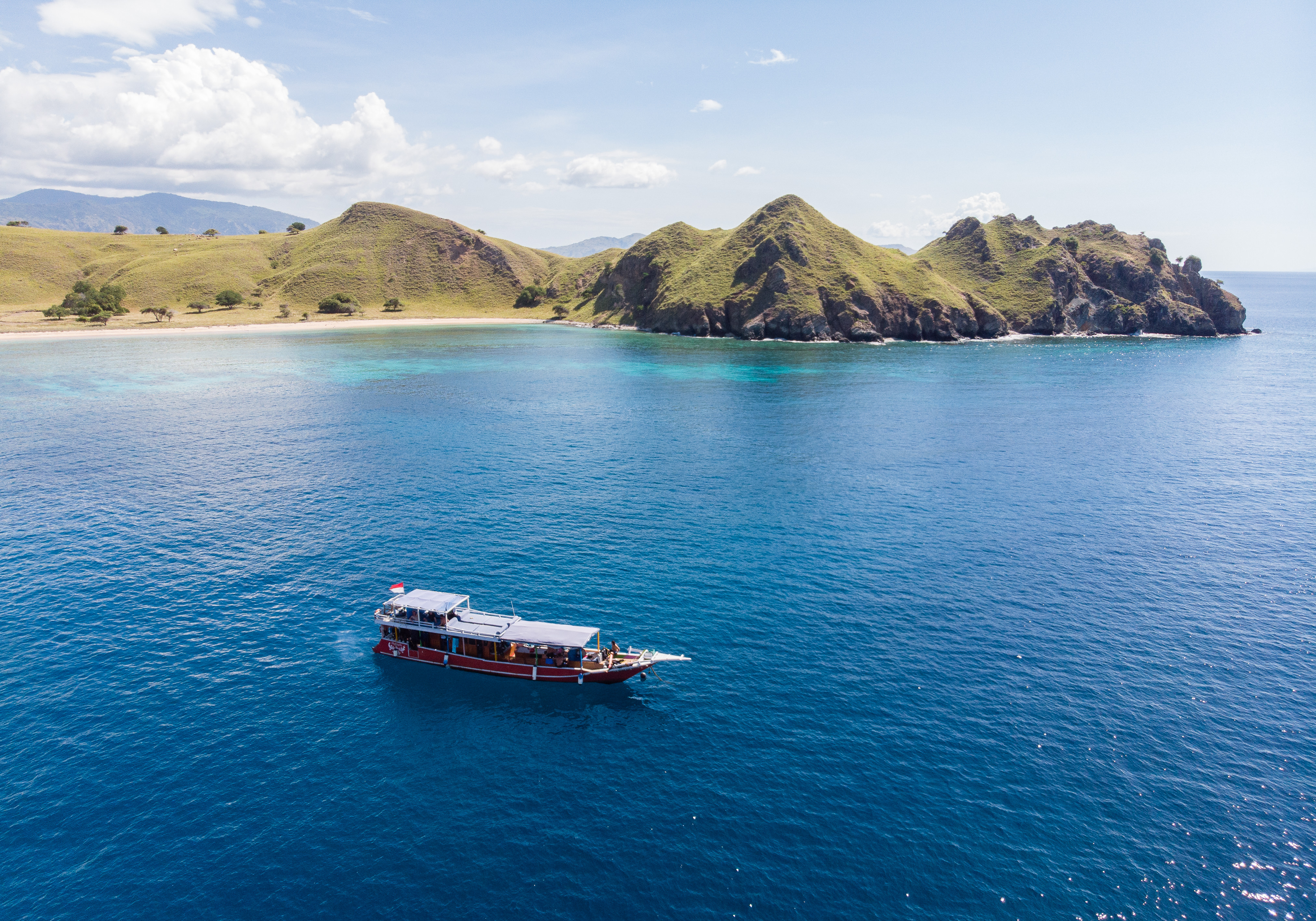
Sites run down the western lee shore from Karpata in the north to Red Slave in the south, each marked with a yellow stone. Klein Bonaire, the uninhabited islet offshore, adds another two dozen sites reached by boat. These are the ones most trips are built around.
1000 Steps
The most photographed entry on the island, a limestone staircase down the cliff, which is 67 steps rather than a thousand and feels like more with tanks on. The reward is a wide sand channel leading to a healthy sloping reef in 10 to 30 m, with turtles, tarpon, large barrel sponges and good visibility. Best dived early, before the wind and the crowds.
Karpata
At the northern end of the road, an old plantation site with an entry over rock and a steep, coral-dense drop-off that is one of the best walls on the island. Big sponges, black coral at depth, turtles and a chance of eagle rays. There is current here more often than at the central sites, so it is usually dived as a drift back to the entry.
Salt Pier
An industrial pier next to the salt works, dived only when no ship is loading, which is the single most important thing to check. The pilings are covered in sponges and coral and hold enormous schools of fish, with tarpon, barracuda and frogfish among them. Depth is 5 to 18 m and the light through the pilings makes it the best photographic site on Bonaire.
Hilma Hooker
A 72 m freighter seized for smuggling and sunk in 1984, lying on her starboard side between two reefs in 18 to 30 m of sand. The dive is short because of the depth, usually combined with the adjacent reef, and the hull is intact enough to be impressive without needing penetration. Tarpon and horse-eye jack patrol the wreck.
Bari Reef
The house reef of a hotel in Kralendijk, and the site most often named as holding the highest fish species count in the Caribbean. It is a gentle slope from 5 to 25 m and it works equally as a check dive, a macro dive and a night dive, with seahorses, frogfish, octopus and tarpon hunting in torch beams after dark.
Oil Slick Leap
A giant stride from a concrete platform three metres above the water, with a ladder for the exit, which is why the name sticks. Below is a fast drop to a wall in 10 to 30 m with excellent coral and sponge cover. Not the entry to choose for your first Bonaire dive, but one of the best walls on the road.
Angel City and Alice in Wonderland
Two adjacent sites on the southern double-reef system, where an inner reef and an outer reef are separated by a sand channel at around 12 m. Diving both in one dive gives two reef profiles, and the channel itself holds garden eels, rays and hunting jacks. Easy entries, gentle depth and consistently good fish life.
Forest and Carl Hill, Klein Bonaire
On the uninhabited islet a ten-minute boat ride offshore. Forest is named for its dense stands of black coral on a steep drop, and Carl Hill is a near-vertical wall covered in sponges, gorgonians and small reef fish, with turtles and eagle rays passing. Klein Bonaire is boat access only and worth at least one day of any trip.
Marine life in Bonaire
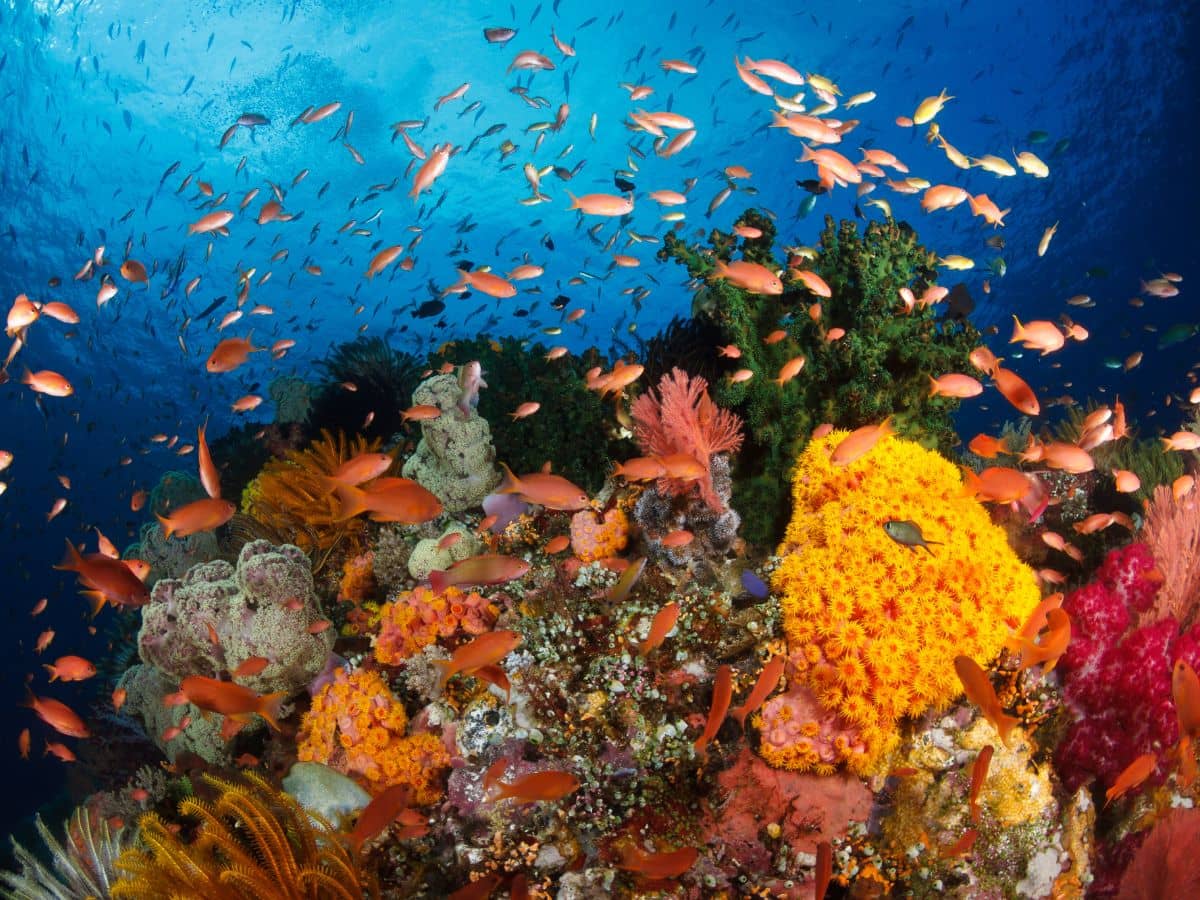
Bonaire holds more than 350 recorded fish species and around 57 species of coral, and decades of protection show in the size of the fish and the state of the reef. This is a Caribbean species list, so expect diversity and macro rather than large pelagics.
Reef fish
- French, queen and grey angelfish, often in pairs and unbothered by divers.
- Stoplight, princess and midnight parrotfish grazing the shallows all day.
- Tarpon, in numbers on the piers and reefs, and actively hunting on night dives.
- Horse-eye jack, bar jack and ocean triggerfish over the drop-offs.
- Schooling grunts and snapper under the coral heads and pier pilings.
Macro
- Longsnout seahorses, most reliably on Bari Reef, Andrea II and Something Special.
- Frogfish on sponges at Bari Reef, Salt Pier and the southern sites.
- Secretary blennies, sharptail eels, arrow crabs and banded coral shrimp on every dive.
- Caribbean reef squid hanging in the shallows, and octopus after dark.
- Nudibranchs, lettuce sea slugs and flamingo tongue snails on the gorgonians.
Bigger visitors and the reef itself
- Green and hawksbill turtles on almost every site, with loggerheads less often.
- Spotted eagle rays cruising the sand channels and the Klein Bonaire walls.
- Southern stingrays and garden eels in the double-reef sand channels of the south.
- Elkhorn and staghorn coral, including restoration nurseries run by local conservation groups.
- Invasive lionfish, culled under a permit system that visiting divers can join through operators.
Dive conditions
Water is 26 to 29C all year, coolest from January to March and warmest from August to October. A 3 mm full suit suits most people, a shorty is enough in late summer, and divers doing four or five dives a day often prefer 5 mm because the cumulative cooling is what gets you, not any single dive.
Visibility is 20 to 35 m on the lee shore, occasionally more, and drops after the rains in November and December or when a northerly swell stirs the shallows. Current on the west coast is usually negligible, with a mild north-south drift at some sites and a stronger flow at Karpata and the far northern sites.
Entries are the real skill. Most sites are entered over ironshore, rock or coral rubble, so hard-soled booties, a good look at the surge and a plan for the exit matter more than depth experience. Open Water is enough for almost the whole island. Reef profiles run from a 5 to 10 m shelf down a slope or wall to 30 m and beyond, so it is easy to go deeper than you meant to; most operators require a buoyancy and orientation check dive on arrival before selling you the tank package. The east coast is exposed and dangerous and is dived only occasionally by experienced groups on rare flat days. There is a recompression chamber on the island near the hospital in Kralendijk.
Bonaire through the year
Water and air temperature, visibility and rainfall for every month, with the windows we would book ourselves. Hover or tap a month for the detail.
- Water
- Air
- Visibility
- Rain
Show the monthly data as a table
| Month | Water °C | Air °C | Visibility | Rain | Diving | Notes |
|---|---|---|---|---|---|---|
| Jan | 26–27 °C | 24–30 °C | 20–30 m | 55 mm | Peak | Windiest month; north sites can be rough |
| Feb | 26–27 °C | 24–30 °C | 20–35 m | 25 mm | Peak | Dry, breezy; easy shore entries |
| Mar | 26–27 °C | 24–31 °C | 25–35 m | 15 mm | Peak | Dry season; calm lee shore |
| Apr | 26–27 °C | 25–31 °C | 25–35 m | 15 mm | Peak | Warm, dry, light winds |
| May | 27–28 °C | 26–32 °C | 25–35 m | 20 mm | Peak | Calm and dry; excellent visibility |
| Jun | 27–28 °C | 26–32 °C | 25–35 m | 20 mm | Peak | Flat lee shore; peak shore diving |
| Jul | 28–29 °C | 26–32 °C | 20–35 m | 30 mm | Peak | Warm water; steady trade winds |
| Aug | 28–29 °C | 26–33 °C | 20–35 m | 30 mm | Peak | Warmest water; low season prices |
| Sep | 28–29 °C | 26–33 °C | 20–35 m | 40 mm | Peak | Calmest month; coral spawning dives |
| Oct | 28–29 °C | 26–32 °C | 15–30 m | 75 mm | Good | Rain starts; occasional north swell |
| Nov | 27–28 °C | 25–31 °C | 15–30 m | 105 mm | Good | Wettest month; some north sites rough |
| Dec | 27–28 °C | 25–30 °C | 20–30 m | 95 mm | Peak | Rain easing; trade winds pick up |
Best time to visit Bonaire
Bonaire is a year-round destination. It sits south of the main hurricane belt, the water never drops below about 26C, and the western lee shore is sheltered from the trade winds in every month. The differences between seasons are about rain, wind and price rather than whether the diving works.
- March to June: the driest, calmest stretch and arguably the best all-round window, with light winds, flat entries and excellent visibility. Prices sit between high and low season.
- July to September: the warmest water at 28 to 29C, low season pricing and the quietest sites. Coral spawning dives run in September and early October in the nights after the full moon.
- October to December: the wet season, such as it is, with 75 to 105 mm a month, occasional northerly swell that can make the northern entries rough, and slightly reduced visibility. Still perfectly diveable.
- January to February: high season and the windiest months, with the trades at their strongest. The lee shore stays workable, but the exposed northern sites and Klein Bonaire crossings can be choppy, and this is the most expensive time to come.
Getting to Bonaire
Flamingo International Airport (BON) sits five minutes from Kralendijk, the island capital, and handles all arrivals. There are direct flights from Amsterdam with KLM, from Miami, Houston, Newark and Atlanta with the US carriers on seasonal or weekly schedules, and from Toronto seasonally. The most frequent connections are the short hops from Curacao (CUR), about 25 minutes, and Aruba (AUA), about 45 minutes, both of which have far denser international service.
Almost every visitor rents a vehicle, and on Bonaire that means a pickup truck with a tank rack rather than a car. Most dive operators sell a package that combines the truck, unlimited air and weights, and the rental desks are at the airport. The island is small: the northern sites at Karpata are about 25 minutes from town and the southern sites at Red Slave about 30 minutes, all on one coastal road.
Klein Bonaire is boat access only, with dive operators and water taxis running the ten-minute crossing from Kralendijk several times a day.
Bonaire is Dutch territory but not part of the Schengen area. Most European, British, American and Canadian visitors enter without a visa for up to 90 days. There is also a visitor entry tax of approximately USD 75 per person arriving by air, paid online before travel.
Getting to Bonaire, and what to know before you go
About 5 min to Kralendijk; pickup trucks with tank racks hired at the airport
Frequent 25-min hops to Bonaire; widest European and US connections
About 45 min by air to Bonaire; heavy North American service
Kralendijk (Klein Bonaire boats and water taxis)
- Best season
- Year-round; driest and calmest Mar–Jun
- Off season
- None. Oct–Dec is wetter with occasional northerly swell; outside the main hurricane belt
- Typical trip
- 7–10 nights with a truck and an unlimited air package
- Experience
- OW, about 0 logged dives
- Park / marine fee
- Mandatory Bonaire National Marine Park nature fee, approximately USD 40 per diver per calendar year (approximately USD 25 non-diving), bought online before entering the water. Separate visitor entry tax of approximately USD 75 per air arrival
- Visa
- Not in the Schengen area; visa-free for up to 90 days for most European, UK, US and Canadian passports
- Nitrox
- Widely available, including on unlimited packages at most operators
- Currency
- US dollar (USD); cards accepted everywhere
- Language
- Dutch official, Papiamentu everyday; English and Spanish widely spoken
- Time zone
- UTC-4 (AST), no daylight saving
- Power
- Type A/B, 127 V at 50 Hz (some properties also fit 220 V)
- Green turtle
- Hawksbill turtle
- Tarpon
- Longsnout seahorse
- Frogfish
- Spotted eagle ray
- Caribbean reef squid
- French angelfish
| Species | Months | Where |
|---|---|---|
| Tarpon | Year-round, best at night | Salt Pier, Bari Reef and the Kralendijk house reefs |
| Coral spawning | Sep–Oct, nights after the full moon | Reef slopes islandwide, on guided spawning dives |
| Longsnout seahorse | Year-round | Bari Reef, Andrea II and Something Special |
| Frogfish | Year-round | Sponges at Bari Reef, Salt Pier and the southern sites |
| Spotted eagle ray | Year-round, more often Dec–Mar | Sand channels in the south and the Klein Bonaire walls |
| Nesting turtles | May–Nov | Klein Bonaire and the protected east coast beaches |
Seasons are typical, not guaranteed: sightings depend on currents, weather and luck.
Practical information
Nature fee (mandatory): everyone entering the water in the Bonaire National Marine Park must buy a nature fee tag. It is approximately USD 40 per diver for the calendar year and approximately USD 25 for non-diving water activities, purchased online at the official nature fee site before you get in. Operators check it and rangers do enforce it, so buy it before your first dive.
Entry tax: separately from the nature fee, Bonaire charges a visitor entry tax of approximately USD 75 per person arriving by air, paid online in advance of travel.
Marine park rules: no gloves without a permit, no touching or standing on coral, no collecting, no spearfishing except under the lionfish culling programme, and no anchoring. Most operators require a buoyancy and orientation check dive before issuing tanks.
Money: the US dollar is the official currency. Cards are accepted everywhere. Tipping is customary at the usual North American levels.
Practicalities: 127 V at 50 Hz with type A and B sockets, and some properties also fit 220 V, so check before plugging in charging equipment. Dutch is the official language, Papiamentu is the everyday one, and English and Spanish are widely spoken. Time is UTC-4 with no daylight saving. There is a recompression chamber in Kralendijk.
Tips & recommendations
- Buy the nature fee tag before your first dive: it is bought online, it is checked, and no operator will fill for you without it.
- Book the truck with the dive package: a pickup with a tank rack is the standard vehicle, and packages that bundle truck, unlimited air and weights are the cheapest way to dive here.
- Wear hard-soled booties: almost every entry is over ironshore or rubble, and this is the injury that ends Bonaire trips.
- Dive the north early: Karpata and 1000 Steps are calmest and least busy first thing, and the wind builds through the day.
- Check the Salt Pier before driving down: the site closes whenever a ship is loading, with no warning and no exceptions.
- Do at least one Klein Bonaire boat day: the walls there are the best on the island and they cannot be reached from shore.
- Plan the night dives: Bari Reef and the town house reefs are outstanding after dark, with tarpon hunting in your torch beam and octopus out on the sand.