Introduction to diving Palau
Palau is a nation of around 340 islands in the western Pacific, about 800 km east of the Philippines. Its reefs sit where the deep water of the Philippine Sea meets a barrier reef and a maze of limestone Rock Islands, and that meeting is the reason the diving is so good. Currents funnel nutrients along a few well-defined walls, corners and channels, and the animals concentrate there predictably.
The country has protected its reefs earlier and harder than almost anyone. Palau declared the world's first shark sanctuary in 2009, closed 80 percent of its exclusive economic zone to fishing with the Palau National Marine Sanctuary in 2020, banned reef-toxic sunscreens the same year, and asks every visitor to sign the Palau Pledge, stamped into the passport on arrival. The result is a shark population that behaves as if divers are part of the scenery.
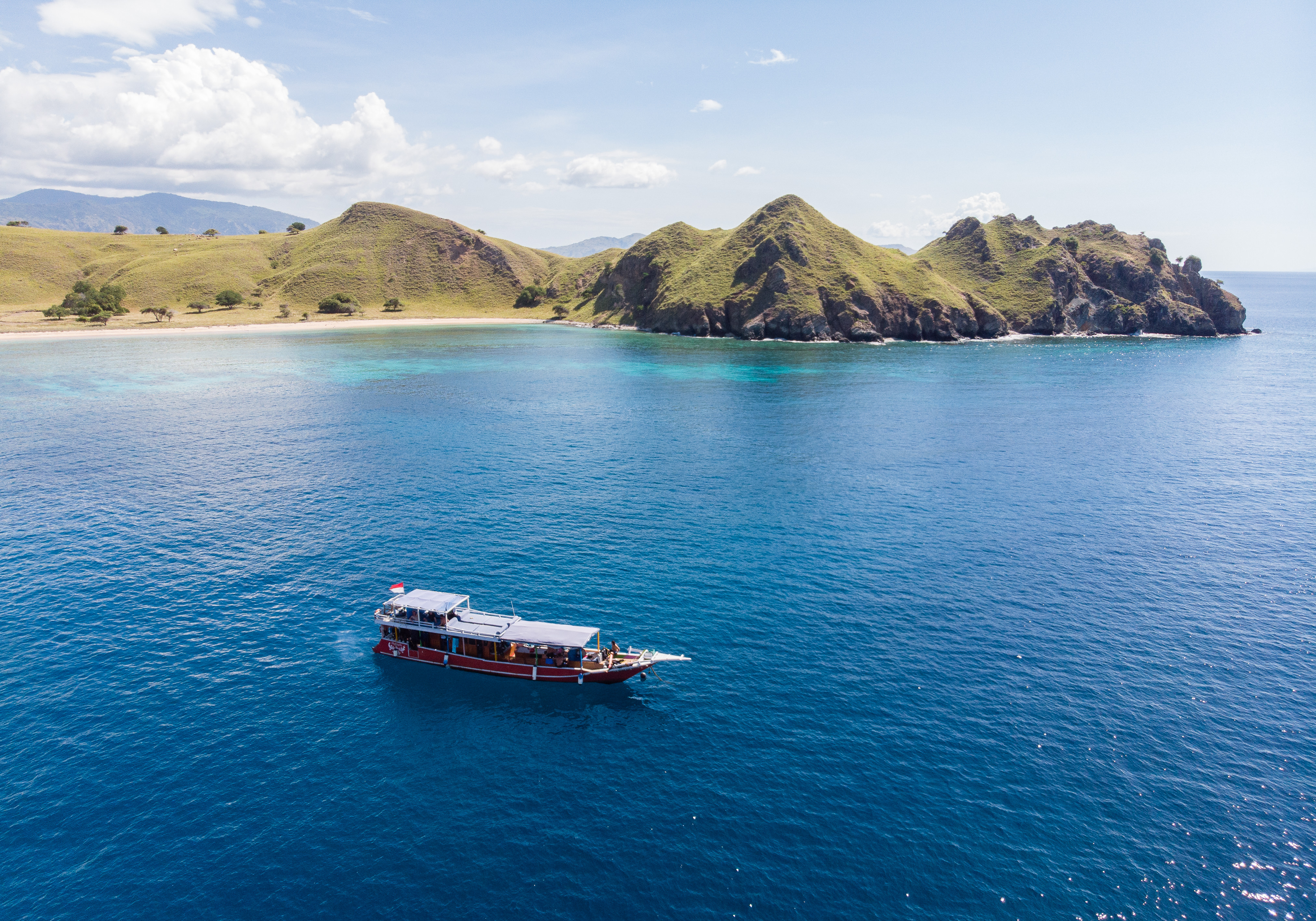
Nearly all the diving lies along the southwest barrier reef between Ulong and Peleliu, 45 to 90 minutes by speedboat from Koror. Day-boat operators cover it from town, which makes Palau one of the few big-animal destinations where a land-based week is genuinely competitive with a liveaboard. Liveaboards add early slots at Blue Corner before the day boats arrive, night dives, and easier access to Peleliu at the southern end of the reef.
Wartime history under water
Palau was a major Japanese base, and the American raid known as Operation Desecrate One sank dozens of ships in Koror and Malakal harbors in March 1944. Around thirty wrecks are diveable, mostly in 20 to 40 m of sheltered water: the Iro Maru fleet oiler, the Chuyo Maru, the Helmet Wreck with its cargo of ammunition and helmets, and the Jake seaplane sitting upright in shallow water. The land battle for Peleliu, one of the bloodiest of the Pacific war, left a coastline still marked by landing craft and bunkers that day trips visit between dives.
Why dive Palau
Palau's reputation rests on a handful of sites that deliver almost every day of the season rather than on one lucky encounter. It is also unusually complete: current dives, wrecks, caves, macro, and a snorkel that exists nowhere else.
- Blue Corner: hook into the plateau and watch grey reef sharks, jacks, barracuda and Napoleon wrasse hold station in the current a few meters away, dive after dive.
- Mantas at German Channel: a cleaning station on the sand at 15 to 20 m where reef mantas visit reliably, most of all from December to March.
- Wrecks and caves: Japanese wartime ships in the harbor, the air chambers of Chandelier Cave and the Siaes Tunnel for a change of pace between current dives.
- Spawning aggregations: bumphead parrotfish gather by the hundreds around the new moon and red snapper before the full moon, predictable enough to plan a trip around.
- Jellyfish Lake: a marine lake full of golden jellyfish that lost their sting over millennia of isolation. Snorkel only, and unlike anything else in diving.
- Short transfers: most sites are under an hour from Koror, so day boats and liveaboards both work well and a week covers the classics more than once.
Dive sites in Palau
Almost every site of note lies along the outer reef between Ulong in the north and Peleliu in the south, plus the harbor wrecks near Koror. A week here, land-based or on a liveaboard, covers most of them.
Blue Corner and Blue Holes (Ngemelis)
A plateau at 15 to 20 m jutting into the current from a wall that drops past 300 m. Reef hooks go in at the edge, and the current brings grey reef sharks, whitetips, eagle rays, dogtooth tuna and barracuda past at arm's length. Many dives start at the neighboring Blue Holes, four openings in the reef top that drop through one cavern to the wall at 30 m, then drift to the Corner.
German Channel (Ngemelis)
Blasted through the reef by German phosphate miners before World War I, the channel is now a manta cleaning station on a sandy slope at 15 to 20 m. Kneel by the coral heads and wait; grey reef sharks and schooling snapper fill the time between visits.
Ulong Channel (Ulong)
A long sandy channel through the reef, drifted on the incoming tide past whitetips, grey reef sharks and a lettuce-coral garden that carpets the channel floor. Around the new moon, groupers spawn here in large numbers. Usually the fastest drift in Palau.
Chandelier Cave (Malakal)
Five minutes from Koror, a shallow cave system with four air-filled chambers where stalactites hang above the water line. Maximum depth is under 15 m. Mandarin fish live on the rubble outside the entrance and are usually seen at dusk.
Siaes Tunnel (Ulong)
A tunnel through the wall with an entrance around 27 m, a huge chamber open to the blue on one side, and an exit near 40 m, so it is a dive for Advanced divers comfortable in a large dark space. Gorgonians and resting whitetips inside; sharks and eagle rays outside.
Peleliu Corner and Peleliu Express (Peleliu)
The southern tip of the reef, where two currents collide. Peleliu Express is a fast drift along the wall, and the Corner is where the big fish stack up: grey reef sharks, silvertips, bull sharks on occasion, tuna and trevally. Currents are strong and can run downward; dive it only with an operator who knows the tides.
Iro Maru (Koror harbor)
A Japanese fleet oiler of about 143 m sunk in 1944, sitting upright in 35 m with the deck around 22 m. Bow and stern guns are intact, the masts reach up toward the surface, and the hull is thick with black coral, oysters and soft corals. The most rewarding of Palau's wartime wrecks.
Marine life in Palau
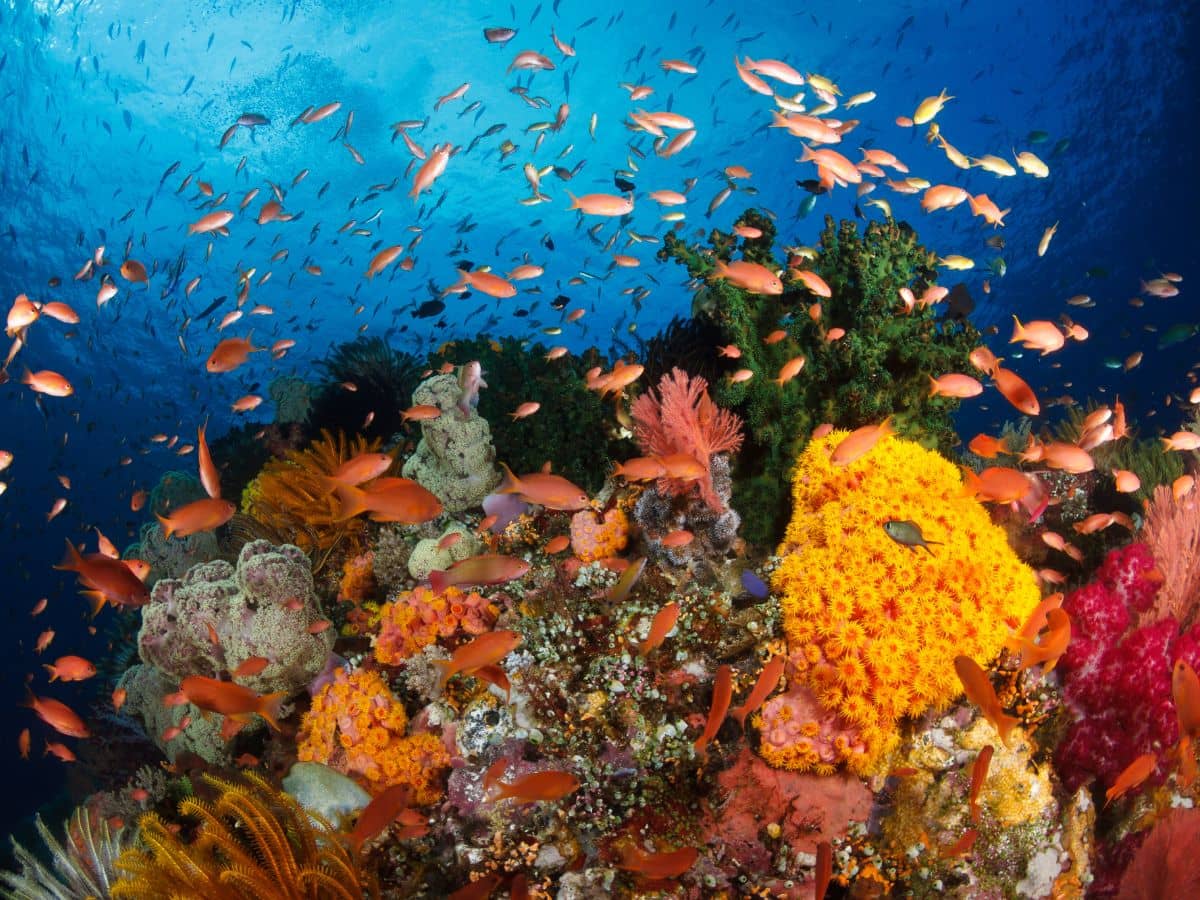
Palau's shark sanctuary has been in force since 2009 and it shows: grey reef sharks appear on almost every outer-reef dive, and fish life at the corners is dense enough to hide the reef behind it.
Pelagics and big animals
- Grey reef sharks, whitetips and silvertips on every corner; bull sharks and occasional hammerheads at Peleliu
- Reef mantas at German Channel and Devilfish City, most reliably December to March
- Spotted eagle rays, dogtooth tuna, giant trevally and barracuda schools
- Napoleon wrasse, unusually tame at Blue Corner; hawksbill and green turtles
- Bumphead parrotfish spawning aggregations at Sandy Paradise around the new moon
Reef and wrecks
- Red snapper and grouper aggregations at Shark City and Ulong Channel on lunar cycles
- Black coral, gorgonians and soft coral on the wrecks and inside Siaes Tunnel
- Anemonefish, sweetlips, batfish and lettuce-coral fields in Ulong Channel
Macro and oddities
- Mandarin fish at dusk outside Chandelier Cave and in Malakal harbor
- Chambered nautilus on special dives: traps set at around 200 m overnight are raised for a brief shallow encounter before release
- Stingless golden and moon jellyfish in Jellyfish Lake
- Saltwater crocodiles live in the mangroves; sightings under water are rare and not something to plan on
Dive conditions in Palau
Water is 27 to 30 C throughout the year, with 28 to 29 C typical; a 3 mm suit is the norm and many divers use a shorty or a skin. Visibility on the outer reef is usually 25 to 40 m and can pass 50 m in the dry season; on the harbor wrecks expect 10 to 20 m.
Current is the defining feature. Blue Corner, Ulong Channel and Peleliu are dived on the tide, and a reef hook is required equipment rather than an accessory: operators expect you to carry one and know how to set it without damaging coral. Peleliu can run with downward and split currents and is normally reserved for divers with recent drift experience. Tunnel and cave sites such as Siaes and Blue Holes require comfort in an overhead environment with open water in sight.
Open Water certification is enough for the harbor wrecks, Chandelier Cave and German Channel on a slack tide, but Advanced Open Water and around 30 logged dives is the realistic entry point for Blue Corner and the other corners, and most liveaboards ask for it. Depths at the key sites are 15 to 30 m; the deep tunnels push toward 40 m. Nitrox is available from most operators.
Palau through the year
Water and air temperature, visibility and rainfall for every month, with the windows we would book ourselves. Hover or tap a month for the detail.
- Water
- Air
- Visibility
- Rain
Show the monthly data as a table
| Month | Water °C | Air °C | Visibility | Rain | Diving | Notes |
|---|---|---|---|---|---|---|
| Jan | 27–29 °C | 24–30 °C | 25–40 m | 270 mm | Peak | Manta peak at German Channel, trade-wind chop |
| Feb | 27–29 °C | 24–30 °C | 25–45 m | 230 mm | Peak | Driest month, mantas still cleaning |
| Mar | 28–29 °C | 24–31 °C | 25–45 m | 200 mm | Peak | Calm seas, last of the manta peak |
| Apr | 28–30 °C | 24–31 °C | 25–45 m | 230 mm | Peak | Red snapper aggregations begin at Shark City |
| May | 28–30 °C | 24–31 °C | 25–40 m | 300 mm | Peak | Snapper spawning, showers increasing |
| Jun | 28–30 °C | 24–31 °C | 20–35 m | 370 mm | Good | Wet season starts, fewer boats |
| Jul | 28–30 °C | 24–30 °C | 20–35 m | 420 mm | Good | Wettest month, Peleliu sometimes closed |
| Aug | 28–30 °C | 24–30 °C | 20–35 m | 350 mm | Good | Warm water, southwest swell on the outer reef |
| Sep | 28–30 °C | 24–30 °C | 20–35 m | 300 mm | Good | Wet season winding down |
| Oct | 28–30 °C | 24–31 °C | 25–40 m | 330 mm | Peak | Dry season returns, seas settle |
| Nov | 28–29 °C | 24–31 °C | 25–40 m | 300 mm | Peak | Good visibility, mantas returning |
| Dec | 27–29 °C | 24–30 °C | 25–40 m | 300 mm | Peak | Manta season opens at German Channel |
Best time to visit Palau
Palau sits close to the equator and outside the main typhoon belt, so diving runs twelve months a year. Seasons matter more for surface conditions and specific animals than for whether you can dive at all.
- October to May (dry season): calmer seas, less rain and the clearest water, with December to March the peak for mantas at German Channel and the busiest months for boats. Northeast trade winds can make the outer reef choppy in January and February, but sites are rarely lost.
- June to September (wet season): heavier showers, mostly short, and southwesterly winds that can close Peleliu on some days. Water is at its warmest, visibility stays good, and prices and crowds ease. Typhoons are uncommon but not impossible.
- New moon, any month: bumphead parrotfish spawn at Sandy Paradise and groupers at Ulong Channel in the days around it.
- Full moon, roughly April to July: red snapper aggregate at Shark City, followed by the sharks that feed on them.
- Jellyfish Lake: open year-round since its 2019 reopening after the 2016 drought; jellyfish numbers vary with rainfall and salinity, so ask operators for a recent count before you build a day around it.
Getting to Palau
All flights arrive at Roman Tmetuchl International Airport (ROR) on Babeldaob, a 20-minute drive from Koror across the bridge. Palau has no direct flights from Europe or mainland North America. Regular routes come from Manila (Philippine Airlines), Taipei (China Airlines) and Guam (United, connecting from Honolulu and Tokyo), with seasonal or charter services from Japan and South Korea. From Europe the usual pattern is a Gulf or Asian hub to Manila or Taipei, then the two- to four-hour hop to Koror, often landing late at night.
Koror is the only base for divers. Dive shops, hotels and the liveaboard embarkation points around Malakal harbor are within a few kilometers of each other, and hotels and operators meet flights. Land-based divers ride out to the Rock Islands each morning on speedboats; liveaboards move between moorings on the barrier reef and return toward Koror for the harbor wrecks or Jellyfish Lake.
Most nationalities, including EU, UK, US, Australian and Japanese citizens, receive visa-free entry for 30 days on arrival with a passport valid for six months and an onward ticket. The Palau Pledge is stamped into every passport and must be signed at immigration. The Pristine Paradise Environmental Fee of USD 100 is collected through your airline ticket, not at the airport. Allow a full day on either side of the trip for flight timing, and keep the usual no-fly interval after your last dive.
Getting to Palau, and what to know before you go
Hotels and liveaboards in Koror are a 20 min drive across the bridge; operators meet flights
Philippine Airlines to ROR, approximately 2 h 30
China Airlines to ROR, approximately 3 h 30
United to ROR, approximately 2 h; connections from Honolulu and Tokyo
Koror (Malakal harbor)
- Best season
- Oct–May
- Off season
- Jun–Sep (wet season: heavier showers, southwest swell, Peleliu sometimes closed; diving continues)
- Typical trip
- 7 nights (day boats and liveaboards)
- Experience
- OW, about 30 logged dives
- Park / marine fee
- Koror State Rock Islands permit approximately USD 50 per person for 10 days, USD 100 including Jellyfish Lake; Peleliu State permit approximately USD 30; Pristine Paradise Environmental Fee USD 100 included in airfare
- Visa
- Visa-free entry for 30 days for most nationalities; Palau Pledge stamped and signed in passport on arrival
- Nitrox
- Available from most operators and liveaboards, usually at a surcharge
- Currency
- US dollar (USD)
- Language
- Palauan and English (both official)
- Time zone
- UTC+9
- Power
- Type A/B (US flat-pin), 120 V
- Grey reef shark
- Reef manta ray
- Napoleon wrasse
- Bumphead parrotfish
- Mandarin fish
- Chambered nautilus
- Spotted eagle ray
- Golden jellyfish
| Species | Months | Where |
|---|---|---|
| Reef manta ray | Dec–Mar | German Channel, Devilfish City |
| Grey reef shark | Year-round | Blue Corner, Peleliu Corner, Ulong Channel |
| Bumphead parrotfish (spawning) | Year-round, new moon | Sandy Paradise |
| Red snapper (spawning) | Apr–Jul, before full moon | Shark City |
| Mandarin fish | Year-round, at dusk | Chandelier Cave entrance, Malakal harbor |
Seasons are typical, not guaranteed: sightings depend on currents, weather and luck.
Practical information
Fees are layered and worth budgeting. The Pristine Paradise Environmental Fee (USD 100) is included in international airfare. Koror State charges a Rock Islands permit of approximately USD 50 per person valid for 10 days, or USD 100 including Jellyfish Lake; Peleliu State charges an additional permit of approximately USD 30 for its sites. Dive operators normally collect these in cash. Reef hooks are required on current sites, gloves are discouraged, and sunscreens containing oxybenzone and nine other reef-toxic chemicals are banned nationwide. Fishing, touching wildlife and collecting shells are prohibited under the Palau Pledge.
The currency is the US dollar, cards are accepted in hotels and dive shops, and ATMs exist in Koror. Power is 120 V with US flat-pin plugs (types A and B). English and Palauan are official languages. Dive insurance is expected by all operators, and there is a recompression chamber at Belau National Hospital in Koror. Nitrox is available from most day-boat operators and liveaboards, usually at a surcharge.
Tips & recommendations
- Own your reef hook: buy or bring one and practice setting it in dead rock. Blue Corner is a different dive when you can hang motionless and watch.
- Ask about the tide table: the difference between a great and an empty Blue Corner is the tide. Good operators plan the week around it; ask how they schedule.
- Book around the moon for aggregations: new moon for bumphead parrotfish at Sandy Paradise, the days before full moon for red snapper at Shark City.
- Budget the permits in cash: Rock Islands, Jellyfish Lake and Peleliu permits add up to approximately USD 130 to 180 per person for a full week.
- Bring reef-safe sunscreen or none: banned sunscreens can be confiscated at customs. Long sleeves and a hat do the job on the boat.
- Plan a rest day for Jellyfish Lake and Peleliu: the lake is a snorkel and the Peleliu battlefield tour is on land, so both fit naturally into a no-fly day at the end.
- Arrive a day early: flights from Manila and Taipei often land after midnight, and an early dive boat the same morning is a poor start.