Nusa Penida diving at a glance
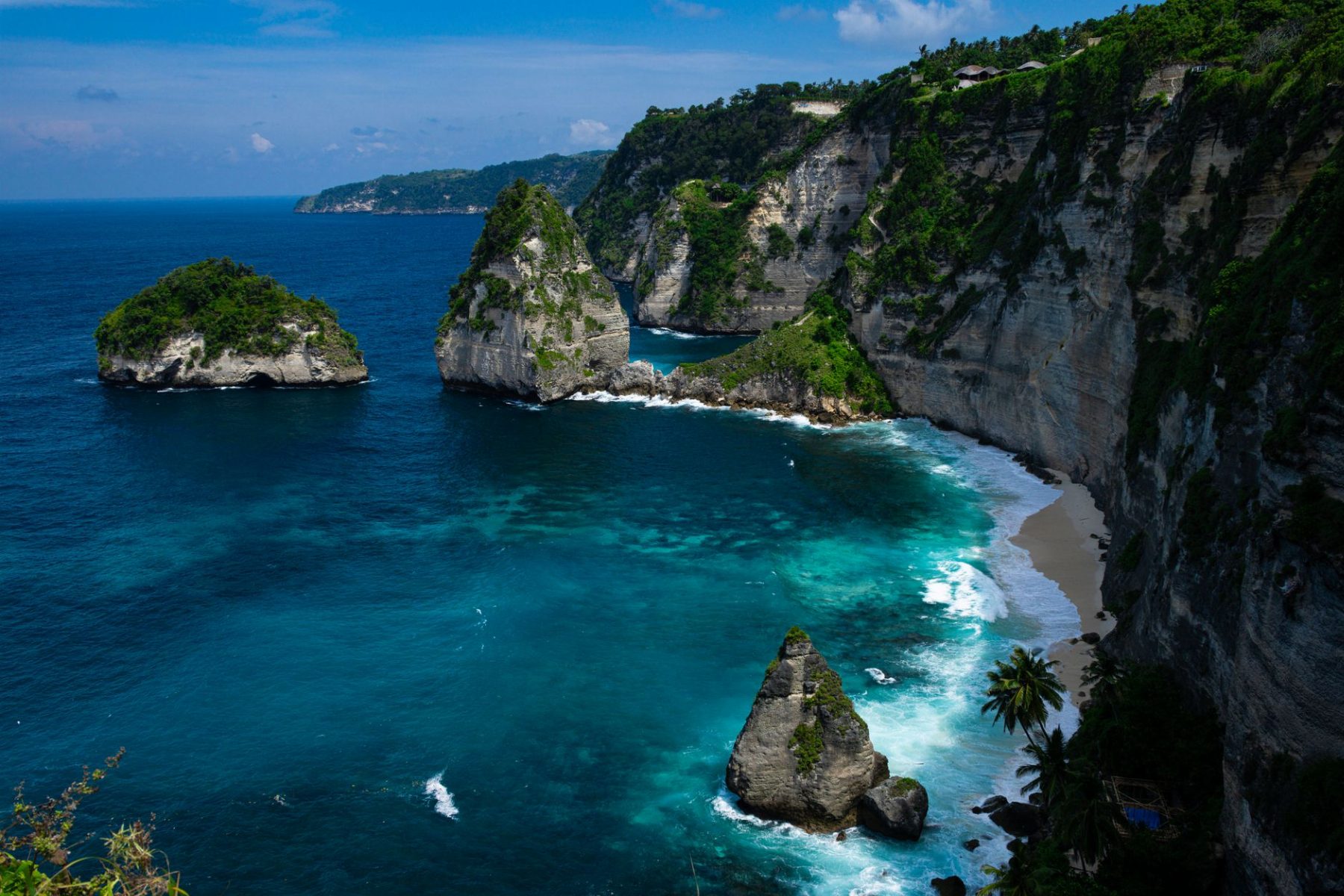
Nusa Penida lies in the Badung Strait, south-east of Bali, in Klungkung regency. Together with Nusa Lembongan and Nusa Ceningan it forms the Nusa islands. The Coral Triangle Center reports that a marine protected area of roughly 20,000 hectares covers the waters around the three islands, and that it includes coral reefs, seagrass, mangroves and seaweed farming areas.
Why conditions differ from the rest of Bali
Water moving through the strait can bring strong currents and noticeably cooler temperatures at some sites, particularly in the middle of the year. That mix is a key reason the area is known for large pelagic animals as well as healthy reefs.
Sites listed by the tourism board
Indonesia's tourism board lists Crystal Bay (about 15 km from Nusa Penida Harbour), Manta Point on the southern side and Malibu Point on the eastern side among popular dive and snorkel spots.
Why dive Nusa Penida
Nusa Penida offers big-animal encounters and clear water, with conditions that reward good planning.
- Manta rays: Manta Point is a well-known cleaning-station area on the island's south side. Official and scientific sources report mantas there, with sightings varying by season.
- Ocean sunfish: The Coral Triangle Center notes the area is known for sunfish. They are typically reported from about July to October when cooler water rises.
- Marine protected area: The waters around the Nusa islands are covered by a marine protected area established with local government and community support.
- Conditions: Visibility often ranges from roughly 15 to 30 metres or more. Water temperature varies, commonly from about 20 to 28 degrees Celsius depending on site and month.
- Close to Bali: A fast boat from Sanur takes about 45 minutes.
Dive sites around Nusa Penida
Sites are spread around the island's coast; conditions change quickly and guides choose sites by tide and current.
- Manta Point (south): Cleaning-station site where manta rays are reported.
- Crystal Bay (west): A bay with clear water and a small island in the middle, listed by Indonesia's tourism board.
- Malibu Point (east): Listed by Indonesia's tourism board; sometimes exposed to current.
- Toyapakeh channel: A channel between Nusa Penida and Nusa Ceningan with strong tidal flow.
- Gamat Bay and Sental: Reef areas on the north and west sides used for varied conditions.
Marine life
Both the reefs and the open-water edges of the island support varied life. The Coral Triangle Center reports around 296 coral species and 576 reef fish species in the protected area.
- Manta rays visit the southern cleaning stations.
- Ocean sunfish (mola mola) are seen in the cooler months.
- Reef sharks, trevally and large rays are reported on current-swept points.
- Turtles are seen on shallow reefs.
- Reef fish and corals are widespread, including macro life on calmer slopes.
These are seasonal and unpredictable; no site can guarantee an animal.
Nusa Penida through the year
Water and air temperature, visibility and rainfall for every month, with the windows we would book ourselves. Hover or tap a month for the detail.
- Water
- Air
- Visibility
- Rain
Show the monthly data as a table
| Month | Water °C | Air °C | Visibility | Rain | Diving | Notes |
|---|---|---|---|---|---|---|
| Jan | 26–29 °C | 25–31 °C | 10–25 m | 300 mm | Possible | Wet season; rain and variable conditions |
| Feb | 26–29 °C | 25–31 °C | 10–25 m | 280 mm | Possible | Wet season; rain and swell |
| Mar | 26–29 °C | 25–31 °C | 12–28 m | 180 mm | Good | Rain easing |
| Apr | 26–29 °C | 24–32 °C | 15–30 m | 90 mm | Peak | Drier weather; mantas reported at Manta Point |
| May | 25–28 °C | 24–32 °C | 15–30 m | 60 mm | Peak | Generally calm; clear water |
| Jun | 22–27 °C | 23–31 °C | 15–30 m | 40 mm | Peak | Dry; cooler water begins |
| Jul | 20–26 °C | 23–31 °C | 15–30 m | 25 mm | Peak | Cooler water; sunfish season begins |
| Aug | 20–26 °C | 23–31 °C | 15–30 m | 15 mm | Peak | Coolest water; sunfish season; stronger currents |
| Sep | 20–26 °C | 23–32 °C | 15–30 m | 20 mm | Peak | Cool water; sunfish possible |
| Oct | 22–27 °C | 24–32 °C | 15–30 m | 60 mm | Peak | Water warming; sunfish still possible |
| Nov | 25–28 °C | 25–32 °C | 12–25 m | 130 mm | Good | Shoulder season, first rains |
| Dec | 26–29 °C | 25–31 °C | 10–25 m | 240 mm | Possible | Wet season begins |
Getting there and around
From Bali
- Fast boats run from Sanur Beach, Padang Bai and Benoa. Indonesia's tourism board gives about 45 minutes from Sanur to Nusa Penida.
- Airport: Fly into Denpasar (DPS) and transfer to the harbour.
On the island
The island is hilly and roads can be rough; many visitors use a scooter or a car with driver. The drive from the main harbour to the west coast takes about 30 to 40 minutes, according to Indonesia's tourism board.
Bali tourist levy
Foreign visitors to Bali pay a levy of IDR 150,000 per person, once per trip. See Love Bali for current rules.
Getting to Nusa Penida, and what to know before you go
Road to Sanur, then about 45 minutes by fast boat to Nusa Penida
Sanur (Bali) · Padang Bai (Bali) · Benoa (Bali)
- Best season
- Apr-Oct (drier months)
- Off season
- Dec-Mar (wetter months)
- Typical trip
- Day trips from Bali or stays of 2 to 7 nights on the island
- Experience
- about 20 logged dives
- Park / marine fee
- Bali foreign tourist levy of IDR 150,000 per person, paid once per trip (Bali provincial government). Check locally for any protected-area charges
- Visa
- Rules depend on nationality and change; check the Indonesian immigration authority before you travel. Many visitors use a visa on arrival or e-VOA for stays of about 30 days.
- Nitrox
- Available at some dive centres; ask when booking
- Currency
- Indonesian rupiah (IDR)
- Language
- Indonesian and Balinese; English widely used in tourism
- Time zone
- UTC+8 (WITA)
- Power
- Type C/F, 230 V
- Manta ray
- Ocean sunfish (mola mola)
- Reef sharks
- Trevally
- Turtles
- Reef fish
| Species | Months | Where |
|---|---|---|
| Manta ray | Reported across much of the year | Manta Point (south coast) |
| Ocean sunfish (mola mola) | Jul-Oct | South and east coast |
| Reef sharks and trevally | Year-round | Current-swept points |
Seasons are typical, not guaranteed: sightings depend on currents, weather and luck.
Tips & recommendations
- Be ready for current: Reef hooks and a surface marker buoy are often useful; follow your guide's briefing.
- Dress for cooler water: A 5 mm suit or a hooded vest can help, especially in the middle of the year.
- Experience helps: Intermediate or advanced certification and recent dives are recommended.
- Check the sea: Crossings and dives can be cancelled in rough weather.
- Respect wildlife: Keep your distance from mantas and do not chase animals.
- Check fees: Entry fees for protected areas may apply; confirm locally.
Operators here
Dive centers, resorts and liveaboards working in Nusa Penida. Unclaimed listings are prepared by DiveHQ from public information.
Dive centers
 Dive center
Unclaimed
Bali Aqua Nusa Penida
Nusa Penida · Indonesia
Bali Aqua runs a dive centre on the north coast of Nusa Penida, on the beach in front of the Ped house reef. Daily speedboat trips offer two-tank morn...
Dive center
Unclaimed
Legend Diving Penida
Nusa Penida · Indonesia
Legend Diving Penida is a dive centre on the main street between Toyapakeh and Ped on Nusa Penida. It offers fun dives, snorkelling trips, private tou...
Dive center
Unclaimed
Nusa Penida Dive Center
Nusa Penida · Indonesia
Nusa Penida Dive Center is based on the Toyapakeh to Ped road on Nusa Penida, a few minutes from Banjar Nyuh harbour. It runs fun dives on its own boa...
Dive center
Unclaimed
Project Laut Diving
Nusa Penida · Indonesia
Project Laut Diving is a dive centre in Dusun Pendem on Nusa Penida. It runs guided boat fun dives in small groups and teaches courses from entry leve...
Dive center
Unclaimed
Reeflex Divers
Nusa Penida · Indonesia
Reeflex Divers is a dive centre on Jalan Raya Crystal Bay in Nusa Penida, with boat dives and shore dives at Crystal Bay. The multilingual team teache...
Dive center
Unclaimed
Sanctum Dive Nusa Penida
Nusa Penida · Indonesia
Sanctum Dive Nusa Penida operates from Ped on the north coast of Nusa Penida, with daily speedboat dive trips and equipment rental. It offers courses...
Dive resorts
Dive resort
Unclaimed
Deep Roots Dive and Yoga Resort
Nusa Penida · Indonesia
Deep Roots Dive and Yoga Resort is a resort in Ped, on the north coast of Nusa Penida, with sixteen rooms and its own dive centre. Guests can take Ope...
Dive resort
Unclaimed
DUNE Penida
Nusa Penida · Indonesia
DUNE Penida is a dive resort in Sakti, Nusa Penida, with a dive shop in the village of Toyapakeh, a short distance away. The operation, formerly known...
Dive resort
Unclaimed
Pure Dive Resort
Nusa Penida · Indonesia
Pure Dive Resort is an eco-minded dive resort on Nusa Penida with its own accommodation and dive centre. Daily fun dive trips leave on custom-built bo...
Dive resort
Unclaimed
Scuba Junkie Penida
Nusa Penida · Indonesia
Scuba Junkie Penida is a dive resort at Banjar Nyuh, on the Toyapakeh to Ped road on Nusa Penida. It runs daily boat dive trips, with lunch on the boa...